Table of Contents
ToggleA sofa takes more abuse than almost any other piece of furniture in the home. Daily use deposits body oils, sweat, food particles, pet dander, and dust deep into the fibers, accumulation that regular vacuuming barely touches. Over time, this buildup degrades fabric, creates odors, and can even trigger allergies. Deep cleaning isn’t just cosmetic maintenance: it extends the life of an investment piece and maintains a healthier indoor environment. This guide walks through the complete process, from identifying fabric types to avoiding the mistakes that ruin upholstery.
Key Takeaways
- Sofa deep cleaning removes up to 80% of embedded bacteria, allergens, and dirt that regular vacuuming misses, protecting both fabric longevity and household health.
- Always identify your sofa’s cleaning code (W, S, WS, or X) before beginning sofa deep cleaning to prevent permanent damage to delicate fabrics.
- Avoid common mistakes like overwetting cushions, using colored towels, and rubbing stains—instead, blot gently from the stain’s outer edge inward.
- Deep clean fabric sofas every 6–12 months using a DIY solution of dish soap, vinegar, and warm water, or invest in a hot water extraction machine for superior soil removal.
- Leather and faux leather require gentler techniques with pH-balanced cleaners and immediate drying to prevent cracking and discoloration.
- Allow 6–12 hours of complete drying time before using the sofa again to prevent mold growth and moisture damage to cushion foam.
Why Deep Cleaning Your Sofa Matters More Than You Think
Upholstery fabric acts like a giant filter, trapping particulates from the air and from human contact. A typical family sofa collects an estimated 200,000 bacteria per square inch in high-contact zones like armrests and seat cushions. That’s more than most toilet seats.
Beyond hygiene, soil buildup is abrasive. When someone sits on a dirty sofa, grit grinds against fibers, accelerating wear. Manufacturers often void warranties if neglect is evident, making regular deep cleaning a practical investment.
Allergen control is another critical factor. Dust mites thrive in upholstery, and their waste is a common trigger for asthma and rhinitis. Steam cleaning or hot water extraction kills mites and removes allergens more effectively than surface cleaning alone. For homes with pets or young children, deep cleaning every 6–12 months is a baseline recommendation.
Identifying Your Sofa Fabric Type Before You Start
Using the wrong cleaner or method can permanently damage upholstery. Most sofas have a cleaning code tag stapled beneath the cushions or along the frame. These codes are standardized:
- W: Water-based cleaners safe (most common for synthetic blends and polyester)
- S: Solvent-based cleaners only (delicate fabrics like silk, velvet, or rayon)
- WS or SW: Either water or solvent cleaners work (versatile, often used on cotton blends)
- X: Vacuum only, no wet cleaning (delicate materials that can’t tolerate moisture)
If the tag is missing, test any cleaner on an inconspicuous area (under a cushion or along the back seam) and wait 24 hours to check for discoloration or texture changes.
Leather and faux leather have their own requirements. Genuine leather reacts poorly to water saturation and needs pH-balanced leather cleaners. Faux leather (polyurethane or PVC) tolerates mild soap solutions but cracks if over-dried with heat.
Essential Tools and Supplies for Deep Cleaning Your Sofa
Gather everything before starting. Stopping mid-process to hunt for supplies extends drying time and increases the risk of overwetting.
For fabric sofas (W or WS codes):
- Vacuum with upholstery attachment and crevice tool
- Spray bottle (for DIY solutions) or upholstery cleaning machine
- Microfiber cloths or white terry towels (colored towels can bleed dye)
- Soft-bristle brush (a 3-inch nylon utility brush works well)
- Enzyme cleaner for organic stains (urine, vomit, food)
- Dish soap (Dawn or similar degreaser) for general soil
- White vinegar (optional, for deodorizing)
For solvent-only fabrics (S code):
- Dry-cleaning solvent or rubbing alcohol (90% isopropyl)
- Lint-free cloths
- Soft brush
For leather and faux leather:
- pH-balanced leather cleaner or mild saddle soap
- Leather conditioner (for genuine leather only)
- Soft sponge or microfiber cloth
PPE: Wear nitrile gloves when handling solvents or enzyme cleaners, and work in a ventilated space. If using a steam cleaner, follow manufacturer guidelines for temperature and pressure to avoid damaging fabric or seams.
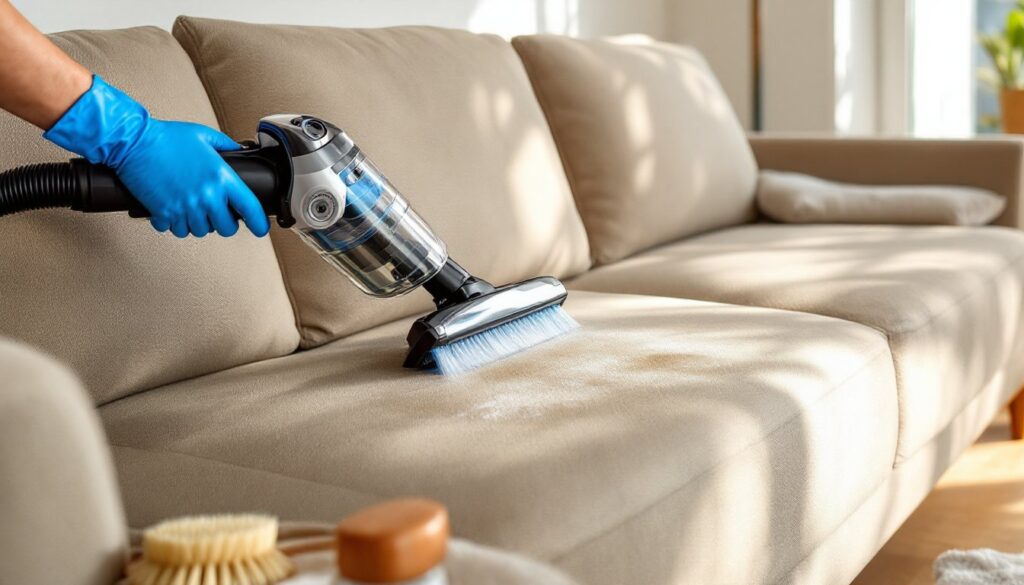
Upholstery cleaning machines (like a Bissell SpotClean or similar hot water extractor) provide better results than spray-and-wipe methods because they extract dirty water instead of leaving it in the cushion.
Step-by-Step Deep Cleaning Process for Fabric Sofas
This process assumes a W or WS cleaning code. Adjust chemical choice for S codes by substituting solvent.
1. Remove Loose Debris
Take off all cushions and vacuum every surface, frame, crevices, under cushions, and the cushions themselves. Use the crevice tool along seams and buttons. Flip cushions and vacuum the underside. This step removes up to 80% of dry soil.
2. Pre-Treat Stains
Identify stain types and treat accordingly:
- Grease (food, body oils): Blot with dish soap diluted 1:10 in warm water
- Protein stains (blood, urine): Apply enzyme cleaner and let sit for 10 minutes
- Tannins (coffee, wine): Blot with white vinegar solution (1:1 with water)
Blot, never rub, from the stain’s outer edge toward the center to prevent spreading. Let treatments sit for the recommended dwell time.
3. Mix Cleaning Solution
For a DIY option, combine 1 tablespoon dish soap, 1 tablespoon white vinegar, and 2 cups warm water in a spray bottle. For tougher soil, use a commercial upholstery cleaner formulated for your fabric type. Many professional cleaning methods recommend hot water extraction for deeply embedded grime.
4. Clean in Sections
Lightly mist one section (about 2 square feet) at a time. Use a soft brush to work the solution into the fabric with gentle circular motions. Avoid soaking the fabric, moisture should penetrate the surface without saturating the cushion foam.
Immediately blot with a clean microfiber cloth to lift soil. For W-code fabrics, an upholstery machine extracts far more water and soil than manual blotting.
5. Rinse (If Applicable)
Soapy residue attracts dirt. For machine cleaning, run a second pass with clean water only. For hand cleaning, mist with plain water and blot thoroughly.
6. Dry Completely
Open windows, run fans, or use a dehumidifier. Drying time is critical, damp fabric invites mold. Most sofas need 6–12 hours to dry fully. Don’t replace cushions or use the sofa until completely dry to the touch, including the underside of cushions.
How to Deep Clean Leather and Faux Leather Sofas
Leather requires a gentler approach than fabric. Water and harsh detergents strip natural oils, leading to cracking and discoloration.
Genuine Leather
- Vacuum crevices and seams with a soft brush attachment.
- Mix cleaning solution: Use a pH-balanced leather cleaner or make a mild solution with a few drops of saddle soap in warm water.
- Dampen (don’t soak) a microfiber cloth and wipe the leather in small sections, using gentle circular motions.
- Wipe dry immediately with a clean cloth.
- Condition: Once dry, apply leather conditioner to restore oils and prevent cracking. Buff to a soft sheen.
Avoid vinegar, alcohol, or ammonia-based cleaners on genuine leather, they damage the finish.
Faux Leather
Faux leather (bonded leather, PU, or PVC) is more forgiving but can peel if scrubbed aggressively.
- Vacuum to remove dust.
- Wipe with mild soap solution: Mix 1 teaspoon dish soap in 2 cups warm water. Dampen a cloth and wipe down all surfaces.
- Rinse with a cloth dampened in plain water.
- Dry with a towel. Do not use heat or direct sunlight, faux leather cracks when dried too quickly.
Skip conditioner on faux leather. It doesn’t absorb oils and will leave a sticky residue. Routine cleaning tips often emphasize prevention, wiping down leather weekly prevents buildup.
Common Mistakes to Avoid During Sofa Deep Cleaning
Overwetting the Fabric
Excess water soaks into cushion foam, where it can take days to dry and promote mold growth. Use minimal liquid and blot thoroughly. If a cushion feels heavy or squishy after cleaning, it’s oversaturated.
Skipping the Test Patch
Even products labeled “safe for upholstery” can react poorly with certain dyes or finishes. Test every cleaner on a hidden area first.
Using Colored Towels
Dye transfer is common when using colored or patterned towels on damp fabric. Stick with white microfiber or terry cloth.
Rubbing Stains
Rubbing spreads stains and damages fabric fibers. Always blot from the outside in, lifting soil rather than grinding it deeper.
Ignoring Drying Time
Sitting on a damp sofa compresses wet fibers and slows evaporation. Worse, it can transfer moisture to clothing. Allow full drying time, 12 hours minimum in humid climates.
Using Steam on Velvet or Silk
High heat flattens pile and can watermark delicate fabrics. S-code fabrics generally can’t tolerate steam.
Mixing Cleaners
Combining products (especially vinegar and bleach, or ammonia and acidic cleaners) can create toxic fumes or ruin fabric. Use one cleaner per session. When tackling stubborn stains, many home care resources stress the importance of selecting the right product for the fabric and stain type.
Conclusion
Deep cleaning a sofa isn’t complicated, but it does require the right approach for the fabric type and a bit of patience during drying. Regular maintenance, vacuuming weekly and spot-treating spills immediately, reduces the need for intensive cleaning and keeps upholstery looking newer longer. For heavily soiled or delicate antique pieces, a professional upholstery cleaner with commercial extraction equipment may be worth the cost.