Table of Contents
ToggleIf you’ve been told you need deep cleaning for your teeth, you’re probably wondering what you’re in for, both clinically and financially. Unlike a standard cleaning that keeps healthy gums in check, deep cleaning (also called scaling and root planing) is a restorative procedure targeting gum disease below the gum line. It’s not a cosmetic upsell: it’s a medical necessity when pockets of bacteria threaten bone and tissue. Costs vary widely depending on severity, location, and insurance coverage, but understanding the price structure upfront helps you plan and avoid surprise bills.
Key Takeaways
- Deep cleaning teeth costs $150–$350 per quadrant ($600–$1,400 for a full mouth) in 2026, with prices varying by geographic location, provider type, and disease severity.
- Deep cleaning addresses gum disease below the gum line and is a medical necessity when periodontal pockets exceed 4 millimeters, requiring multiple appointments and local anesthesia.
- Insurance typically covers deep cleaning at 50–80% after your deductible, classified as a basic or major procedure rather than preventive care, so verify coverage limits and waiting periods before scheduling.
- Dental schools, community health centers, and payment plans can reduce deep cleaning costs by 30–50%, while HSAs and FSAs allow you to pay with pre-tax dollars.
- Untreated periodontal disease can progress to bone loss and tooth loss, making dental implants ($3,000–$5,000 each) far more expensive than timely deep cleaning intervention.
What Is Deep Teeth Cleaning and Why Do You Need It?
Deep cleaning differs from routine prophylaxis in both scope and intent. During a regular cleaning, a hygienist removes plaque and tartar above the gum line. Deep cleaning goes beneath it, scraping calculus from root surfaces and smoothing them to help gums reattach.
You’ll typically need this procedure if your dentist measures periodontal pockets deeper than 4 millimeters during a probing exam. Healthy gums sit snugly around teeth with pockets of 1–3 mm. When inflammation from plaque bacteria pushes that measurement higher, you’re dealing with gingivitis or periodontitis, stages of gum disease that won’t resolve with brushing alone.
Symptoms that often prompt a recommendation include persistent bad breath, bleeding gums, receding gum lines, or loose teeth. Left untreated, periodontal disease can lead to bone loss and tooth loss. Deep cleaning is the first line of defense before surgical interventions become necessary.
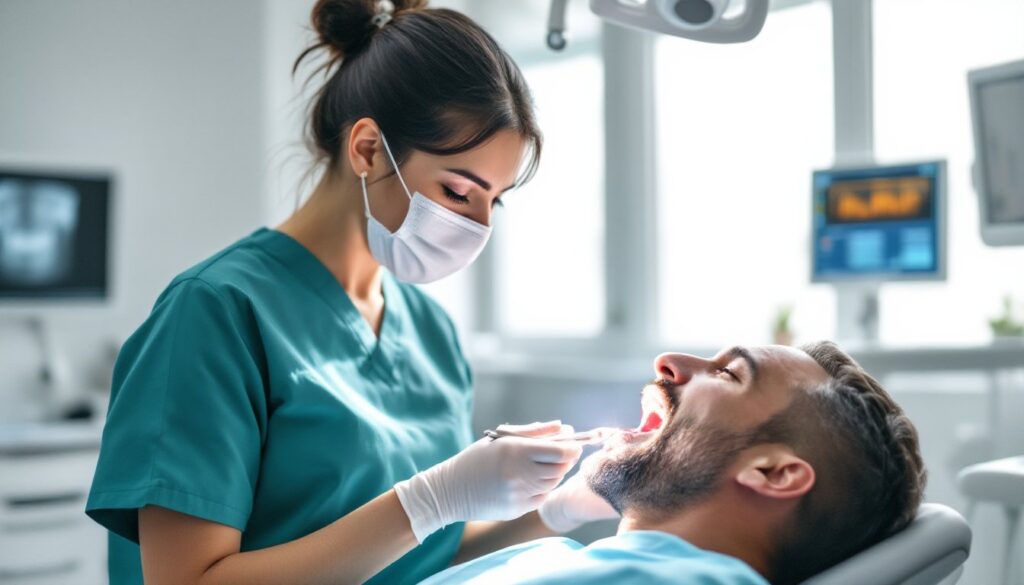
The procedure is usually done in two to four appointments, treating one or two quadrants of your mouth per visit. Local anesthesia numbs the area, and the hygienist or periodontist uses ultrasonic scalers and hand instruments to remove deposits. Some practices offer antimicrobial rinses or localized antibiotics afterward to support healing.
Average Cost of Deep Cleaning Teeth in 2026
As of 2026, expect to pay $150 to $350 per quadrant without insurance, putting a full-mouth deep cleaning in the range of $600 to $1,400. Costs swing based on geographic region, provider type, and severity of disease. Urban practices in the Northeast or West Coast often charge at the higher end, while rural or Southern clinics may come in closer to $150 per quadrant.
A general dentist typically charges less than a periodontist for the same procedure, though complex cases benefit from specialist expertise. If your pockets exceed 6 mm or you have significant bone loss, a periodontist’s higher fee may deliver better long-term outcomes.
Anesthesia adds to the bill. Local injections are usually bundled into the quadrant fee, but if you opt for nitrous oxide (laughing gas) or oral sedation for anxiety, tack on another $50 to $200. IV sedation, rare for scaling and root planing, can exceed $500.
Cost Breakdown by Quadrant
Most offices bill per quadrant because treatment is staged over multiple visits. Here’s what you’re paying for in each session:
- Examination and probing: Typically included in the quadrant fee or billed separately as a periodontal assessment ($50–$100).
- Scaling: Removal of calculus above and below the gum line using ultrasonic and hand instruments.
- Root planing: Smoothing root surfaces to eliminate rough spots where bacteria cling.
- Irrigation and medication: Antimicrobial rinse or locally applied antibiotic (e.g., Arestin), sometimes an additional $50–$75 per quadrant.
If you need all four quadrants treated, ask about a package rate. Some practices discount the total if you commit to the full treatment plan upfront.
Factors That Affect Deep Cleaning Costs
Several variables shift the final invoice beyond the base per-quadrant rate:
Severity of gum disease: Mild periodontitis with 4–5 mm pockets is quicker to treat than advanced cases with 7+ mm pockets and furcation involvement. More time, more instruments, higher fee.
Provider credentials: A general dentist may charge $150–$250 per quadrant, while a board-certified periodontist often starts at $250 and can exceed $350. Specialists bring advanced training, but not every case requires it.
Geographic location: Metropolitan areas and states with higher costs of living see steeper pricing. A quadrant in Manhattan might run $350: the same work in rural Mississippi could be $150.
Anesthesia and sedation: Standard local anesthetic is usually included, but nitrous oxide, oral sedation, or IV sedation are add-ons.
Follow-up maintenance: After deep cleaning, many patients need more frequent maintenance cleanings, every three months instead of six, to prevent recurrence. Budget $100–$200 per visit, and factor that into annual dental costs.
X-rays and diagnostics: Full-mouth or periapical X-rays to assess bone loss may be billed separately, adding $100–$300 to the initial visit.
Laser-assisted therapy: Some practices offer laser periodontal therapy as an adjunct or alternative, which can cost $1,000–$3,000 for a full mouth. Proponents cite less bleeding and faster healing: critics note limited long-term research compared to traditional scaling.
Does Insurance Cover Deep Teeth Cleaning?
Most dental insurance plans classify deep cleaning as a basic or major procedure rather than preventive, which changes your out-of-pocket share. Preventive cleanings (twice a year) are often covered at 100%. Deep cleaning typically falls under 50–80% coverage after you meet your deductible.
Before scheduling, verify these details with your carrier:
- Annual maximum: Many plans cap benefits at $1,000–$2,000 per year. A full-mouth deep cleaning can consume that limit, leaving little for other work.
- Waiting periods: Some policies impose a 6–12 month waiting period for major services if you’re a new enrollee.
- Pre-authorization: Insurers may require your dentist to submit X-rays and pocket measurements before approving coverage. This process can take one to two weeks.
- Frequency limits: Plans often cover deep cleaning once every 24 to 36 months per quadrant. If you relapse and need retreatment sooner, you’ll likely pay full price.
Medical insurance occasionally picks up part of the tab if your periodontist documents a link between gum disease and a systemic condition (diabetes, heart disease). This is uncommon but worth exploring if you have a relevant diagnosis.
Without insurance, ask about in-house discount plans or membership programs. Many practices offer annual plans ($200–$400) that include exams, X-rays, and percentage discounts on procedures.
Ways to Save Money on Deep Cleaning Procedures
If you’re facing a four-figure bill with limited coverage, these strategies can ease the financial hit:
Dental schools: Accredited schools with periodontics programs offer deep cleaning performed by supervised residents at 30–50% below market rates. Treatment takes longer, but quality control is rigorous.
Community health centers: Federally Qualified Health Centers (FQHCs) use sliding-scale fees based on income. If you qualify, you might pay as little as $50–$100 per quadrant.
Payment plans: Many offices partner with financing companies like CareCredit or LendingClub to offer 0% APR for 6–24 months if paid in full by the promotional deadline. Read the fine print, deferred interest can spike if you miss the window.
Negotiate the treatment plan: If cost is prohibitive, ask your dentist if you can stage treatment over multiple benefit years. Treating two quadrants in December and two in January can maximize two years of insurance.
Health Savings Accounts (HSAs) or Flexible Spending Accounts (FSAs): Both allow you to pay with pre-tax dollars, effectively discounting the procedure by your marginal tax rate (typically 20–30%).
Preventive maintenance: The best savings come from avoiding deep cleaning altogether. Regular six-month cleanings, daily flossing, and prompt attention to bleeding gums keep minor issues from escalating. Practices with strong preventive cleaning protocols emphasize this approach to reduce long-term patient costs.
Is Deep Cleaning Worth the Investment?
From a clinical standpoint, the answer is straightforward: untreated periodontal disease progresses. What starts as manageable 5 mm pockets can advance to bone loss, abscesses, and tooth mobility. At that stage, you’re looking at extractions, implants, or dentures, procedures that dwarf the cost of deep cleaning.
A single dental implant runs $3,000–$5,000. Losing multiple teeth to periodontal disease can push total restoration costs into five figures. Deep cleaning, while not cheap, is the least expensive intervention that halts disease progression.
Beyond your mouth, research links periodontal disease to systemic health risks: increased cardiovascular events, poorly controlled diabetes, and adverse pregnancy outcomes. Treating gum disease isn’t just about saving teeth, it’s about reducing systemic inflammation.
Patient satisfaction is generally high once initial soreness subsides. Most people report less bleeding, fresher breath, and visibly healthier gums within weeks. The caveat: results depend on home care compliance. If you skip flossing and maintenance cleanings, pockets will deepen again, and you’ll be back in the chair.
Think of deep cleaning as foundation repair for your mouth. You wouldn’t ignore cracks in your home’s foundation because the fix is inconvenient or costly, you’d address it before the house shifts. The same logic applies here. Comparing costs and outcomes, patients who invest in timely periodontal care preserve not just their teeth but their overall quality of life. If your dentist says you need it, don’t delay. The longer you wait, the more invasive and expensive treatment becomes.