Table of Contents
ToggleA dishwasher quietly accumulates grease, mineral deposits, soap scum, and food debris over weeks of hard work, residues that can clog spray arms, dull performance, and leave dishes with spots or odors. Most homeowners don’t think about cleaning the appliance that does the cleaning, but skipping routine maintenance shortens its lifespan and can lead to costly repairs. White distilled vinegar, a pantry staple, cuts through buildup naturally without harsh chemicals or complicated procedures. This guide walks through exactly how to clean a dishwasher with vinegar, from prep to cycle completion, so the appliance runs cleaner, smells fresher, and lasts longer.
Key Takeaways
- Cleaning your dishwasher with vinegar dissolves mineral deposits, grease, and soap scum using natural acetic acid without harsh chemicals or costly repairs.
- Pour 2 cups of white distilled vinegar into a bowl on the top rack and run the hottest, longest cycle to effectively clean the tub, spray arms, and heating elements.
- Clean your dishwasher with vinegar monthly for daily use, every 2-3 weeks for hard water, and always inspect and scrub the filter beforehand for best results.
- Never combine vinegar with bleach or detergent, and avoid apple cider or cleaning vinegar—use only standard 5% white distilled vinegar to prevent gasket damage.
- Optional baking soda cycles after vinegar cleaning provide extra deodorizing power and a sparkling finish for persistent odors.
Why Vinegar Is the Perfect Natural Dishwasher Cleaner
White distilled vinegar contains acetic acid (typically 5% by volume), which dissolves mineral scale, soap scum, grease, and hard-water deposits without damaging rubber gaskets, plastic components, or stainless-steel tubs. Unlike commercial cleaners that rely on synthetic surfactants or bleach, vinegar is non-toxic, biodegradable, and safe around kids and pets.
Vinegar’s acid breaks down calcium carbonate and magnesium deposits, the white film that coats spray arms, filters, and heating elements in areas with hard water. It also neutralizes odors from trapped food particles and sour dishcloths without leaving behind artificial fragrances.
Cost is another advantage. A gallon of white distilled vinegar runs under five dollars and lasts for dozens of cleaning cycles. There’s no need for specialized tabs, pods, or descaling solutions for routine maintenance. That said, vinegar won’t disinfect. If sanitizing is the goal, after a bout of illness, for example, a dedicated dishwasher cleaner with antimicrobial agents is a better choice. For monthly deep cleans and mineral management, though, vinegar does the job well.
One caution: never use vinegar and bleach together in any cleaning task. The combination produces toxic chlorine gas. If switching from a bleach-based cleaner, run an empty rinse cycle first.
What You’ll Need to Clean Your Dishwasher with Vinegar
Most of the supplies are already in the house. Gather everything before starting to keep the process quick.
Materials:
- 2 cups white distilled vinegar (not apple cider or cleaning vinegar, stick to standard 5% acidity)
- 1 dishwasher-safe bowl or measuring cup (glass or ceramic, able to hold at least 2 cups)
- Soft-bristle brush or old toothbrush (for scrubbing filters and spray arms)
- Microfiber cloth or sponge
- Warm water (for rinsing components)
Optional:
- Baking soda (1 cup, for an optional second deodorizing cycle)
- Dish soap (a drop or two for hand-washing the filter)
No specialized tools or protective equipment required. Gloves are optional, vinegar is gentle on skin, though some prefer them to avoid the smell lingering on hands.
Step-by-Step: How to Clean Your Dishwasher with Vinegar
Preparing Your Dishwasher for the Cleaning Cycle
1. Empty the dishwasher completely.
Remove all dishes, utensils, and racks. This gives full access to the interior and ensures vinegar reaches every surface without interference.
2. Inspect and clean the filter.
The filter sits at the bottom of the tub, usually under the lower spray arm. Twist or lift to remove it (consult the owner’s manual if unclear, designs vary by manufacturer). Rinse under warm running water, then scrub with a soft-bristle brush to dislodge trapped food, grease, and debris. A drop of dish soap helps cut heavy buildup. Rinse thoroughly and set aside.
3. Check the spray arms.
Remove the lower and upper spray arms by unscrewing or unclipping them. Hold each arm up to the light and look through the spray holes, mineral deposits often clog these openings. Use a toothpick or straightened paperclip to clear blockages, then rinse under warm water. Wipe down the arms with a damp microfiber cloth.
4. Wipe down the door gasket and edges.
The rubber gasket around the door traps mold, mildew, and food particles. Dampen a cloth with warm water and wipe all folds and crevices. For stubborn gunk, dip the cloth in a 1:1 vinegar-water solution. Don’t skip this, it’s where odors often hide.
5. Reassemble the filter and spray arms.
Once everything is clean and rinsed, lock the filter back in place and reattach the spray arms. Make sure they spin freely.
Running the Vinegar Cleaning Cycle
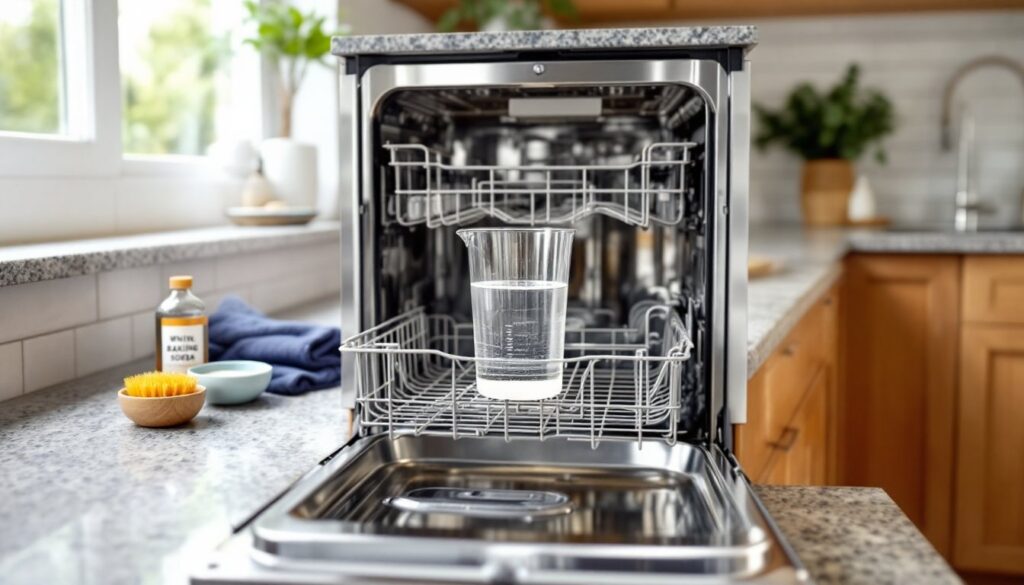
1. Place the vinegar in the top rack.
Pour 2 cups of white distilled vinegar into a dishwasher-safe bowl or large measuring cup. Set it upright on the top rack, centered if possible. Do not pour vinegar directly into the detergent dispenser, it will release too early in the cycle.
2. Run a hot-water cycle.
Close the door and select the hottest, longest cycle available (often labeled “heavy” or “pots and pans”). Skip the heated dry setting to save energy. Start the cycle. The vinegar will vaporize and circulate throughout the wash, dissolving grease and scale on the tub, spray arms, heating element, and hidden plumbing.
Many cleaning techniques recommend running the cycle empty except for the vinegar, and that’s the most effective approach. The heat activates the acetic acid, and the extended wash time gives it plenty of contact with buildup.
3. Optional: run a baking soda cycle for extra freshness.
After the vinegar cycle completes, sprinkle 1 cup of baking soda evenly across the bottom of the tub. Run a short hot-water cycle (1–2 hours). Baking soda is mildly abrasive and deodorizing, and it leaves the interior sparkling. This step isn’t mandatory, but it’s useful if the dishwasher had a persistent smell.
4. Wipe down the interior.
Once the cycle finishes and the tub cools, open the door and wipe down the walls, door, and bottom with a clean microfiber cloth. This removes any loosened debris and leaves a streak-free finish. For households dealing with significant hard-water buildup, repeating the vinegar cycle quarterly helps prevent long-term scale damage.
The dishwasher is now clean, deodorized, and ready for the next load.
How Often Should You Clean Your Dishwasher with Vinegar?
Frequency depends on usage and water hardness. For most households running the dishwasher daily, a monthly vinegar cleaning cycle keeps mineral deposits and odors in check. If the water is soft or the machine runs only a few times a week, every six to eight weeks is sufficient.
Households with hard water, common in areas with high calcium and magnesium levels, should clean more often, roughly every two to three weeks. Hard water accelerates scale buildup on heating elements and spray arms, which can reduce efficiency and eventually cause mechanical failures.
The filter requires more frequent attention. Rinse and scrub it every one to two weeks to prevent clogs and maintain spray pressure. A clogged filter forces the pump to work harder and can leave dishes dirty.
If the dishwasher starts leaving spots, smells musty between cycles, or drains slowly, it’s time for an immediate vinegar clean, don’t wait for the scheduled interval. These are early signs of buildup or trapped debris.
For those seeking a consistent home organization strategy, adding dishwasher maintenance to a monthly checklist (alongside HVAC filter changes and garbage disposal cleaning) keeps the routine easy to remember.
Common Mistakes to Avoid When Using Vinegar in Your Dishwasher
Pouring vinegar into the detergent dispenser.
The dispenser opens mid-cycle, releasing vinegar too late to reach the pre-wash and rinse stages. Placing vinegar in a bowl on the top rack allows it to work throughout the entire cycle.
Using apple cider or balsamic vinegar.
These contain sugars, colorants, and sediments that can stain the tub or leave sticky residues. White distilled vinegar is the only type safe for dishwasher cleaning.
Cleaning with vinegar after every wash.
Overuse can eventually degrade rubber gaskets and seals. Monthly or bi-weekly intervals are sufficient for most homes. Daily vinegar cycles are overkill and may cause more harm than good.
Skipping the filter.
Running a vinegar cycle without cleaning the filter is like mopping a floor without sweeping first. Trapped debris limits circulation and prevents the vinegar from reaching problem areas.
Combining vinegar with detergent or bleach.
Vinegar is acidic: detergent is alkaline. Mixed together, they neutralize each other and reduce cleaning power. Bleach and vinegar produce dangerous fumes. Always run vinegar cycles alone, with no other additives.
Using “cleaning vinegar” without dilution.
Cleaning vinegar has 6–10% acetic acid, stronger than standard distilled vinegar. While effective, prolonged exposure at full strength can damage rubber and plastic components. If using cleaning vinegar, dilute it 1:1 with water.
Ignoring manufacturer guidance.
Some dishwasher manufacturers caution against vinegar due to potential long-term effects on specific gasket materials. Check the owner’s manual or manufacturer website. If vinegar is discouraged, consider citric acid powder as an alternative (1/4 cup in the detergent dispenser).
Avoiding these mistakes ensures the dishwasher stays clean without risking premature wear or voiding warranties.