Table of Contents
ToggleLiving in New York City means dealing with air pollution, street grime, and the wear of high-density living. Regular tidying keeps surfaces presentable, but deep cleaning addresses what accumulates beneath, grout stains, appliance buildup, dust behind radiators, and allergens trapped in textiles. For NYC residents, deep cleaning isn’t just about appearances. It’s about maintaining air quality in tight quarters and extending the life of finishes that take a beating from the city environment. This guide breaks down what deep cleaning involves, why it matters more in urban apartments, and how to tackle it yourself or know when to call in help.
Key Takeaways
- Deep cleaning in NYC goes beyond regular maintenance by targeting hidden grime, grout stains, appliance buildup, and allergens that accumulate in tight urban spaces.
- NYC’s particulate pollution, high humidity, and dense living conditions cause grime to build up faster than in suburban areas, making deep cleaning every 3–6 months essential for NYC apartments.
- Deep cleaning checklists should include appliances, grout and tile, baseboards, windows, upholstery, light fixtures, and vents—areas that regular cleaning routines typically miss.
- DIY deep cleaning costs $50–$100 in supplies but requires 6–12 hours of labor, while professional NYC services charge $200–$500+ but deliver results in 3–5 hours with commercial-grade equipment.
- Hiring professional deep cleaning services makes sense for move-in/move-out situations, post-renovation cleanup, or when physical limitations make DIY unsafe.
What Makes Deep Cleaning Different from Regular Cleaning?
Regular cleaning handles the visible layer: wiping counters, vacuuming floors, cleaning toilets, and dusting accessible surfaces. It’s maintenance mode, typically done weekly or biweekly to keep things functional.
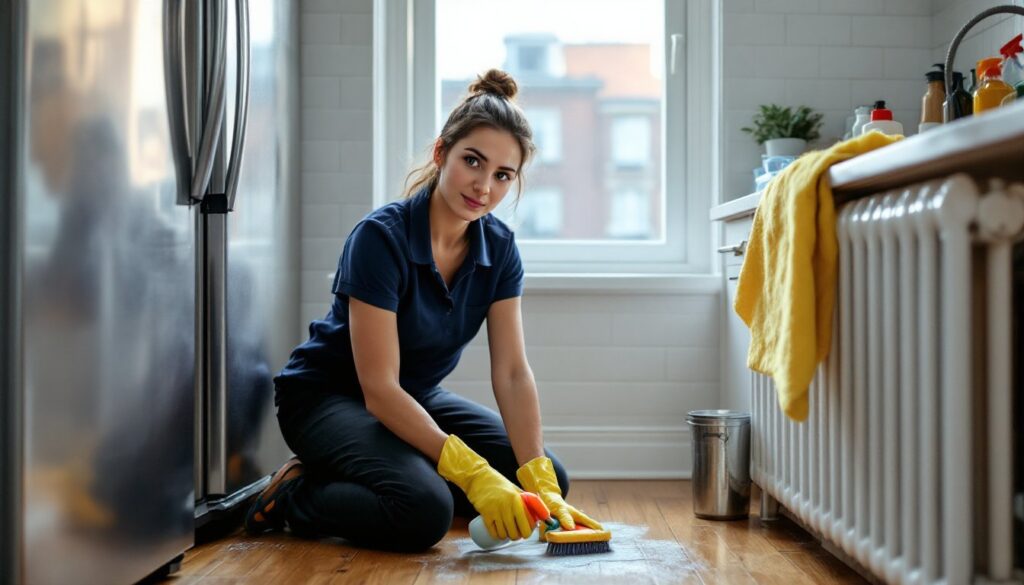
Deep cleaning goes further. It targets neglected areas and buildup that regular routines miss. Think scrubbing grout with a stiff brush and alkaline cleaner, pulling out the refrigerator to clean coils and the wall behind it, washing baseboards, degreasing range hood filters, and vacuuming inside air vents. Deep cleaning also involves moving furniture, washing window tracks, descaling faucet aerators, and treating mildew in tile joints.
The difference comes down to frequency and intensity. Regular cleaning maintains order. Deep cleaning resets a space to near-original condition, removing the grime that layers up over months. It’s more labor-intensive, requires stronger cleaning techniques, and often needs specialty products, enzyme cleaners for organic stains, citric acid for mineral deposits, or trisodium phosphate (TSP) for heavy grease.
Deep cleaning also includes tasks like washing walls (especially in kitchens where grease aerosolizes), cleaning light fixtures and ceiling fan blades, and wiping down door frames and light switches. These are the touch points and surfaces that accumulate oils, dust, and particulate matter but rarely make it onto a weekly checklist.
Why NYC Homes Need Deep Cleaning More Often
New York City’s environment accelerates grime accumulation. Particulate matter from traffic, construction, and subway dust infiltrates apartments even with windows closed. HVAC systems in older buildings often lack modern filtration, so airborne contaminants settle on surfaces faster.
High humidity in summer promotes mold and mildew, especially in bathrooms without exhaust fans or units with poor ventilation. Grout, caulk, and window seals are prime targets. Winters bring the opposite problem, radiator heat dries the air, causing dust to circulate and cling to textiles and electronics.
Small square footage means higher density of activity per room. Cooking oils disperse more quickly in a 600-square-foot apartment than a suburban house. Pet dander, if applicable, concentrates faster. Foot traffic from sidewalks tracks in salt, dirt, and pollutants that embed in rugs and hardwood gaps.
Older buildings, common in NYC, add another layer. Pre-war units often have plaster walls that flake, wood floors with crevices that trap debris, and cast-iron radiators that collect dust in unreachable fins. Lead paint (in buildings pre-1978) requires caution: disturbing it during aggressive cleaning can create hazards. Always use damp methods and avoid sanding or scraping if lead is suspected.
Property managers typically recommend deep cleaning every three to six months for NYC apartments, compared to biannual schedules in less dense areas. High-traffic homes with pets or kids may need quarterly sessions.
Essential Deep Cleaning Checklist for NYC Apartments
A methodical checklist prevents overlooked tasks and wasted effort. Work top-to-bottom and left-to-right in each room to avoid re-cleaning areas.
Kitchen and Bathroom Deep Cleaning
Kitchen:
- Appliances: Pull out the refrigerator and stove. Vacuum coils (dirty coils reduce efficiency by up to 25%). Wipe down sides and the wall behind them. Remove and soak range hood filters in hot water and degreaser, most are dishwasher-safe.
- Cabinets: Empty cabinets and wipe interiors with a mild detergent solution. Check for pests or moisture damage. Clean cabinet faces, especially around handles where oils accumulate.
- Grout and tile: Scrub tile backsplashes and floors with a stiff nylon brush and an oxygen bleach cleaner (safer for septic and less corrosive than chlorine). For stubborn stains, make a paste of baking soda and hydrogen peroxide, apply, let sit 10 minutes, then scrub.
- Sink and faucet: Remove and soak the faucet aerator in white vinegar to dissolve mineral buildup. Scrub the sink with a non-abrasive cleaner. For stainless steel, use a dedicated cleaner and buff in the direction of the grain.
- Oven and microwave: Use an oven cleaner per manufacturer specs (most require 2–4 hours of dwell time). For effective cleaning strategies, microwave a bowl of water and lemon slices for five minutes to loosen splatters, then wipe.
Bathroom:
- Grout and caulk: Inspect caulk around tubs and sinks. If it’s cracked or moldy, remove it with a utility knife and re-caulk with mildew-resistant silicone. Clean grout with a bleach-based cleaner or a mix of vinegar and baking soda. Use a grout brush or an old toothbrush.
- Toilet: Remove the seat (two bolts at the base) for easier access to hinges and the bowl rim. Clean the base where it meets the floor, this is a common urine and dust trap.
- Exhaust fan: Remove the cover and vacuum the fan blades and housing. Wipe with a damp cloth. A clogged fan reduces ventilation efficiency, promoting mold growth.
- Shower and tub: Descale showerheads by soaking in vinegar overnight. Scrub tile, paying attention to corners and the joint where the wall meets the tub. For soap scum, use a commercial descaler or a 1:1 vinegar-dish soap solution.
Living Spaces and Bedrooms
- Walls and baseboards: Wipe walls with a damp microfiber cloth and mild detergent. Start at the top to catch drips. Scrub baseboards with a brush and soapy water. NYC apartments often have scuff marks from tight furniture placement, magic erasers work well here but test in an inconspicuous spot first.
- Windows and tracks: Vacuum window tracks, then scrub with a brush and soapy water. Use a squeegee or microfiber cloth for glass. Don’t forget the exterior if accessible (and safe).
- Floors: Move all furniture. Vacuum or sweep, including under beds and sofas. For hardwood, use a wood-safe cleaner and damp mop, never soak wood floors. For tile, a steam mop works well. Check for gaps or damage: urban humidity fluctuations can cause wood to expand and contract.
- Upholstery and textiles: Vacuum sofas, chairs, and mattresses using the upholstery attachment. Spot-clean stains per fabric type. Wash or dry-clean curtains, and launder bedding including mattress protectors and pillow covers. Consider a HEPA-filter vacuum to capture finer particulates common in city air.
- Light fixtures and vents: Dust ceiling fans, chandeliers, and pendant lights. Remove vent covers and wash in soapy water, then vacuum inside the duct opening as far as the hose reaches.
- Electronics and books: Wipe screens, keyboards, and remotes with appropriate cleaners (alcohol wipes for non-porous surfaces). Dust books and shelves with a microfiber cloth.
DIY Deep Cleaning vs. Hiring Professional Services in NYC
DIY deep cleaning costs less upfront, mainly supplies and time. Expect to spend $50–$100 on cleaners, brushes, sponges, and protective gear (gloves, mask, knee pads). Time investment ranges from 6–12 hours for a one-bedroom apartment, longer for larger spaces or severe buildup.
Pros of DIY:
- Full control over products and methods (important if avoiding harsh chemicals or specific allergens).
- Flexibility to work in stages, tackle one room at a time.
- Lower cost if labor is free.
Cons of DIY:
- Physically demanding. Scrubbing grout, moving appliances, and reaching high fixtures strain the back and knees.
- Requires tools and knowledge. Not having a steam cleaner or understanding which cleaner works on which surface leads to poor results or damage.
- Time-consuming. A full apartment deep clean eats up a weekend or more.
Professional deep cleaning services in NYC typically charge $200–$500+ depending on apartment size, condition, and service inclusions. Many companies offer flat rates for studios and one-bedrooms, scaling up for larger units. Some specialize in move-in/move-out cleans, which overlap heavily with deep cleaning scope.
Pros of hiring pros:
- Speed and efficiency. A team of two or three finishes in 3–5 hours what would take a DIYer a full day.
- Commercial-grade equipment, steam cleaners, HEPA vacuums, and professional-strength (but safe) cleaners yield better results.
- Expertise in stain removal, material compatibility, and hard-to-reach areas.
- Insured and bonded services protect against accidental damage.
Cons of hiring pros:
- Cost. For frequent deep cleans (quarterly), it adds up.
- Scheduling and access. Coordinating appointments and giving access to your home requires trust and flexibility.
- Variable quality. Not all services are equal: vetting through reviews and references is essential.
When to hire a pro:
- Move-in/move-out situations where security deposits or lease terms are on the line.
- Post-renovation cleanup (dust and debris from construction require specialized handling).
- Severe mold or pest infestations, these often need remediation beyond standard cleaning.
- Limited mobility or physical constraints that make DIY unsafe.
When DIY makes sense:
- Regular maintenance deep cleans if you’re comfortable with the labor.
- Budget constraints.
- Specific concerns about products or methods (e.g., only using non-toxic cleaners).
Many NYC residents split the difference: hire pros annually or biannually for a full reset, then handle quarterly touch-ups themselves. Homes adopting top cleaning tips and best cleaning methods often find that consistent routines reduce the need for intensive sessions. For detailed checklists and expert recommendations, resources like Good Housekeeping’s deep cleaning guide and Martha Stewart’s comprehensive checklist offer room-by-room breakdowns. Additional insights on maintaining a cleaner home year-round can be found at The Spruce, which covers everything from seasonal tasks to product recommendations.
Conclusion
Deep cleaning an NYC apartment tackles the grime regular routines miss and addresses the unique challenges of urban living. Whether handling it solo or hiring help depends on budget, time, and physical capacity. Either way, a methodical approach and the right tools make the difference between surface-level tidying and a truly reset space.