Table of Contents
ToggleA Dyson vacuum is a workhorse, but its performance tanks when the vacuum head gets clogged with hair, debris, and dust. Even the best cyclone technology can’t compensate for a brush bar wrapped in pet hair or airways choked with lint. The good news? Cleaning a Dyson vacuum head is straightforward and doesn’t require special tools, just a bit of patience and about 20 minutes. This guide walks through exactly how to clean dyson vacuum head components, from detangling the brush bar to clearing hidden blockages, so homeowners can restore suction and extend the life of their machine.
Key Takeaways
- Cleaning a Dyson vacuum head every 2–4 weeks for pet owners prevents suction loss, motor overheating, and expensive repairs by removing hair and debris from the brush bar and airways.
- Regular maintenance of your cleaning Dyson vacuum head requires only basic tools like scissors, a screwdriver, and a microfiber cloth—no special equipment needed.
- Detangled brush bars spin freely and increase pickup performance on carpets, while clogged airways directly cause weak suction and longer cleaning times that frustrate homeowners.
- Always unplug the vacuum before maintenance, inspect the drive belt for wear, and allow components to dry completely before reinstalling to prevent motor damage and mold.
- If suction remains weak after cleaning the vacuum head, check the pre-motor filter and dustbin first, as clogged filters are the leading cause of suction loss in all vacuums.
Why Regular Dyson Vacuum Head Cleaning Matters
The vacuum head is where the action happens. It’s the first point of contact with dirt, pet hair, crumbs, and everything else hiding in carpet fibers or hardwood crevices. Over time, debris accumulates around the brush bar (also called the roller or beater bar), wraps around the bristles, and clogs the intake airways. This buildup creates several problems.
First, suction drops. When airways are restricted, the motor works harder but moves less air, resulting in weak pickup and longer cleaning times. Second, the brush bar can’t spin freely. Hair and string tangled around the roller prevent proper agitation, especially on carpets, leaving dirt behind. Third, the motor overheats. Dyson vacuums have thermal cutoff switches to prevent damage, but repeated overheating shortens motor life and can trigger frustrating shutdowns mid-clean.
Neglecting vacuum head maintenance also accelerates wear. A jammed brush bar puts strain on the drive belt (on models that use one) and can cause bristles to flatten or break. Regular cleaning, ideally every two to four weeks for households with pets, or monthly for lighter use, keeps the machine running efficiently and prevents expensive repairs down the line. For homes with long-haired pets or high-traffic carpet, checking the brush bar weekly isn’t overkill.
Tools and Supplies You’ll Need
Cleaning a Dyson vacuum head doesn’t require a hardware store run. Most of what’s needed is already in a typical toolbox or kitchen drawer. Here’s the short list:
Tools:
- Flathead screwdriver or coin (for releasing the brush bar on most models)
- Scissors or seam ripper (for cutting through tangled hair)
- Old toothbrush or stiff brush (for scrubbing crevices)
- Microfiber cloth or lint-free rag
Supplies:
- Mild dish soap (optional, for stubborn grime)
- Rubbing alcohol or disinfectant wipes (optional, for sanitizing)
- Small bowl of warm water
Safety Note: Always unplug the vacuum or remove the battery before starting any maintenance. Dyson vacuums are powerful, and accidental activation while hands are near the brush bar can cause injury.
Some Dyson models (like the V11, V15, or Ball Animal series) have quick-release brush bars that pop out without tools, while older uprights may require loosening a fastener. Check the user manual or the Dyson website for model-specific instructions if unsure. Having a well-lit workspace and a garbage bag handy for collected debris makes the job cleaner and faster.
Step-by-Step Guide to Cleaning Your Dyson Vacuum Head
Removing Hair and Debris from the Brush Bar
-
Detach the vacuum head. For cordless stick models, press the release button to separate the floor tool from the wand. For uprights, lower the handle flat and access the brush bar from the underside.
-
Release the brush bar. Most Dyson heads have a plastic cap on one or both ends with a coin slot or tab. Turn the fastener a quarter-turn counterclockwise and lift out the brush bar. On models like the V8 or V10, the end cap pops off by hand.
-
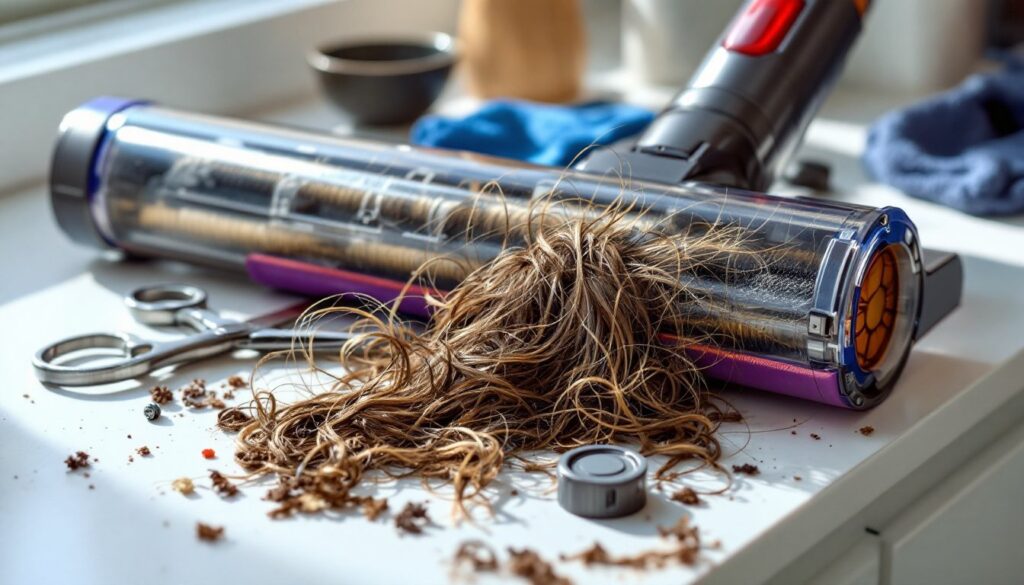
Cut away tangled hair. Use scissors to carefully slice along the length of the brush bar, cutting through hair and string wrapped around the bristles. A seam ripper works even better for precision. Pull the cut debris away with fingers, don’t yank hard, as this can damage the bristles. For homes with pets or long-haired occupants, routine vacuuming maintenance includes this step every few weeks to prevent matting.
-
Wipe down the brush bar. Use a damp microfiber cloth to remove dust and sticky residue from the roller and bristles. For stubborn grime (like dried pet saliva or spilled liquids), dip the cloth in warm water with a drop of dish soap. Do not submerge the brush bar if it contains a motor or electrical components, check the manual first. Some Dyson models have motorized brush bars that should only be wiped, not soaked.
-
Inspect the drive belt (if applicable). Older Dyson uprights use a rubber belt to spin the brush bar. Check for cracks, stretching, or glazing. A worn belt slips and reduces brush performance. Replacement belts are inexpensive and available from Dyson or third-party suppliers.
-
Let everything dry completely. Even a small amount of moisture can cause mold or motor issues. Air-dry the brush bar for at least an hour before reinstalling.
Cleaning the Vacuum Head Housing and Airways
-
Clear the intake opening. With the brush bar removed, inspect the rectangular opening where air and debris enter the vacuum. Use fingers or needle-nose pliers to pull out any visible clogs, common culprits include socks, paper scraps, or clumps of pet hair.
-
Scrub the housing interior. An old toothbrush is perfect for loosening dust and grime from the corners and channels inside the vacuum head. Pay attention to the area around the brush bar housing, where fine dust often cakes up. Wipe clean with a damp cloth.
-
Check the airways and hose connection. If the vacuum head still has weak suction after cleaning, the blockage may be upstream. Detach the wand and look through it, hold it up to a light source and check for obstructions. Use a broomstick or straightened wire hanger to push out clogs. Many home cleaning routines recommend checking hoses every month or two to catch buildup early.
-
Wipe the wheels. The vacuum head’s wheels and swivel joints collect hair and gunk, which can make the head hard to push. Use scissors to cut away wrapped hair, then wipe the axles with rubbing alcohol to remove sticky residue.
-
Reassemble the vacuum head. Once everything is dry, slide the brush bar back into place, ensuring it seats properly in the drive socket (if motorized). Replace the end cap and turn the fastener clockwise until it clicks. Give the brush bar a spin by hand, it should rotate freely without resistance or grinding noises.
-
Test the vacuum. Plug in or reattach the battery, turn on the vacuum, and run it over a small area of carpet or hard floor. Listen for smooth operation and check that the brush bar spins. If suction is still weak, the filter or bin may need attention, those are separate maintenance tasks but equally important.
Troubleshooting Common Dyson Vacuum Head Issues
Even with regular cleaning, vacuum heads can develop problems. Here’s how to diagnose and fix the most common ones.
Brush bar won’t spin: If the roller doesn’t turn, first check for tangled hair or debris, even a small amount can jam the mechanism. On motorized heads, listen for a humming sound when the vacuum runs. If the motor hums but the bar doesn’t spin, the drive belt (on belt-driven models) may be broken or the motor itself could be faulty. Replacing a belt is a 10-minute DIY job, but a dead motor usually requires professional repair or replacement of the entire head.
Weak suction at the head: Clean the brush bar and airways first, as outlined above. If suction is still poor, remove and wash the vacuum’s pre-motor filter and check the dustbin for cracks or improper seating. Dyson recommends washing filters monthly and replacing them annually. A clogged filter is the number-one cause of suction loss across all vacuum brands.
Vacuum head hard to push: This usually means the brush bar is spinning too aggressively for the floor type, or the wheels are gummed up. Most Dyson stick models have a manual height adjustment or carpet/hard floor mode, make sure it’s set correctly. Clean the wheels and axles as described earlier. If the head still drags, check that the brush bar bristles aren’t worn down to nubs, which can cause uneven contact with the floor.
Burning smell or overheating: Unplug immediately. A burning odor often indicates a jammed brush bar, clogged airway, or overworked motor. Let the vacuum cool for at least 30 minutes, then inspect the head, hose, and filter for blockages. Dyson’s thermal cutoff will shut down the motor to prevent damage, but repeated overheating shortens its lifespan. Keeping up with cleaning tasks from resources like The Spruce can help prevent these issues.
Rattling or grinding noise: Remove the brush bar and check for foreign objects (coins, small toys, gravel) stuck in the housing. Inspect the brush bar itself for cracks or broken bristles. A damaged roller should be replaced, Dyson sells OEM parts, and third-party options are available but vary in quality.
If none of these fixes resolve the issue, contact Dyson support or take the vacuum to an authorized service center. Some problems, like a failed motor or damaged internal wiring, aren’t DIY-friendly and attempting repairs can void warranties.
Conclusion
A clean Dyson vacuum head means better suction, longer motor life, and less frustration during weekly cleaning sessions. Taking 20 minutes every few weeks to detangle the brush bar and clear airways pays off in performance and equipment longevity. Bookmark this guide, keep scissors and a screwdriver handy, and make vacuum head maintenance a regular habit, right alongside changing HVAC filters and sharpening lawnmower blades.