Table of Contents
ToggleGig Harbor’s wet Pacific Northwest climate delivers an average of 44 inches of rain annually, which means gutters work harder here than in drier regions. Clogged gutters don’t just create an eyesore, they cause foundation damage, roof leaks, and wood rot that can cost thousands to repair. For homeowners in Gig Harbor and the surrounding Pierce County area, keeping gutters clear isn’t optional maintenance: it’s essential protection against water damage. Whether tackling the job themselves or hiring a pro, homeowners need to understand the right frequency, methods, and safety considerations for this climate’s unique demands.
Key Takeaways
- Gig Harbor’s 44 inches of annual rainfall combined with year-round tree debris makes gutter cleaning critical to prevent foundation damage, roof leaks, and expensive wood rot repairs.
- Most Gig Harbor homes require gutter cleaning at least twice yearly—in late spring and late fall—with heavily wooded properties needing quarterly cleanings to prevent pine needle and leaf accumulation.
- DIY gutter cleaning requires proper safety equipment, including an extension ladder rated for your weight, gloves, and careful downspout flushing, though homes over two stories or with steep roofs should hire professionals to reduce fall injury risk.
- Professional gutter cleaning in Gig Harbor costs $120–$400 depending on home size and tree coverage, and hiring a licensed, insured contractor ensures thorough work including downspout flushing and proper cleanup.
- Gutter guards and regular tree trimming help reduce debris accumulation, but annual inspections and maintenance are still essential since no guard completely eliminates the need for gutter cleaning in the Pacific Northwest.
- Monitor your foundation and siding for water stains and erosion—early detection of drainage problems prevents costly structural damage and protects your home’s value in Gig Harbor’s wet climate.
Why Gutter Cleaning Is Critical for Gig Harbor Homes
Gig Harbor sits in a microclimate where Douglas firs, western red cedars, and bigleaf maples shed needles, cones, and leaves year-round. Unlike regions with a single fall leaf drop, Pacific Northwest gutters accumulate organic debris continuously. When gutters clog, rainwater overflows and pools against the foundation, penetrating crawl spaces and basements. This is particularly problematic in Gig Harbor, where many homes sit on sloped lots, water that doesn’t drain properly can undermine soil stability and create erosion channels.
Clogged gutters also trap moisture against fascia boards and roof edges, accelerating rot in wood trim and roof decking. Cedar siding, common in this area, is naturally rot-resistant but still vulnerable when constantly exposed to standing water from overflowing gutters. Ice dams are less common here than in colder climates, but they do occur during occasional freezes when trapped water refreezes at roof edges, forcing meltwater under shingles.
Another often-overlooked issue: mosquitoes and pests. Standing water in clogged gutters becomes a breeding ground for insects, and decomposing organic matter attracts rodents and carpenter ants. For homes near Gig Harbor’s wooded areas, this creates an entry point for wildlife damage.
How Often Should You Clean Gutters in Gig Harbor’s Climate?
Most Gig Harbor homes need gutter cleaning at least twice per year, once in late spring (May) and again in late fall (November). But, homes surrounded by conifers or deciduous trees may need quarterly cleanings. Pine needles are particularly problematic because they mat together and block downspouts even when the main gutter trough looks clear.
Spring cleaning removes winter accumulation: fallen branches, moss buildup, and seed pods from maples and alders. By late May, most of the heavy spring pollen has washed through, making it an ideal time to clear debris before summer’s lighter rain.
Fall cleaning is non-negotiable. October through November is when bigleaf maples and other deciduous trees drop leaves, and this coincides with Gig Harbor’s wettest months. Gutters clogged in November will overflow repeatedly through winter’s heavy rains, causing the most severe damage.
Homes near the harbor or in heavily wooded neighborhoods like Canterwood or Harbor Hill should inspect gutters after major windstorms, which can dump branches and needles into gutters overnight. If you notice water spilling over gutter edges during rain, or if plants start growing in the gutter trough, that’s a clear sign cleaning is overdue.
Timing matters. Don’t wait until the first big October storm to schedule gig harbor gutter cleaning, professionals book up quickly in fall, and DIYers will be working in cold, wet conditions if they delay.
DIY Gutter Cleaning: Step-by-Step Guide for Homeowners
Essential Tools and Safety Equipment
Before climbing a ladder, gather the right gear. You’ll need:
- Extension ladder rated for your weight plus 50 lbs (Type I or Type IA)
- Ladder stabilizer or standoff brackets to prevent gutter damage and improve stability
- Heavy-duty work gloves (leather or nitrile-coated: avoid fabric gloves that stay soggy)
- Safety glasses to protect against debris and splashing
- Gutter scoop or plastic garden trowel (metal tools can scratch aluminum gutters)
- 5-gallon bucket with a hook or tool belt to collect debris
- Garden hose with spray nozzle for flushing downspouts
- Plumber’s snake or leaf blower for stubborn downspout clogs
Never use a step ladder for gutter work, extension ladders provide better reach and stability. Position the ladder on firm, level ground, and maintain three points of contact when climbing. If your roof pitch exceeds 6:12 or you have a three-story home, hire a professional. Fall injuries from gutter cleaning send thousands to emergency rooms annually.
Wear shoes with good traction, not flip-flops or smooth-soled boots. The ladder rungs and roof edges will be slippery from moss and moisture.
The Cleaning Process from Start to Finish
Step 1: Start near a downspout and work away from it. This prevents pushing debris into the downspout opening, which causes clogs deeper in the system.
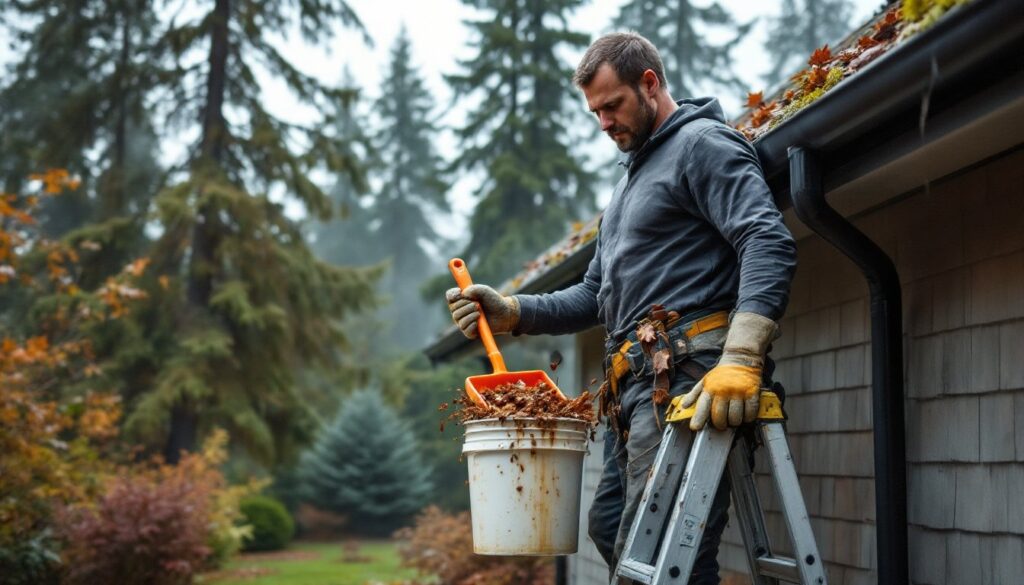
Step 2: Scoop out leaves, pine needles, and sludge by hand or with a gutter scoop. Drop debris into your bucket, don’t toss it onto the ground below, where it’ll need raking later. Decomposed organic matter (black sludge) should come out completely: it holds moisture against the gutter bottom and accelerates corrosion in aluminum gutters.
Step 3: Once a section is clear, flush it with a garden hose. Start at the far end and work toward the downspout, checking that water flows freely. If water pools or drains slowly, the gutter may have improper slope, it should pitch at least ¼ inch per 10 feet toward downspouts.
Step 4: Clear downspouts from the top. If water doesn’t exit the bottom freely, insert a plumber’s snake or use a leaf blower to dislodge clogs. For stubborn blockages, disconnect the downspout elbow at the bottom and flush upward with a hose. Homes using project planning tools often budget 3-4 hours for a typical single-story home’s full gutter system.
Step 5: Inspect gutter hardware while you’re up there. Check for loose spikes or hidden hangers, sagging sections, and rust spots. Aluminum gutters can develop pinholes after 20-25 years, especially if cleaning has been neglected. Replace sections showing visible holes or severe corrosion, patching is a temporary fix at best.
Step 6: Check that downspout extensions direct water at least 6 feet from the foundation. Many Gig Harbor homes have clay-heavy soil that doesn’t drain well, so proper grading and downspout placement are critical.
When to Hire a Professional Gutter Cleaning Service
Some situations call for a pro, not a ladder and a Saturday morning. If your home is taller than two stories, has a steep roof pitch, or features complex rooflines with multiple valleys, the fall risk outweighs the cost savings of DIY work.
Professional gutter cleaning in Gig Harbor typically costs $120-$250 for a single-story home and $200-$400 for two stories, depending on linear footage and gutter condition. Homes with extensive tree coverage or gutter guards that need removal and reinstallation will be at the higher end. According to data from renovation cost guides, the national average is $160, but Pacific Northwest rates run slightly higher due to the frequency of service needed.
Hire a pro if you have physical limitations, lack a proper extension ladder, or simply don’t feel comfortable working at height. Many homeowners misjudge ladder safety and end up injured.
Look for licensed and insured contractors. In Washington State, gutter cleaning doesn’t require a contractor’s license, but reputable companies carry general liability insurance and workers’ comp. When comparing top-rated gutter cleaning professionals in Gig Harbor, check reviews for mentions of punctuality, thoroughness (did they flush downspouts?), and cleanup.
Avoid door-to-door solicitors offering rock-bottom prices. Fly-by-night operators may damage gutters, skip downspout flushing, or leave debris scattered across your yard. A legitimate company will provide a written estimate and proof of insurance before starting work.
Some pros offer seasonal maintenance contracts: two or four cleanings per year at a discounted rate. For homes in heavily wooded areas, this can be worth the cost to ensure gutters stay clear year-round.
Preventative Maintenance Tips to Keep Gutters Clear Longer
Prevention reduces the frequency and difficulty of gutter cleaning. Start by trimming tree branches that overhang the roofline, branches should be at least 6-10 feet away from gutters to minimize debris drop. For Gig Harbor homes near conifers, this won’t eliminate pine needles entirely, but it will reduce volume significantly.
Gutter guards are a common solution, but they’re not foolproof. Mesh screens and foam inserts can trap small debris and create maintenance headaches. Reverse-curve guards (like Gutter Helmet) and micro-mesh systems (such as LeafFilter or Raptor) perform better in the Pacific Northwest’s needle-heavy environment, but they add $1,500-$3,000+ to gutter costs depending on home size. No guard eliminates cleaning entirely, you’ll still need annual inspections and occasional top-surface cleaning.
If installing guards, choose stainless steel micro-mesh over plastic. Plastic guards become brittle in UV exposure and can crack within 5-7 years. Aluminum mesh is mid-grade: stainless is the longest-lasting option.
Flush gutters with a hose between full cleanings. A quick rinse every few months prevents organic matter from compacting into cement-like sludge. This five-minute task can extend the time between deep cleanings.
Inspect and clear roof valleys and behind chimneys. These areas collect debris that eventually washes into gutters during heavy rain. Use a roof rake (telescoping pole with a blade) to pull leaves off the roof without climbing.
Check gutter slope annually. Gutters settle over time as hangers loosen or fascia boards rot. If you notice standing water in the gutter trough after rain, rehang the affected section with hidden hangers spaced every 24 inches for proper support. Aluminum gutters are forgiving, but improper slope causes premature failure.
Finally, monitor your home’s exterior for early warning signs: staining on siding below the gutter line, erosion channels near the foundation, or water marks on fascia boards. Catching these early prevents expensive repairs down the line. Gig Harbor’s wet climate is unforgiving, staying ahead of gutter maintenance protects your home’s structure and value.