Table of Contents
ToggleStanding on a ladder with a bucket and trowel isn’t the only way to clean gutters anymore. A gutter cleaning hose attachment turns an ordinary garden hose into a ground-based cleaning system, letting homeowners tackle clogged gutters without climbing. These tools use water pressure to flush out leaves, pine needles, and debris from the ground or a stable platform. They won’t replace manual scooping for severely packed gutters, but for regular maintenance, especially on single-story homes, they’re fast, affordable, and safer than repeated ladder trips. This guide covers how they work, which designs perform best, and how to use them effectively.
Key Takeaways
- A gutter cleaning hose attachment eliminates the need for repeated ladder climbs by using water pressure to flush debris from the ground or a stable platform.
- Gutter cleaning hoses work best for routine maintenance and minor to moderate buildup; severely packed gutters still require manual scooping before using the hose.
- Choose a J-hook nozzle for single-story homes under $20, or invest in a telescoping wand ($30–$60) to reach second-story gutters safely without a ladder.
- Always wear safety goggles and waterproof gloves, keep water streams away from power lines, and use a ladder with proper stabilization if needed for upper-level work.
- Work in overlapping 5–10 foot sections, start at downspouts, and flush the system completely to ensure water drains without pooling.
What Is a Gutter Cleaning Hose and How Does It Work?
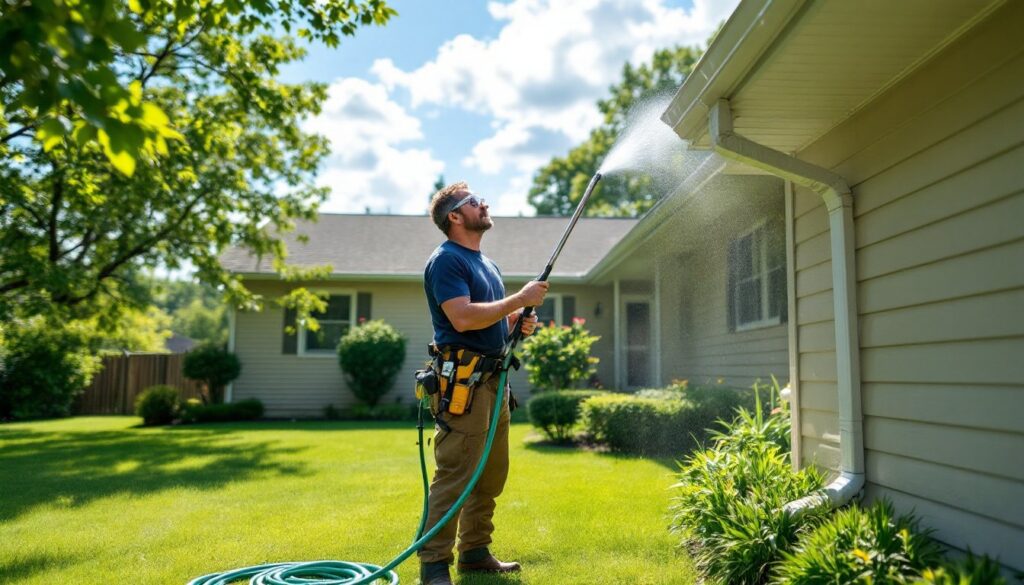
A gutter cleaning hose is a specialized nozzle or wand attachment that connects to a standard garden hose. It delivers a focused jet of water upward and into the gutter channel, flushing debris toward the downspout. Most models use a curved or angled nozzle that extends over the gutter edge, allowing the user to stand on the ground or a low step while directing water flow.
The cleaning action relies on water pressure, typically 40 to 80 psi from a residential supply line. Higher pressure moves wet leaves and sludge more effectively, but even moderate pressure works for routine maintenance. The nozzle design creates a concentrated stream that scours the gutter bottom without requiring the user to see inside the channel.
These tools work best on gutters with minor to moderate buildup. If gutters are packed solid with compacted organic matter or contain roofing granules, they may need manual scooping first. A hose attachment won’t clear heavy blockages, but it’s ideal for quarterly or bi-annual maintenance to prevent clogs from forming. The system also rinses downspouts, helping identify clogs that need auger work or disassembly.
Most attachments fit a standard ¾-inch garden hose coupling and don’t require tools for installation. Some models include a shut-off valve at the handle, which is useful when repositioning between sections. Expect to get wet, overspray and dripping are part of the process, so work on a dry day and wear old clothes.
Types of Gutter Cleaning Hose Attachments
Telescoping Wand Attachments
Telescoping wands extend from 4 to 12 feet or more, giving users the reach to clean second-story gutters from the ground. These consist of multiple rigid or semi-rigid tube sections that lock into place at various lengths. The wand connects to the garden hose at the base, with the spray nozzle mounted at the tip.
Advantages:
- Reach two-story gutters without a ladder
- Adjustable length lets you work close on single-story homes or extend for upper levels
- Some models rotate the nozzle angle via a twist mechanism
Drawbacks:
- Longer wands become unwieldy, water weight and leverage make them hard to control above 10 feet
- Joints can leak if O-rings wear out
- Aluminum or fiberglass poles are lighter than plastic but cost more
Telescoping designs work well for homes with clear sight lines to the roofline. If trees or architectural features block your angle, you may still need a ladder for spot cleaning. The DIY PVC pipe gutter tool offers a budget alternative using hardware store materials, though it lacks the adjustability of commercial wands.
Curved and J-Hook Nozzle Designs
Curved nozzles, often called J-hooks or gutter wands, feature a rigid bend that directs the spray backward into the gutter while the user stands below. The hook shape clears the gutter lip and aims water along the channel bottom. These are typically 3 to 5 feet long and work best on single-story homes or from a stable stepladder on multi-story buildings.
Advantages:
- Simple, no moving parts to fail
- Lightweight and easy to maneuver
- Inexpensive (often under $20)
- Direct line of sight to the spray pattern
Drawbacks:
- Limited reach, requires a ladder for upper gutters
- Fixed angle may not fit all gutter profiles (especially on homes with wide fascia boards)
- No shut-off valve on basic models
J-hook nozzles excel at close-range work where the user can see and adjust the spray. They’re the go-to for ranch-style homes, sheds, and garages. If you’re already comfortable on a ladder and your home is one story, a curved nozzle is usually the most effective tool.
How to Choose the Right Gutter Cleaning Hose for Your Home
Home height is the first decision point. Single-story homes under 10 feet at the roofline do fine with a basic J-hook nozzle. Two-story homes (18 to 20 feet) need a telescoping wand with at least 10 feet of extension: factor in your own height and arm reach when calculating.
Water pressure matters more than most assume. If your home has low pressure (below 40 psi), a telescoping wand may not generate enough force at full extension. Check static pressure at an outdoor spigot with a gauge (available at hardware stores for under $15). High-pressure nozzles (labeled for pressure washers) won’t fit a standard garden hose without an adapter and may damage older gutters.
Gutter type and condition also influence the choice. K-style gutters (the common residential profile with a flat back and decorative front) work with any attachment. Half-round gutters may require a narrower nozzle to avoid splashing over the curved edge. If gutters are dented, sagging, or have loose brackets, address those issues first, aggressive water flow can worsen damage.
Material and build quality vary widely. Brass and stainless steel nozzles outlast plastic, especially at connection points. Telescoping poles in aluminum or fiberglass resist bending better than thin-wall PVC. Rubber-coated grips reduce hand fatigue. Avoid attachments with thin, proprietary fittings that won’t accept a standard hose washer.
Extras to consider:
- On/off valve at the handle (reduces trips to the spigot)
- Nozzle angle adjustment (useful for varying gutter depths)
- Brush or scraper tip (some models include a physical agitator for stubborn buildup)
Budget $15 to $25 for a basic J-hook, $30 to $60 for a quality telescoping wand. Spending more on durable materials pays off if you clean gutters twice a year or more.
Step-by-Step Guide to Cleaning Gutters with a Hose
1. Inspect and Prepare
Walk the perimeter and note visible problem areas, sagging sections, overflowing downspouts, or plant growth. Remove large debris by hand if accessible (use a ladder and gloves for this step). Check that downspouts aren’t fully blocked: if water won’t drain at all, clear the downspout opening before using the hose.
2. Attach the Hose and Test Pressure
Thread the gutter cleaning attachment onto the hose, hand-tight plus a quarter turn. Turn on the water and check for leaks at the connection. Adjust pressure at the spigot if the spray is too weak or too forceful. For telescoping wands, extend to the working length and lock the sections before turning on the water.
3. Start at a Downspout
Position yourself directly below or slightly to the side of a downspout. Aim the nozzle into the gutter, directing the spray toward the downspout opening. Work backward along the gutter, moving the stream in a sweeping motion to push debris. You’ll see material flush out the downspout or pile up at the outlet.
4. Work in Sections
Move 5 to 10 feet at a time, overlapping slightly to avoid missing spots. For telescoping wands, reposition your footing as you go, don’t overreach. If debris clumps and won’t move, the gutter may need manual removal. A curved nozzle lets you walk along the house and treat it like a continuous pass.
5. Flush Downspouts
Once the gutter channel is clear, focus the stream directly into the downspout opening. If water backs up, there’s a clog in the elbow or underground drain line. Use a plumber’s auger or disassemble the downspout to clear it. Never force a hose into a downspout, it can get stuck.
6. Rinse and Inspect
Make a final pass to rinse any remaining silt. Walk the perimeter again and look for standing water, which indicates sags or inadequate slope. Gutters should drain completely within a few minutes. If water pools, the hangers may need adjustment, a separate repair.
Safety Tips and Best Practices for Hose-Based Gutter Cleaning
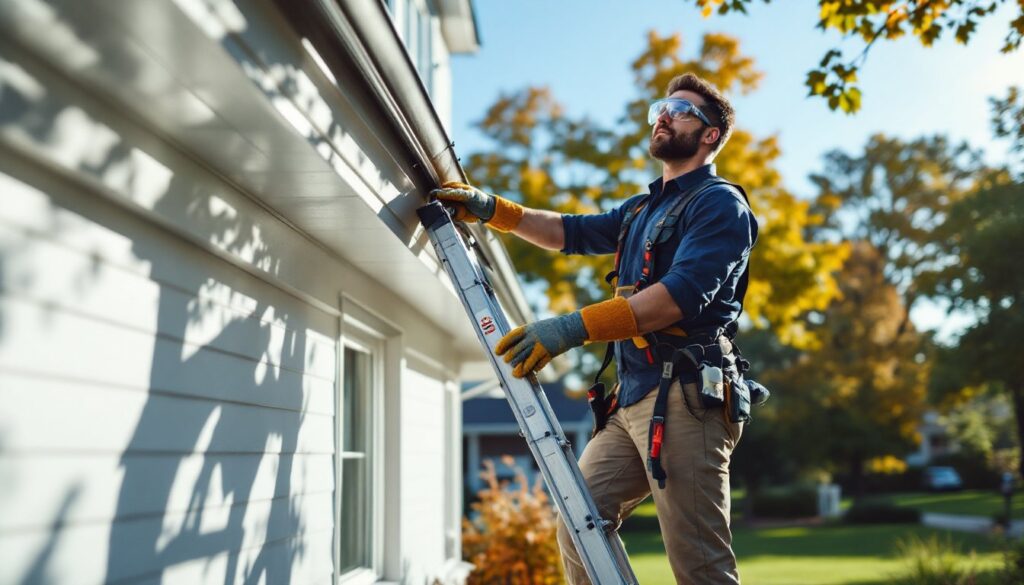
Ladder safety still applies. Even if you’re working from the ground, you may need a ladder for initial debris removal or to reach upper gutters with a telescoping wand. Use a Type I or Type IA ladder rated for your weight plus tool load. Set it on firm, level ground and maintain three points of contact. Never lean a ladder against gutters, use a standoff stabilizer to protect the edge and distribute weight.
Wear appropriate PPE. Safety goggles are non-negotiable, gutter slurry contains bacteria, mold spores, and sharp particles. Waterproof gloves protect against cuts and contamination. Long sleeves prevent splashback from hitting skin. If you’re sensitive to mold, wear an N95 respirator (not a dust mask).
Watch for electrical hazards. Keep the water stream and telescoping poles away from overhead power lines and service drops. Aluminum and wet fiberglass conduct electricity. If the service entrance is near the roofline, stay at least 10 feet clear or call a professional. Don’t clean gutters during a storm or when lightning is possible, wet conditions increase shock risk.
Check for structural issues first. Loose gutter brackets, rotted fascia boards, or rusted hangers can fail under the weight of water and debris. If you notice sags or gaps, repair them before power-washing the channel. Homes built before 1990 may have gutters fastened with spikes and ferrules, which loosen over time: consider upgrading to hidden hangers for better support. For general home improvement advice on gutter repairs, consult a contractor if the structure seems compromised.
Don’t overreach with telescoping poles. Physics works against you at full extension, a 12-foot wand with water pressure becomes a lever that’s hard to control. If you can’t comfortably manage the angle, reposition or use a ladder to get closer. Overreaching causes falls and shoulder injuries.
Mind the mess below. Gutter sludge stains concrete, kills grass, and clogs storm drains. Lay tarps or drop cloths under work areas and hose them off afterward. If you’re flushing onto landscaping, dilute the runoff with additional water to prevent fertilizer burn from decomposed organic matter.
Know when to call a pro. Homes over two stories, those with steep roofs (above a 6/12 pitch), or properties with complex rooflines are safer in professional hands. If you’re uncomfortable with heights or lack the right equipment, the cost of a gutter cleaning service, typically $100 to $250 depending on home size and region, is worth it. You can research local contractor pricing to compare options in your area.