Table of Contents
ToggleSlow drains don’t announce themselves with a bang, they creep up with pooling water, gurgling sounds, and that unmistakable smell. In Orange County, where hard water deposits, aging infrastructure, and landscaping root intrusion are common, clogged drains can go from minor annoyance to plumbing emergency fast. Whether it’s a kitchen sink backing up during dinner prep or a shower that won’t drain, knowing how to tackle clogs yourself, and when to call in help, saves time, money, and a lot of frustration. This guide walks through the most effective DIY methods, the tools worth owning, and the red flags that mean it’s time to bring in a pro.
Key Takeaways
- Hard water mineral buildup and tree root intrusion are the most common drain cleaning challenges in Orange County, requiring understanding of local water chemistry and home age.
- DIY methods like boiling water, drain snakes, and plungers solve 80% of residential drain clogs, but chemical drain cleaners should be avoided due to safety risks.
- Multiple drains backing up simultaneously or recurring clogs in the same location signal serious problems that require professional drain cleaning equipment and video inspection.
- Installing drain screens, never pouring grease down the sink, and monthly hot water flushes are simple preventive maintenance habits that eliminate most clogs before they start.
- Drain clogs that extend beyond 25-50 feet, involve sewage backup, or occur in homes with galvanized steel pipes need licensed plumber intervention with motorized tools and camera equipment.
Common Causes of Drain Clogs in Orange County Homes
Orange County’s water chemistry and building stock create specific drainage challenges that homeowners need to understand.
Hard water mineral buildup tops the list. Orange County’s municipal water supply contains high concentrations of calcium and magnesium. Over time, these minerals accumulate inside galvanized steel pipes (common in homes built before the 1980s) and even PVC, narrowing the passageway and trapping debris. You’ll see white or rust-colored scaling around faucet aerators, that same buildup is happening inside your drain lines.
Tree root intrusion affects older neighborhoods with mature landscaping. Roots from eucalyptus, ficus, and palm trees seek out moisture and can infiltrate clay sewer laterals through microscopic cracks. Once inside, roots expand and catch everything passing through. If multiple fixtures drain slowly or you notice soggy patches in the yard, roots may be the culprit.
Grease and food debris cause most kitchen sink clogs. Even with a garbage disposal, fats congeal as they cool, coating pipe walls and trapping coffee grounds, rice, and fibrous vegetables. The disposal grinds food into smaller pieces, it doesn’t magically dissolve grease.
Hair and soap scum dominate bathroom drains. A single shower can shed 50-100 hairs, and when mixed with soap residue (especially bar soap with tallow), it forms dense mats in the trap and drain line.
Foreign objects account for sudden, complete blockages. Jewelry, cotton swabs, dental floss, “flushable” wipes (which aren’t), and kids’ toys all make regular appearances in drain calls. Wipes are particularly problematic, they don’t break down like toilet paper and can block the entire sewer lateral.
DIY Drain Cleaning Methods That Actually Work
Natural Solutions for Minor Clogs
For slow drains without standing water, start with low-risk methods before moving to mechanical tools.
Boiling water works surprisingly well for grease buildup in metal pipes. Boil a full kettle (about half a gallon) and pour it directly down the drain in a steady stream. Wait five minutes, then flush with hot tap water. Don’t use boiling water on PVC or with standing water in the sink, thermal shock can loosen joints. This method shines for routine maintenance on kitchen drains.
Baking soda and vinegar gets hyped online but has limited effectiveness. Pour half a cup of baking soda down the drain, follow with a cup of white vinegar, cover the drain, and wait 30 minutes. The fizzing reaction helps dislodge light soap scum but won’t touch hair clogs or serious grease. Flush with hot water afterward. It’s gentle enough for weekly use and won’t damage pipes, but don’t expect miracles.
Enzyme drain cleaners use bacteria cultures to digest organic matter over 6-8 hours. Products like Bio-Clean work well for ongoing maintenance and can slowly clear soft clogs, but they need time and won’t help with emergencies. They’re safe for septic systems and won’t corrode pipes, unlike chemical drain cleaners.
Skip the chemical drain openers (sodium hydroxide or sulfuric acid formulas) if possible. They generate heat that can crack older pipes, create toxic fumes, and turn into a caustic mess if the clog doesn’t clear. If you’ve already used one and the drain is still blocked, tell any plumber before they start work, that standing liquid is a safety hazard.
Tools Every Homeowner Should Have for Drain Maintenance
Mechanical tools handle clogs that natural methods can’t touch. These four tools solve 80% of residential drain problems.
Cup plunger (for sinks and tubs): The familiar red rubber plunger with a flat bottom. Fill the sink with 2-3 inches of water to create a seal, cover the overflow opening with duct tape, and plunge vigorously for 15-20 strokes. The pushing motion matters less than the pulling, you’re trying to dislodge the clog, not push it deeper.
Toilet auger (closet auger): A specialized 3-6 foot snake with a protective rubber sleeve. Essential for toilet clogs where a cup plunger fails. Insert the curved end into the toilet trap and crank the handle while pushing forward. Don’t use a standard drain snake in a toilet, you’ll scratch the porcelain.
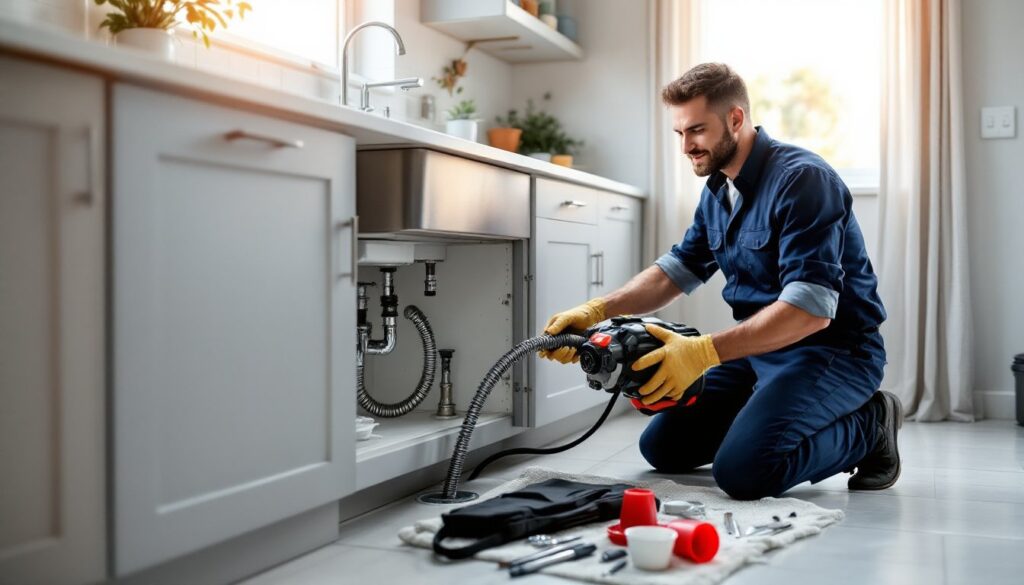
Drain snake (25-foot hand auger): The workhorse for sink, tub, and shower drains. Feed the cable down through the drain opening or by removing the P-trap under the sink. When you hit resistance, push and rotate, don’t just spin in place. You’ll either break through or hook the clog. Pull out slowly to retrieve hair clumps and debris. Clean and dry the cable before storing to prevent rust.
Drain cleaning bladder attaches to a garden hose and uses water pressure to blast clogs. Insert it into the drainpipe (usually after removing the P-trap), and the expanding rubber bladder seals against the pipe walls while pulsing water forward. Effective for clogs 10-30 feet down the line, but requires an outdoor hose connection and works best on 1.5-2 inch pipes. Not for use in toilets.
For tool alternatives, basic drain maintenance techniques can often be performed with items already in most garages.
When to Call a Professional Drain Cleaning Service
Some drain problems sit outside DIY territory. Knowing when to stop and call a licensed plumber prevents property damage and wasted effort.
Multiple fixtures draining slowly signals a main sewer line blockage. When toilets, sinks, and tubs all back up, especially on the lowest floor, the clog is downstream of all your fixtures, likely in the sewer lateral between your house and the street. This requires a motorized drain machine (100+ feet) or hydro-jetting equipment that homeowners don’t own. Don’t pour drain cleaner down multiple drains hoping to fix it.
Sewage backing up through floor drains or toilets is an emergency. This indicates a complete blockage or sewer line failure. Shut off water at the main, avoid using any fixtures, and call for same-day service. Raw sewage creates health hazards and can damage flooring and subfloors within hours.
Recurring clogs in the same location mean you’re treating symptoms, not the cause. If you’re snaking the same drain monthly, the problem could be improper venting (causing air pressure issues), a dip in the pipe (belly) that constantly collects debris, or root infiltration. A plumber can run a video inspection camera through the line to diagnose the actual issue.
Clogs beyond your reach require professional cable machines. Most hand augers max out at 25-50 feet. If the blockage is farther down, common with outdoor cleanouts, basement drains, or cast iron stacks, you need motorized equipment with 75-100 foot cables and more torque.
Cast iron or galvanized steel pipe systems in older homes (pre-1980) corrode from the inside out. If you’re getting frequent clogs and the house is 40+ years old with original plumbing, interior scaling may have reduced the pipe diameter by half. A pro can scope the line and advise whether drain cleaning or repiping makes more sense long-term. When researching local help, resources listing top-rated drain cleaning services provide verified reviews and company ratings.
Chemical drain cleaner already in the line creates a hazardous situation if the clog doesn’t clear. Professionals have protective equipment and know how to safely extract caustic standing water. Always disclose chemical use upfront.
Preventive Maintenance Tips to Keep Your Drains Clear
Routine maintenance beats emergency repairs every time. These habits prevent most residential drain clogs.
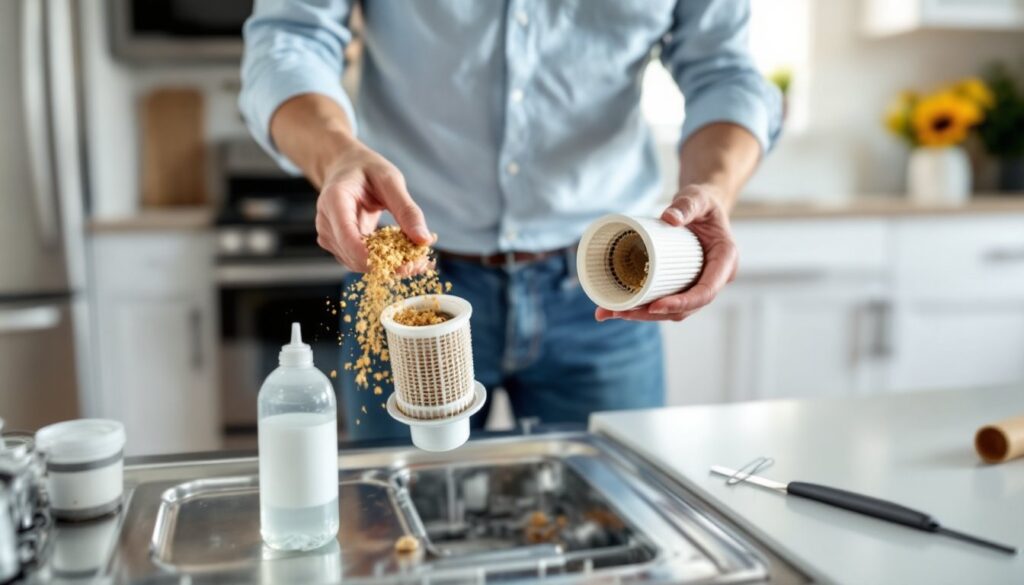
Install drain screens and hair catchers in every sink, tub, and shower. Stainless steel mesh screens (about $5-10 each) catch hair and debris before it enters the trap. Empty them weekly. For tubs, silicone hair catchers sit over the drain and remove easily for cleaning, they’re especially effective in households with long hair.
Never pour grease down kitchen drains. Scrape plates into the trash, wipe greasy pans with paper towels before washing, and pour bacon fat into a container to solidify before disposal. Even hot water and dish soap won’t prevent grease from eventually coating your pipes.
Run hot water after every sink use for 15-20 seconds. This flushes debris through the trap and into the main line before it can accumulate. For garbage disposals, run cold water during grinding (it solidifies grease so the disposal can chop it), then flush with hot water for 30 seconds afterward.
Monthly hot water flush helps maintain clear lines. Once a month, plug all sinks and fill them to the rim with the hottest tap water available. Then release all drains simultaneously, the volume and heat scour the pipes more effectively than regular use. Do this on a Saturday morning before the day’s activities.
Enzyme treatment quarterly keeps organic buildup in check. Pour an enzyme-based drain maintainer down rarely-used drains (guest bathroom, laundry standpipe, basement floor drains) every three months. These drains are prone to trap evaporation and dried biofilm buildup.
Trim trees away from sewer lines. If you have mature trees within 10-15 feet of your sewer lateral, consider a professional root treatment or mechanical root cutting every 2-3 years. The cost estimate tools on sites like HomeAdvisor help budget for preventive sewer maintenance before it becomes an emergency.
Check cleanout access points annually. Outdoor cleanouts (usually a white or black PVC cap at ground level) should be accessible and clearly marked. If you don’t know where yours is, locate it now, you’ll need it during an emergency. Make sure it’s not buried under mulch, pavers, or landscaping.
Conclusion
Most drain clogs in Orange County homes come from predictable causes, hard water buildup, grease, hair, and root intrusion, and respond well to the right tools and techniques. A cup plunger, 25-foot snake, and a set of drain screens handle the majority of routine blockages. But when multiple fixtures back up, clogs recur weekly, or you’re dealing with older pipe materials, that’s the signal to call in a licensed plumber with camera equipment and motorized tools. Pair DIY capability with honest assessment of the problem, and you’ll keep your drains flowing without unnecessary service calls or pipe damage.