Table of Contents
ToggleMost homeowners grab a plunger or bottle of drain cleaner at the first sign of a slow sink. That works fine for minor clogs, hair, soap scum, and food scraps. But when water backs up into the shower while you’re running the washing machine, or the kitchen sink gurgles like a swamp creature, you’re looking at something a $4 bottle of chemicals won’t fix. Professional drain cleaning experts have tools, diagnostic equipment, and training that go far beyond what’s available at the hardware store. Knowing when to stop DIYing and pick up the phone can save you from flooded basements, sewer backups, and expensive emergency repairs. This guide walks through the red flags that signal it’s time to call a pro, what they actually do, how to choose the right one, and what you’ll pay in 2026.
Key Takeaways
- Multiple drains backing up simultaneously or persistent slow drains unresponsive to DIY methods indicate a serious mainline clog requiring professional drain cleaning experts to diagnose and resolve.
- Drain cleaning experts use advanced equipment like video camera inspection and hydro-jetting (up to 4,000 PSI) that far exceed rental tools, reaching 100+ feet into sewer lines to identify structural damage, tree roots, and grease buildup.
- Professional drain cleaners are licensed, insured, and code-compliant, protecting you from liability if pipes are damaged during repairs—something DIY damage leaves you responsible for covering entirely.
- In 2026, expect to pay $100–$250 for simple clogs, $200–$800 for mainline or hydro-jetting services, plus additional costs for emergency service, camera inspection, and complex repairs requiring excavation.
- Preventative maintenance—avoiding grease, using drain screens, monthly enzyme treatments, and annual inspections for homes with trees or old pipes—prevents 80% of emergency calls and costly repairs.
Signs You Need to Call a Drain Cleaning Expert
Multiple drains backing up at once is the biggest red flag. If flushing the toilet causes the bathtub to gurgle or the kitchen sink backs up when the washing machine drains, you’ve got a mainline clog. That’s beyond a single fixture, it’s in the main sewer line or a primary branch.
Persistent slow drains that don’t respond to plunging or enzymatic cleaners often mean buildup deep in the line, grease, mineral deposits, or root intrusion. Surface fixes won’t reach it.
Foul odors coming from drains, especially rotten egg or sewage smells, can indicate a partial blockage trapping organic matter, or worse, a broken sewer pipe venting gases back into your home.
Repeated clogs in the same spot every few weeks mean you’re treating symptoms, not the cause. Tree roots, a bellied pipe (sagging section that traps debris), or corroded cast iron could be the real problem.
Water pooling around floor drains or cleanouts in the basement or garage signals a serious backup. Don’t wait, sewage backups are a health hazard and can cause structural damage.
DIY methods making it worse. If you’ve already snaked a drain and it’s still slow, or if chemical cleaners haven’t worked after two tries, stop. Overuse of caustic chemicals can damage pipes, and improper augering can punch through old cast iron or PVC joints.
What Professional Drain Cleaners Do That DIY Methods Can’t
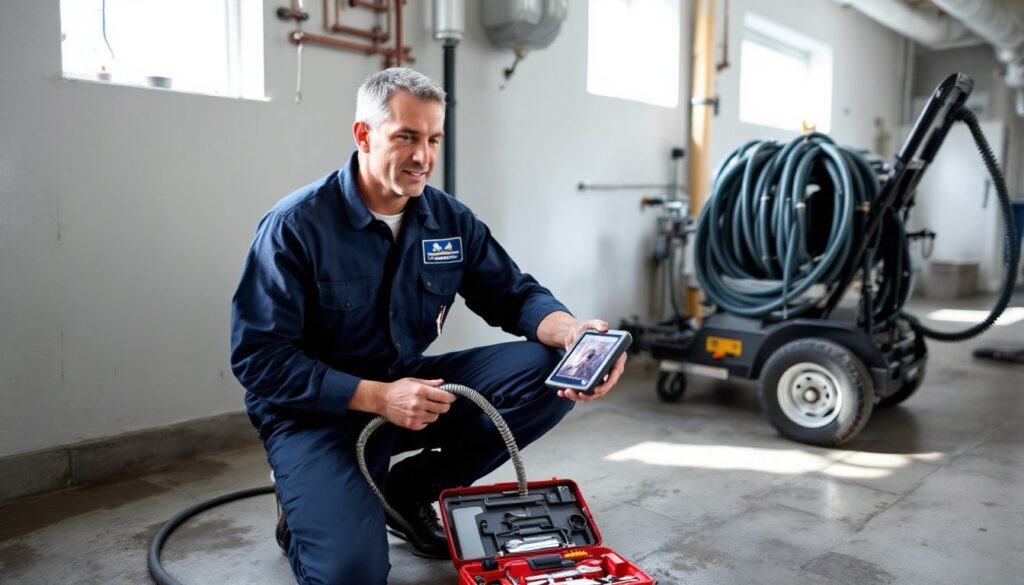
Video camera inspection is the game-changer. Pros use a waterproof camera snake to travel through your pipes and broadcast real-time footage to a monitor. They can pinpoint clogs, cracks, root intrusion, pipe corrosion, and misaligned joints. You see exactly what’s wrong and where, no guesswork.
Hydro-jetting uses high-pressure water (up to 4,000 PSI) to scour pipe walls clean. It removes grease, mineral scale, and even tree roots far more thoroughly than a mechanical snake. Hydro-jetting is especially effective for mainline clogs and chronic buildup in older homes. DIY drain snakes only poke a hole through a clog: hydro-jetting eliminates it.
Professional-grade augers and snakes reach 100+ feet into sewer lines with motors powerful enough to cut through root masses and compacted debris. Rental snakes max out around 50 feet and lack the torque for serious obstructions.
Diagnosis of structural issues. If your pipes are collapsing, offset, or invaded by tree roots, a drain cleaner can document it and provide a scope recording for insurance claims or contractor bids. They’ll tell you whether you need a simple cleaning, spot repair, or full sewer line replacement.
Safety and code compliance. Licensed plumbers know local codes and when a repair requires a permit. They carry liability insurance, so if something goes wrong (like a damaged pipe), you’re covered. Homeowners who damage their own sewer lines can face expensive repairs with no recourse.
How to Choose the Right Drain Cleaning Professional
Check licensing and insurance. Every state requires plumbers to be licensed. Verify the contractor holds a current plumbing license (not just a business license) and carries both liability insurance and workers’ comp. If an unlicensed worker gets hurt on your property, you could be liable.
Look for specialists, not generalists. Some plumbers focus on drain and sewer work: others do new construction or remodels. A specialist will have better equipment (video inspection, hydro-jetting) and more experience diagnosing tough clogs.
Read recent reviews. Check Google, Yelp, and the Better Business Bureau for patterns. One bad review isn’t a dealbreaker, but repeated complaints about surprise charges, no-shows, or shoddy work are red flags. Platforms like HomeAdvisor and Angi vet contractors and offer some recourse if things go sideways.
Get multiple quotes. Most reputable pros offer free estimates for drain cleaning. Compare not just price, but scope, does the quote include video inspection? A written report? A warranty on the work?
Ask about equipment. If a plumber shows up with just a hand snake, they’re not equipped for mainline work. Ask if they have a camera and hydro-jetter on the truck.
Questions to Ask Before Hiring
- “Are you licensed and insured?” Ask for proof. A legitimate contractor will hand over copies without hesitation.
- “Do you offer video camera inspection?” If not, find someone who does. You need to see what’s happening inside your pipes.
- “What’s included in the quoted price?” Clarify whether diagnostics, camera work, and any follow-up visits are covered, or if they’re add-ons.
- “Do you provide a written estimate and warranty?” Verbal promises don’t hold up. Get everything in writing, including a guarantee on the work (common warranties are 30–90 days).
- “What if you find a bigger problem?” Ask how they handle surprises, broken pipes, root intrusion requiring excavation. Will they stop and re-quote, or keep billing by the hour?
- “Can you provide references?” A pro with a solid track record will gladly share contact info for recent customers.
What to Expect During a Professional Drain Cleaning Service
Most drain cleaning calls follow a similar process. The tech will start with an initial assessment, where’s the clog, which fixtures are affected, any visible water damage? They’ll ask about your home’s age, pipe material (cast iron, PVC, ABS, clay tile), and whether you’ve had work done recently.
Next comes access and setup. For mainline clogs, they’ll locate the sewer cleanout (usually a capped pipe in the basement, crawlspace, or yard). If you don’t have one, they may need to pull a toilet to access the line, standard procedure, no need to panic.
Camera inspection happens first if you’ve got recurring or unknown issues. The camera feeds into the line and the tech narrates what they see on the monitor: root intrusion at 35 feet, partial collapse at the junction, grease buildup in the main stack. You’ll get a recording or still images for your records.
Cleaning method depends on the diagnosis. For simple clogs, a motorized auger (snake) may suffice. For grease, scale, or roots, they’ll bring in the hydro-jetter. Jetting is loud and can take 30–90 minutes for a thorough cleaning.
Post-cleaning inspection. A good tech runs the camera again to confirm the line is clear and show you the before-and-after. They’ll also check for any damage caused by the clog or cleaning process.
Cleanup and recommendations. Expect some water on the floor near the cleanout, pros bring towels and a wet vac. They’ll recap what they found, recommend any repairs, and suggest a maintenance schedule (annual jetting for homes with old pipes or big trees nearby).
Total time for a straightforward mainline cleaning: 1–3 hours. Complex jobs (multiple clogs, root removal, pipe repairs) can take half a day or require a follow-up visit.
Cost of Professional Drain Cleaning Services in 2026
Pricing varies widely based on location, severity, and access. Here are typical ranges for common services as of 2026:
- Simple sink or tub clog: $100–$250. Quick auger work, no camera needed.
- Mainline sewer cleaning (snake): $200–$500. Includes locating and augering the main line, usually within 100 feet of the cleanout.
- Hydro-jetting: $350–$800. More thorough than snaking: best for grease, roots, and scale. Price depends on line length and severity.
- Video camera inspection: $100–$300 as a standalone service, often included with hydro-jetting or complex diagnostics.
- Emergency or after-hours service: Add 50–100% to base rates. Weekends and holidays cost more.
- Root removal and pipe repair: $500–$3,000+, depending on whether it’s a spot repair or requires excavation and pipe replacement.
Factors that affect cost:
- Pipe location and access. If the cleanout is buried or non-existent, expect higher labor charges.
- Pipe material and age. Old clay tile or cast iron is fragile and requires gentler methods.
- Regional labor rates. Urban areas and high-cost-of-living regions run 20–40% higher than rural markets.
- Scope of work. A one-time cleaning is cheaper than a full diagnostic with camera, jetting, and a written report.
Get a written estimate before work begins. Reputable contractors won’t start billing until you approve the scope and price. Beware of lowball quotes that balloon into four-figure bills, ask what’s included and what costs extra. Resources like Family Handyman offer cost breakdowns for common plumbing repairs to help you spot outliers.
Preventative Maintenance Tips from the Experts
Pros will tell you that most emergency calls are preventable. Here’s what drain cleaning experts recommend to keep your lines clear:
Never pour grease down the drain. Let it solidify in a can and toss it in the trash. Grease coats pipe walls and traps debris, especially in older cast iron lines.
Use drain screens. Mesh screens over tub and shower drains catch hair before it forms clogs. Empty them weekly.
Run hot water after every sink use. A 30-second hot water flush helps dissolve soap and grease before it cools and sticks.
Monthly enzyme treatments. Unlike caustic chemical cleaners, enzyme-based treatments (available at hardware stores) break down organic buildup without damaging pipes. Pour them down slow drains overnight once a month.
Avoid “flushable” wipes. They don’t break down like toilet paper. Even brands labeled flushable cause clogs in sewer lines and municipal systems.
Schedule annual inspections if you have risk factors. Homes with large trees (roots infiltrate pipes seeking water), cast iron or clay tile sewer lines (prone to corrosion and cracks), or a history of backups should have a video camera inspection every 1–2 years. Catching a small root intrusion early costs $300–$500 to jet: ignoring it until the line collapses can mean a $10,000+ excavation and replacement.
Know where your cleanout is. In an emergency, you or a plumber needs quick access. If your home doesn’t have a sewer cleanout (common in houses built before the 1980s), consider having one installed, cost is typically $300–$800 and makes future service much faster and cheaper.
Be mindful of what goes down the garbage disposal. Fibrous vegetables (celery, potato peels), coffee grounds, and pasta expand and clog drains. Compost them instead.