Table of Contents
ToggleStanding water pooling at the bottom of your dishwasher is never a good sign, and it’s usually fixable without calling in a pro. Whether your dishwasher isn’t washing properly due to backup water or you’re dealing with a full tub that won’t empty, water not draining is one of the most common complaints homeowners face. The good news: most blockages live in places you can reach. This guide walks you through the quickest and most reliable fixes for a dishwasher not cleaning dishes because water is stuck inside, plus those related headaches like water not emptying from the tub or the dishwasher not washing at all.
Key Takeaways
- Water not emptying from a dishwasher is usually fixable at home by checking the drain filter, hose, and disposal connection before calling a professional.
- Clean the drain filter regularly and inspect the drain hose for kinks, blockages, or mineral deposits, as these are the most common causes of poor drainage.
- Verify that the drain hose slopes downward at ¼ inch per foot and that the garbage disposal is functioning properly, since a clogged disposal will back water into the dishwasher.
- Test the drain pump by running a drain-only cycle and listening for a whirring sound; if there’s no noise and water remains in the tub, the pump motor may have failed and require professional replacement.
- Call a professional repair service if standing water persists after basic cleaning, or if you notice burning smells, leaks under the unit, or grinding sounds from the pump.
Check The Drain Filter And Screen
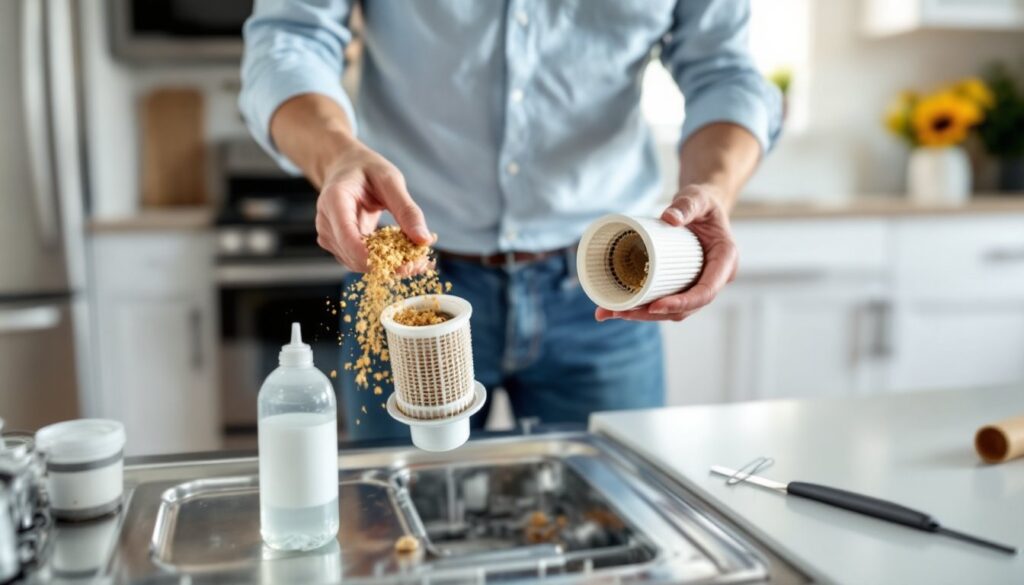
The drain filter sits at the bottom of your dishwasher tub and catches food particles, grease, and debris that would otherwise clog the pump. Over time, this filter gets gunked up, and when it does, water can’t escape, so your dishwasher not cleaning dishes becomes inevitable because the cycle gets cut short or water backs up.
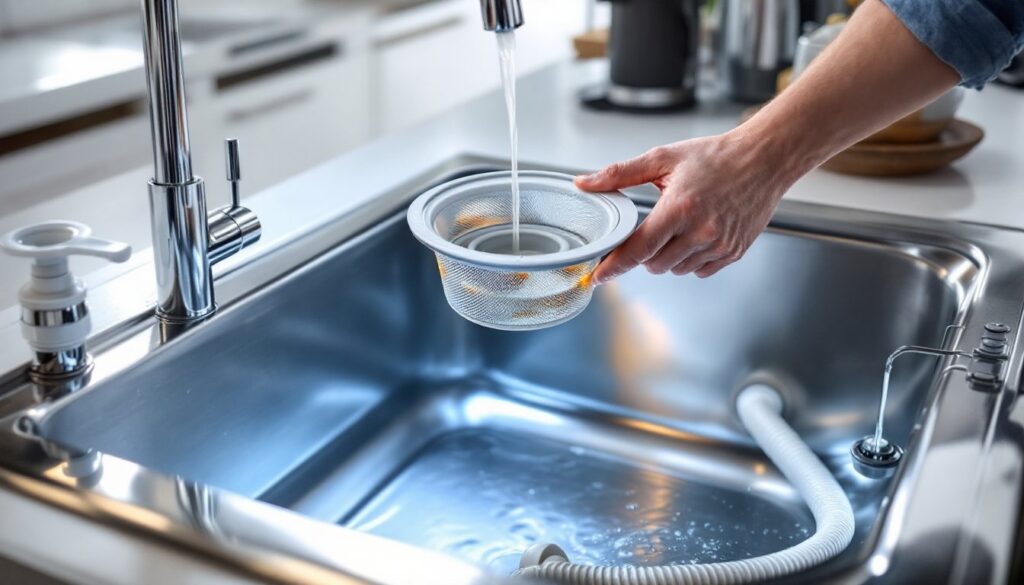
Start by removing the lower spray arm (usually two bolts), then lift out the filter basket. You’ll see a cylindrical filter (sometimes called a strainer) with a fine mesh screen. Hold it under warm running water and scrub away buildup with a soft brush. Pay special attention to the mesh edges where food particles hide. For stubborn gunk, soak the filter in hot water mixed with white vinegar for 15 minutes, then brush again.
While the filter is out, check the drain opening below it, use a flashlight and peer into the hole. If you spot debris blocking the drain pump intake, remove it carefully with needle-nose pliers. Don’t force anything: if it won’t budge easily, stop and move to the hose inspection below.
Reinstall the filter, making sure it seats fully and the spray arm bolts are snug. Run a test cycle on your empty dishwasher to confirm water drains.
Inspect The Drain Hose For Blockages
The drain hose runs from your dishwasher‘s pump to either the garbage disposal or a standpipe, and it’s the most frequent culprit when water isn’t emptying from your dishwasher. Kinks, collapsed sections, or buildup inside the hose all trap water and prevent proper drainage.
First, locate the drain hose under your sink, it’s usually a flexible plastic tube (typically ¾ inch diameter) connected at the dishwasher outlet and the disposal or drain outlet. Check the entire length for sharp bends or kinks that pinch the hose closed. If you find kinks, straighten them gently: don’t yank on the connections.
Next, disconnect the hose at both ends (you may get a small water spill, so have a towel ready). Look inside each end, you’re hunting for mineral deposits, grease buildup, or food blockages. If the hose looks clear, run a plumbing snake (a flexible auger about 25 feet long) through it to dislodge any hidden blockage. Flush the hose with hot water afterward.
When reinstalling, make sure the hose slopes downward (about a ¼-inch drop per foot) from the dishwasher to the drain. A hose that’s too flat or rises at any point traps water. Secure all connections with hose clamps to prevent leaks.
Common Drain Hose Issues
Blockage in the hose connection: Food and grease accumulate where the hose meets the disposal or drain. Disconnect and clean both the hose end and the connection point with a damp cloth or a small brush.
Collapsed hose: Plastic hoses can flatten over time, especially if something’s resting on them under the sink. Replace with a new reinforced drain hose (about $15–30) if the old one is damaged beyond straightening.
Air gap clogged: If your sink has an air gap (a small cylinder on the counter), unscrew the cap, pull out the tube, and rinse it. Air gaps prevent siphoning but they clog easily with food debris.
Clean The Garbage Disposal Connection
If your dishwasher drains into a garbage disposal, a clogged disposal will back up water into your dishwasher. Even if the disposal sounds fine when you run it, buildup inside can slow drainage enough to trap water during the dishwasher cycle.
With the disposal completely unplugged, use tongs or needle-nose pliers to pull out any visible debris, coffee grounds, food scraps, grease clumps. Don’t put your hand in. Plug the disposal back in and run it with cold water for 30 seconds. If water drains slowly or backs up, the disposal itself needs cleaning.
Fill a sink with about 4 inches of water, remove the disposal’s splash guard (if removable), and unplug the unit again. Pour ½ cup of baking soda down the drain, followed by 1 cup of white vinegar. Let it bubble for 5 minutes, this breaks down grease and odors. Boil a kettle of water and slowly pour it down while the disposal is unplugged. Once it cools, plug in the disposal and run it for 30 seconds with cold water.
If the disposal still drains slowly, the problem may be deeper in the main drainpipe, not the dishwasher. In that case, you may need a plumbing snake in the drain arm, or it’s time to call a professional drain service. A properly functioning disposal is critical: otherwise, your dishwasher not washing or water not emptying will keep happening.
Test The Drain Pump And Motor
If the filter’s clean, hose is clear, and the disposal drains fine, but your dishwasher still isn’t draining, the pump itself may have failed. The drain pump is an electric motor that forces water out during the drain cycle. You can test it without taking the dishwasher apart.
Run your dishwasher on the drain-only or rinse-only cycle (check your manual for this option, it varies by model). Listen carefully: you should hear a whirring sound during the drain phase, followed by water flowing out. If you hear nothing and water sits in the tub, the pump motor likely isn’t running.
Check your dishwasher’s model number on the inside edge of the door frame and look up the drain pump assembly cost and access method online. Some models have the pump accessible from underneath: others require removing the front panel. If you’re handy with basic wiring and have an instructables guide to follow, you might replace it yourself, a drain pump assembly runs $80–200 in parts plus your labor. But, if the pump requires soldering connections or removing the tub, call a technician: the dishwasher not draining due to pump failure is one job where professional help often saves time and frustration.
Verify The Check Valve Function
A check valve (or one-way valve) sits in or near the drain hose outlet and stops backflow, it prevents water from the sink or disposal from siphoning back into the dishwasher. If it gets stuck or fails, water can’t drain forward even if the pump is working. The dishwasher not washing properly happens because the cycle gets confused or pressure builds inside.
Locate the check valve by tracing the drain hose where it exits the dishwasher or connects to the disposal inlet (it looks like a small plastic or rubber ball inside a chamber). The valve should swing freely to let water out but prevent backflow. If it’s stuck, try gently tapping the valve housing to free it, sometimes sediment traps the ball.
If tapping doesn’t work, you may need to disconnect the hose and inspect the valve more closely. Check that the ball or flapper inside moves smoothly. If it’s damaged or permanently stuck, the valve must be replaced. Many dishwashers have integrated check valves in the drain pump assembly, so you can’t swap just the valve: you’d replace the whole pump. If the valve is external (a separate part in the hose line), you can replace just that component for $20–50.
Always ensure the check valve is installed in the correct direction (look for a flow arrow printed on the housing). A reversed valve will block all drainage, making your dishwasher not draining at all.
When To Call A Professional Repair Service
If you’ve cleaned the filter, cleared the hose, checked the disposal, listened for pump sounds, and verified the check valve, and water still won’t drain, you’re beyond DIY territory. Internal leaks, a failed control board preventing the pump from running, or damage to the tub or sump area all require professional diagnosis.
Also call a tech if:
• You smell burning or see sparks near the pump area.
• The dishwasher is leaking water under the unit (not just standing water in the tub).
• The pump runs but makes grinding or squealing sounds.
• Your dishwasher is under warranty, opening it yourself may void coverage.
A service call runs $100–150 for diagnosis plus labor for repair. Most fixes (pump replacement, valve replacement, or hose work done by a tech) run $200–600 depending on the model and the problem. Emergency or same-day service costs more.
Before booking, check if your dishwasher is still under warranty or if you have a home repair plan through your insurance or a retailer. Some plans cover appliance repairs with little out-of-pocket cost. Also, consult your dishwasher’s manual or contact the manufacturer’s support line, they can walk you through one more diagnostic step before you pay for service.
When a professional repair service comes out, they have diagnostic tools and factory parts on hand, so the repair is usually faster and safer than troubleshooting alone. Don’t hesitate to call if water sitting in your dishwasher isn’t emptying after basic cleaning, the longer standing water stays inside, the more likely you’ll develop mold or odors that make the problem worse.