Table of Contents
ToggleWhen it comes to gutters service and home protection, copper gutters represent a premium choice that’s stood the test of time. Unlike standard aluminum or vinyl options, copper gutters develop a distinctive patina over time while offering unmatched durability and curb appeal. Homeowners who invest in copper gutters aren’t just solving a drainage problem, they’re enhancing their home’s aesthetic while building in decades of reliable performance. If you’re considering a gutter upgrade or tackling your first gutter protection project, understanding what makes copper special is essential.
Key Takeaways
- Copper gutters last 50+ years with minimal maintenance, making them a premium long-term investment compared to aluminum (20–25 years) or vinyl (20 years) alternatives.
- The distinctive blue-green patina that develops on copper gutters is both aesthetic and functional, providing natural corrosion protection that actually improves the system over time.
- While copper gutters cost $15–25 per linear foot installed, their antimicrobial properties reduce moss and algae growth, and proper gutter protection systems require far less maintenance than other materials.
- Professional installation with seamless copper, custom-formed on-site, is recommended over DIY because soldering seams requires skill, and improper joints are the leading cause of copper gutter failure.
- Always use stainless steel or copper fasteners and hangers to avoid galvanic corrosion—mixing copper with aluminum or galvanized steel accelerates deterioration at contact points.
Why Copper Gutters Stand Out From Other Materials
The Beauty and Durability of Copper
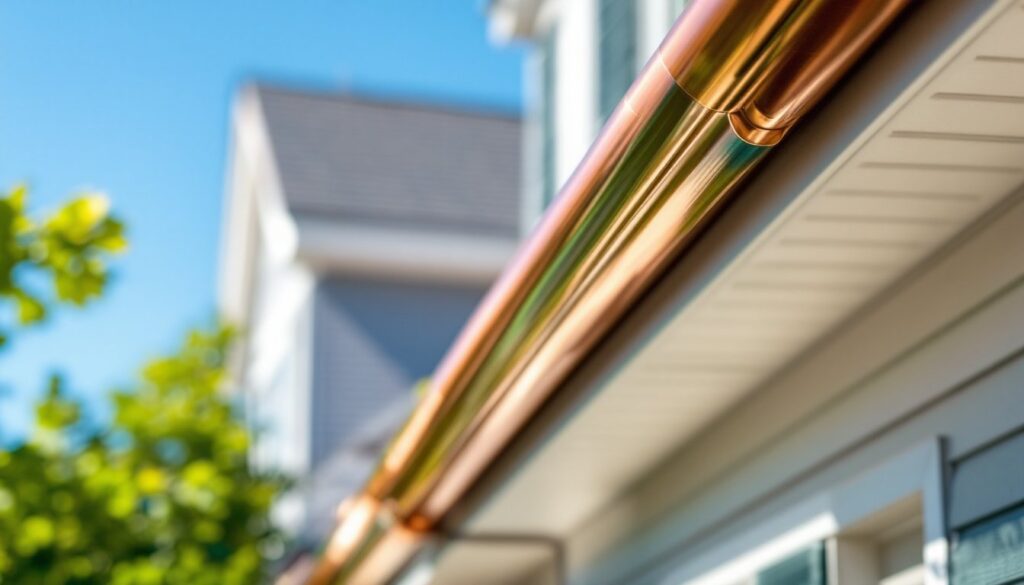
Copper gutters deliver what few other materials can: genuine beauty paired with serious longevity. Unlike aluminum gutters, which dent and fade, or vinyl gutters, which crack in cold weather, copper actually gets more attractive as it ages. The metal naturally develops a blue-green patina, a protective oxidation layer that looks architectural and elegant. This isn’t just cosmetic: the patina actively prevents further corrosion, so your gutters improve with age rather than deteriorate.
Durability-wise, copper gutters typically last 50+ years, often outliving the home itself. Aluminum gutters? Usually 20–25 years. Vinyl? 20 years if you’re lucky. That lifespan difference means fewer replacements, fewer ladder climbs, and genuine peace of mind. Copper is also naturally antimicrobial, so algae, moss, and mildew don’t colonize the surface the way they do on other materials, another maintenance advantage.
The structural strength of copper is another reason it stands apart. At roughly twice the thickness of standard aluminum gutters, copper won’t flex or sag under snow or heavy rain loads. A properly installed copper system handles freeze-thaw cycles without warping, a critical benefit in regions that experience harsh winters.
When comparing options, seamless copper gutters come out ahead in aesthetics, durability, and long-term reliability. While they cost more upfront, the extended lifespan and minimal maintenance mean your total cost of ownership, spread over decades, often beats cheaper alternatives.
Cost Considerations and Long-Term Value
Let’s talk money, because copper gutters aren’t cheap. Seamless copper gutters typically run $15–25 per linear foot installed, compared to $5–10 for aluminum. For a 2,000 sq. ft. home with roughly 160 linear feet of gutters, you’re looking at $2,400–$4,000 in material and labor, a significant investment.
But, that sticker shock deserves context. First, copper’s 50+ year lifespan means you might install them once in your lifetime. Aluminum gutters? You’ll likely replace them twice. Second, copper requires far less maintenance than other materials. No gutter guards needed, minimal debris accumulation (thanks to antimicrobial properties), and no paint touch-ups. Your gutters service costs drop dramatically over time.
Resale value also factors in. Copper gutters signal quality and durability to potential buyers, often adding perceived value to a home. They’re seen as a high-end upgrade, especially in older or historic homes where they match the original architecture.
Consider requesting quotes from at least three local contractors familiar with copper installation. Real-world pricing discussions on professional forums often reveal regional variations and seasonal discounts. Spring and early summer typically cost more: fall might offer better rates as demand drops.
Installation Basics for DIY Homeowners
If you’re handy and experienced with gutter work, a copper gutter installation is technically possible as a DIY project, but it’s not beginner-friendly. Copper is heavy (about 40 pounds per 10 feet), requires precise cutting and fitting, and demands soldering skills to seal seams properly. Most homeowners hire professionals, but understanding the process helps you oversee the work intelligently.
Professional installers typically work with seamless copper, custom-formed on-site to your home’s exact dimensions, which eliminates interior seams where leaks start. If you go DIY with sectional copper gutters, you’ll need to solder joints, a skill that takes practice. Poor solder joints are the leading cause of copper gutter failure.
Basic installation steps include:
- Measure and mark slope – Gutters must slope toward downspouts at 1/16 inch per 10 linear feet. Use a level and chalk line.
- Install hangers – Copper gutters use copper or stainless steel hangers spaced 24 inches apart. Use corrosion-resistant fasteners: galvanized nails will corrode and stain copper.
- Fit sections or gutter stock – Cut to length using a hacksaw or reciprocating saw: copper is softer than aluminum and cuts cleanly.
- Solder seams – Use lead-free solder and flux rated for copper. Heat with a propane torch until the joint flows smoothly. Undersized joints will leak.
- Attach and seal – Use caulk rated for copper to seal hangers and end caps. Ensure downspouts discharge water 4–6 feet from the foundation.
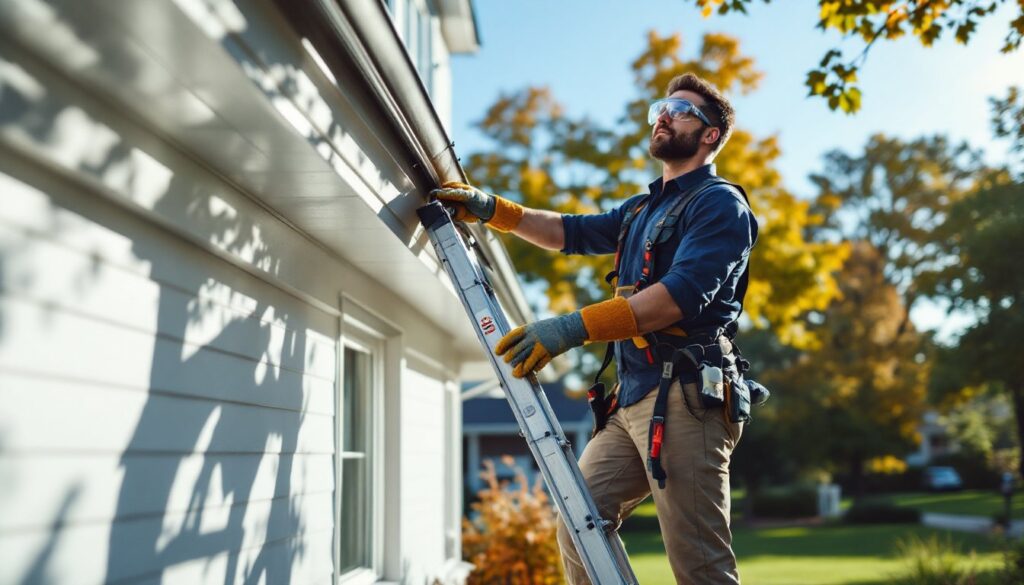
Safety note: Use fall protection equipment (harness, ladder stabilizer) at all times. Wear work gloves, copper edges are sharp. If soldering, wear eye protection and work in ventilated areas.
For most homeowners, hiring a professional gutter contractor is the smarter move. They bring proper tools, scaffolding, and warranty coverage. A professional installation typically takes 1–2 days.
Maintaining Your Copper Gutters
Here’s the good news: copper gutters require surprisingly little maintenance compared to other materials. The antimicrobial properties mean you won’t deal with moss or algae blooms like you would with aluminum or vinyl. That said, a little seasonal care keeps them performing optimally.
Spring and fall cleanings – Even copper gutters collect leaves and debris. Schedule two cleanings annually: late spring (after pollen season) and late fall (after leaves drop). A simple scoop-and-rinse with a hose typically does the job. If your roof has heavy tree coverage, add a midsummer cleaning.
Inspect seams and fasteners – Check soldered seams and hanger connections yearly for any signs of separation or corrosion. Copper rarely corrodes, but fasteners and adjacent materials might. Tighten loose fasteners with stainless steel screws.
Patina management – Your copper will develop a protective blue-green patina over 3–5 years. Some homeowners love this aged appearance: others prefer to maintain the bright copper finish. If you want to keep copper shiny, gently clean with mild soap and water, avoid harsh chemicals or abrasive scrubbing that damages the patina once formed.
Downspout care – Ensure downspouts remain clear and direct water at least 4–6 feet from your foundation. Clogged downspouts defeat the entire gutters protection system. Consider adding gutter guards if leaf accumulation is heavy in your area.
Copper-specific note – Never paint copper gutters unless the finish is already compromised. Paint traps moisture against the metal and accelerates corrosion. If you must paint, use a primer designed for copper.
Proper maintenance extends the life of your gutters and keeps them looking excellent for decades.
Common Challenges and How to Address Them
Even though their advantages, copper gutters can present specific challenges worth understanding upfront.
Incompatible metals and corrosion – Copper reacts unfavorably with aluminum, galvanized steel, and some fasteners. Always use stainless steel or copper hangers and fasteners. Mixing metals accelerates corrosion at the contact points. This is a common installation mistake that homeowners discover years later.
Patina staining – As copper ages, the patina can leave blue-green stains on siding, especially light-colored paint or stone. This isn’t damage, it’s surface staining from water runoff. You can minimize it with a copper roof protectant (applied during early patina formation) or by ensuring gutters are well-sealed so water doesn’t drip onto siding. Some homeowners accept patina staining as part of the copper aesthetic.
Soldering failures – If you DIY or hire an inexperienced installer, poor solder joints will leak. Soldering requires heat control and technique: undersized or cold joints fail within months. Always hire installers certified in copper gutter work.
Cost surprises – Complex roof lines, multiple levels, or difficult-to-reach sections add labor costs. Get detailed quotes upfront. A complete gutter cleaning and maintenance guide for your specific region can help you anticipate climate-driven challenges.
Thermal expansion – Copper expands and contracts with temperature changes. Proper installation accounts for this with slotted hangers that allow slight movement. If installed too rigidly, the metal can twist or buckle over decades.
Conclusion
Copper gutters represent a long-term investment in your home’s protection and appearance. While the upfront cost is higher than aluminum or vinyl, the 50+ year lifespan, minimal maintenance, and aesthetic value make them worthwhile for homeowners committed to quality. Understanding installation requirements, maintenance routines, and potential challenges helps you make an well-informed choice. Whether you hire a professional for gutters service or manage maintenance yourself, copper delivers reliable drainage and timeless beauty for decades.