Table of Contents
ToggleA dishwasher sitting with standing water at the bottom is one of those problems that makes you want to call a professional immediately, but chances are, you can fix it yourself. Water pooling in the tub, a backup into the sink, or the unmistakable funk of stagnant water means drainage has stalled. The good news: dishwasher water not draining is rarely a catastrophic failure. Most often, it’s a clogged filter, kinked hose, or jammed valve that’s stopping the flow. This guide walks you through five quick fixes to get your dishwasher draining properly again, starting with the simplest checks and moving to slightly trickier components. You won’t need special tools or a service call for any of these.
Key Takeaways
- Dishwasher water not draining is usually caused by a clogged filter, kinked hose, or jammed valve—most of which you can fix yourself without professional help.
- Clean the drain filter regularly by rinsing it under hot water and using white vinegar to dissolve stubborn buildup, as food particles and grease accumulate over dozens of wash cycles.
- Check the drain hose for kinks, pinches, or internal blockages, and straighten it to maintain a gentle downward slope toward the drain for proper water flow.
- Test the drain valve by manually moving its flapper and soaking the valve housing with white vinegar if mineral deposits are preventing smooth operation.
- Clear your air gap or garbage disposal connection, as clogs in these points directly prevent dishwasher drainage and can be cleaned with hot water and vinegar.
- Call a professional if you encounter electrical issues, hear unusual pump noises, or still have backup after completing all five troubleshooting steps.
Check the Drain Filter and Strainer Basket
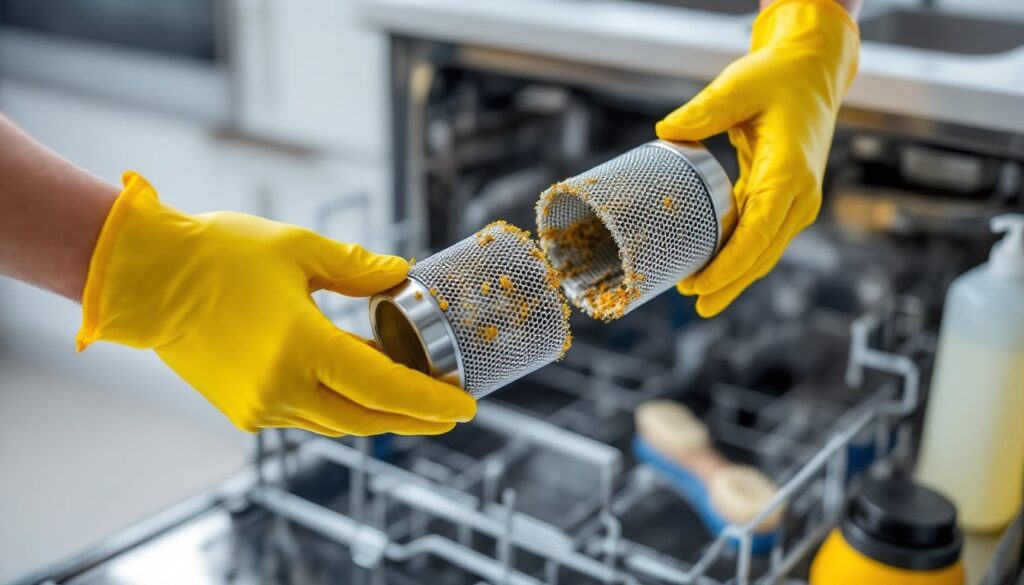
The drain filter is the most common culprit when a dishwasher is not cleaning properly or water refuses to drain. Food particles, grease, and debris accumulate here over dozens of wash cycles, creating a solid blockage that traps water.
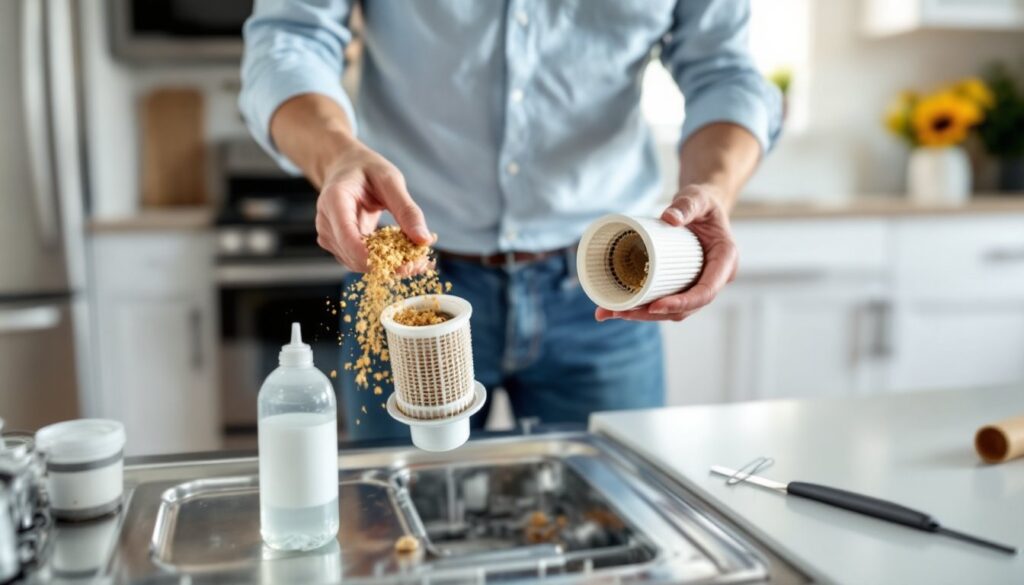
Start by pulling out the lower rack and locating the filter assembly at the bottom center of the tub. Most filters are either a cylindrical cartridge or a basket-and-cup combo. Unscrew or unclip the filter (check your manual if you’re unsure about your specific model). Once removed, rinse it under hot running water, scrubbing away any buildup with an old toothbrush or soft-bristled brush. For stubborn gunk, soak it in warm water mixed with white vinegar for 10–15 minutes, then scrub again.
While the filter is out, peer into the drain area below it. You’ll likely see the drain pump inlet, a small opening where water flows downward. Check for debris, bits of glass, or food lodged there. Use a flashlight if needed. A wet cloth or your fingers (wear gloves) can pull out visible blockages. When you’re satisfied the filter and drain area are clear, rinse the filter once more, reinstall it, and run a short test cycle with no dishes to confirm water drains.
If your dishwasher is not cleaning dishes even after filter cleaning, the pump may need deeper attention, but filter maintenance is the first and most essential step. How to clean your Whirlpool dishwasher filter covers detailed techniques for stubborn buildup.
Inspect and Clear the Drain Hose
The drain hose is a rubber or plastic tube running from the dishwasher‘s pump outlet to either your kitchen sink drain, an air gap, or your garbage disposal. If this hose is kinked, crushed, or clogged, water backs up inside the tub.
Look for Kinks or Blockages
Pull the dishwasher out slightly (turn off power first and shut off the water supply valve beneath the sink if you’re working on the connections). Trace the drain hose from the back of the machine to where it exits, usually underneath the sink cabinet. Look for obvious kinks, pinches, or sections where the hose folds at a sharp angle. If you spot a kink, straighten it carefully by hand. Sometimes the hose gets trapped behind a cabinet frame or pinched by the dishwasher’s own weight: gently reposition it to allow a gentle downward slope toward the drain.
Next, check for internal blockages. Disconnect the hose from the drain or garbage disposal (have a bucket ready, there may be trapped water). Use a flashlight to peer through the hose. If you see a blockage, a straightened wire coat hanger or a plumbing snake can dislodge it. Feed the snake gently through the hose, twist slightly, and pull back. Repeat until water flows freely through the hose when you pour a bit of water into it.
After clearing, reconnect the hose securely, a loose connection allows air leaks that disrupt the siphon and prevent proper drainage. Drain cleaning DIY guides explain how mineral deposits and food buildup accumulate in drainage systems, much like what happens inside a dishwasher hose over time.
Examine the Drain Valve and Pump
If the filter is clean and the hose is clear, the problem may lie with the drain valve or pump itself. The drain valve is a small solenoid-operated flapper inside the dishwasher that opens to let water exit during the drain cycle. When it malfunctions, water stays trapped.
Access the drain valve by removing the lower spray arm and filter assembly (which you’ve already done). Look beneath the filter housing for a small plastic valve body, it usually has two wires attached. Check that the wires are firmly connected and show no corrosion or damage. If they’re loose, reconnect them: if they’re corroded, the valve may need replacement, which requires ordering a part and some disassembly.
You can test whether the valve is stuck by manually moving its flapper (consult your manual for the exact location and design). With the dishwasher powered off, gently push or wiggle any moving parts you can safely access. Sometimes mineral deposits prevent smooth movement. Soak the valve housing area with white vinegar using a spray bottle, let it sit for 20 minutes, and try again. If movement is restored and water drains, the valve may have just been temporarily stuck.
The drain pump itself, a small motor connected to the valve, can also fail. Signs include an unusual grinding noise or no water movement at all even though filter cleaning. Pump replacement is a mid-level repair that’s best left to a technician, but before calling, rule out simpler fixes first.
Clean the Air Gap or Garbage Disposal Connection
If your dishwasher drain hose connects to an air gap (a small cylinder on your countertop near the sink), or if it drains into a garbage disposal, these connection points can clog and block water flow.
An air gap prevents the drain hose from siphoning dirty water back into the dishwasher, it’s a safety device. To clean it, unscrew the decorative cap on top and lift out the strainer basket inside. You’ll see gunk accumulated in the chamber. Rinse it thoroughly and use a small brush to scrub the inner walls. Pour a mixture of hot water and vinegar down the opening, let it sit briefly, and flush with hot water. Reconnect the basket and cap.
If your dishwasher drains directly into a garbage disposal, a clogged disposal means backed-up dishwasher water. Run the disposal alone (without the dishwasher) to test it. If it’s jammed, turn it off, remove any visible debris by hand (with the breaker switched off), and try again. For persistent clogs in either scenario, you can use professional drain cleaning approaches that work in residential kitchens, though basic plunging often clears disposal blockages.
Once the air gap or disposal is clean and flowing freely, your dishwasher should drain properly. Test with a short cycle to confirm.
When to Call a Professional Repair Service
If you’ve completed all five checks and your dishwasher water is still not draining, or if you encounter a problem you’re unsure about, it’s time to call a professional. A few scenarios warrant immediate professional attention:
Electrical issues or water under the machine. If you notice water pooling beneath the dishwasher even though dry drain lines, or if you see signs of electrical shorts (burned smells, sparking), power off the unit and call a technician. Don’t attempt further diagnosis yourself.
Pump failure or motor noise. A loud grinding, squealing, or rattling from the pump area during the drain cycle suggests internal damage. Parts like the pump motor or solenoid valve can fail electrically or mechanically, and replacement requires technical skill.
Persistent blockages in branch drain lines. If the problem isn’t in the dishwasher itself but in your home’s drain system, you’ll need a plumber with a drain camera or power snake to locate and clear blockages deeper in the line. Professional resources like Today’s Homeowner outline when homeowner troubleshooting reaches its limit.
Warranty and safety. Some repairs, especially on high-end or newer models with electronic controls, may void your warranty if not performed by an authorized service center. Check your manual before opening panels or replacing components.
A service call costs $100–$200 for diagnosis alone, but it’s a worthwhile investment if you’re uncertain. A professional can identify problems in minutes that might take you hours to diagnose.
Conclusion
Dishwasher water not draining is frustrating, but most causes are simple fixes you can handle at home. Start with the filter, check the hose, test the valve, and verify your air gap or disposal are clear. These steps solve the vast majority of drainage problems without special tools or expertise. If you’ve worked through all five checks and water still backs up, a professional can pinpoint what your inspection missed. Either way, addressing the issue promptly prevents mold, odors, and further damage to your dishwasher.