Table of Contents
ToggleRichmond’s climate throws a lot at your gutters, spring pollen from the flowering trees, summer thunderstorms that dump inches of rain in minutes, fall leaves from all those oaks and maples, and occasional winter ice. If those gutters aren’t clean and flowing freely, that water’s going somewhere it shouldn’t: behind your siding, into your basement, or straight down to undermine your foundation. Gutter cleaning isn’t glamorous, but it’s one of those maintenance tasks that saves you thousands in repair bills. Whether you’re climbing the ladder yourself or hiring it out, understanding when, how, and why to clean your gutters in Richmond, Virginia keeps your home dry and your weekends free of emergency calls to a structural engineer.
Key Takeaways
- Gutter cleaning in Richmond, VA should be performed at least twice yearly (late May and November) to prevent water damage to foundations, basements, and structural components caused by the region’s heavy spring pollen and fall leaf debris.
- Clogged gutters in Richmond’s clay-rich soils can lead to foundation movement, ice dams in winter, fascia rot, and pest infestations—problems that are often excluded from insurance coverage as preventable neglect.
- DIY gutter cleaning requires proper safety equipment, a correctly positioned ladder using the 4-to-1 rule, and 2–4 hours per job; professional services in Richmond typically cost $100–$350 depending on home size and condition.
- Richmond homeowners should extend downspouts at least 6 feet from the foundation, inspect for rust and sagging sections, and trim overhanging oak and pine branches to reduce debris accumulation between cleanings.
- High-quality gutter guards and regular maintenance can extend system lifespan to 20–30 years, while neglected gutters require section replacements every 10–15 years plus costly water damage repairs.
Why Gutter Cleaning Is Critical for Richmond Homeowners
Richmond sits in a transition zone, hot, humid summers and enough freeze-thaw cycles in winter to cause real problems. When gutters clog, water overflows and saturates the soil right next to your foundation. Clay soils common in the metro area expand when wet and contract when dry, which leads to foundation movement, cracks, and settlement.
Clogged gutters also create ice dams in winter. Meltwater backs up under shingles, seeps into your attic, and damages insulation and framing. Fascia boards rot when constantly soaked, and carpenter ants or termites love the damp wood. You’ll also see staining on brick or siding from overflow, and landscaping gets hammered by the waterfall effect pouring off a clogged edge.
Insurance claims for water damage due to poor gutter maintenance often get denied, it’s considered preventable neglect. A couple hours of gutter cleaning richmond twice a year beats a five-figure foundation repair or mold remediation project.
When to Clean Your Gutters in Richmond’s Climate
Plan on cleaning gutters at least twice a year: late spring (May) and late fall (November). Richmond’s oak, maple, and pine trees drop debris year-round, but fall leaf drop and spring seed pods are peak clog seasons.
If your property has overhanging trees, especially oaks, which shed leaves, acorns, and tassels, you may need quarterly cleanings. Pine needles are sneaky: they mat together and block downspouts even when the gutters look clear from the ground.
After major storms, do a quick visual check. Summer thunderstorms with high winds deposit twigs and shingle granules in gutters. If you notice water spilling over the edge during a rain event, that’s a red flag to get up there sooner rather than later.
Winter in Richmond is unpredictable. If you’ve got a mild January, it’s worth doing a mid-winter inspection to clear any buildup before the next cold snap. Ice forming in a half-full gutter weighs it down and can pull sections away from the fascia.
DIY Gutter Cleaning: Step-by-Step Guide for Richmond Homes
Essential Tools and Safety Equipment
Before you touch a ladder, gather your gear:
- Extension ladder rated for your weight plus 25% (Type I or Type IA). A 24-foot ladder handles most two-story Richmond homes.
- Work gloves (leather or rubberized grip, gutter sludge is nasty, and sharp metal edges cut).
- Safety glasses to keep debris out of your eyes.
- Gutter scoop or garden trowel for scooping out compacted leaves and sediment.
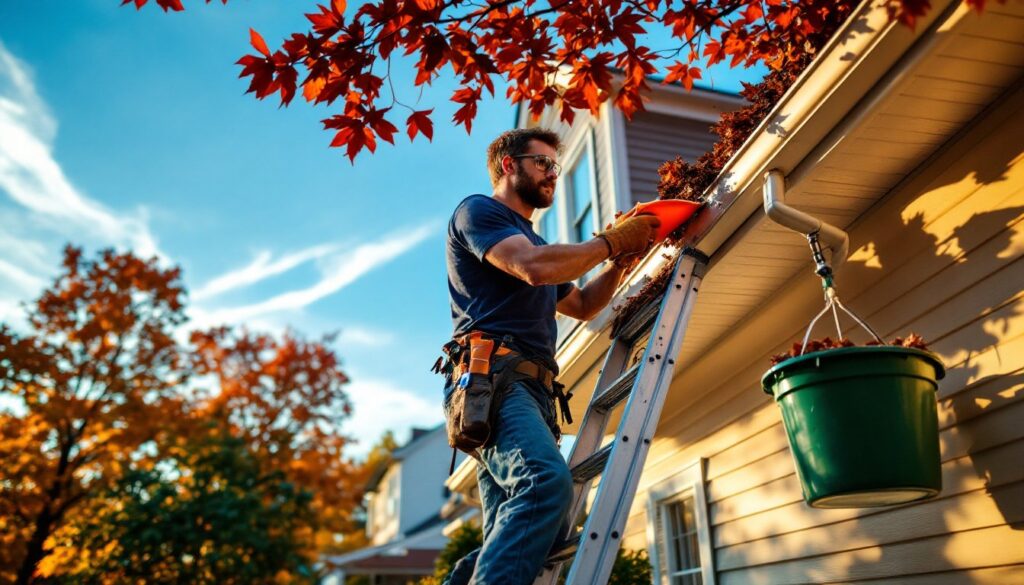
- 5-gallon bucket with a hook to hang on the ladder, or a tarp on the ground below.
- Garden hose with a spray nozzle to flush downspouts.
- Ladder stabilizer or standoff to keep the ladder from crushing gutters and give you better balance.
Safety first: Set the ladder on firm, level ground. Use the 4-to-1 rule, for every four feet of ladder height, the base should be one foot away from the house. Never lean out past the ladder rails: move the ladder frequently. If your roof pitch is steep or you’re uncomfortable with heights, call a pro. A fall from a second-story gutter isn’t worth it.
Step-by-step process:
- Start near a downspout. Scoop out the bulk of the debris, working away from the downspout so you don’t push muck into it.
- Bag the gunk as you go. Wet leaves compact and make great compost, but don’t dump them straight into your yard waste if they’re mixed with shingle grit.
- Flush each section with a hose once cleared. Watch the water flow, if it’s slow, the downspout may be clogged.
- Clear downspout blockages by running water from the top. If that doesn’t work, use a plumber’s snake or disassemble the elbow at the bottom. Tap the side of a metal downspout gently with a rubber mallet to loosen debris.
- Check gutter pitch and hangers while you’re up there. Gutters should slope about ¼ inch per 10 feet toward downspouts. If water’s pooling, you may have a sagging section or a loose hanger.
- Inspect for damage: rust holes, separated seams, or loose spikes. Small holes can be patched with gutter sealant: larger issues need section replacement.
Plan on 2–4 hours for an average single-story ranch, longer for a two-story with multiple downspouts and mature trees overhead. When looking for project planning resources, HomeAdvisor offers calculators and timelines for common maintenance tasks.
Choosing Professional Gutter Cleaning Services in Richmond
If ladders aren’t your thing, or your home’s got tricky roof access, hiring out makes sense. Typical cost for gutter cleaning in Richmond, Virginia runs $100–$250 for a single-story home, $150–$350 for two stories, depending on linear footage, height, and condition. Heavily clogged or neglected gutters cost more because they take longer.
What to look for:
- Licensing and insurance: Virginia doesn’t require a specific gutter cleaning license, but reputable companies carry general liability and workers’ comp. Ask for proof.
- Detailed estimates: A good company inspects before quoting and breaks down what’s included, cleaning, flushing, minor repairs, or gutter guard installation.
- Reviews and references: Check Google, Yelp, or Angie’s List. For Richmond-area providers, many homeowners rely on verified customer reviews to compare local pros.
- Guarantees: Some companies offer a clog-free period or free follow-up if downspouts back up within a set time.
Red flags: Prices way below market (they’re either cutting corners or upselling hard), no insurance, or door-to-door solicitation after a storm. Reputable outfits don’t chase weather events.
Ask if they take photos or video of problem areas, helpful for documenting damage or planning future repairs. Some companies now use drones to inspect hard-to-reach valleys and third-story gutters without extra ladder time.
Common Gutter Problems Richmond Residents Face
Clogging from oak leaves and pine needles: Richmond’s canopy is beautiful but brutal on gutters. Oak leaves are large and slow to decompose: pine needles weave into a mat that blocks water flow even when the gutter looks half-empty.
Sagging or detached gutters: Older homes often have spike-and-ferrule hangers, which loosen over time as fascia wood degrades. Modern hidden hangers are more secure. If you see a sag, the fascia behind it may be rotted and need replacement, that’s not a DIY fix unless you’re comfortable with carpentry and roofing.
Rust and corrosion: Galvanized steel gutters common in pre-1990 homes rust through in 20–30 years, especially at seams and corners where water sits. Aluminum gutters last longer but still dent easily. Copper is premium, lasting 50+ years, but expensive and usually reserved for historic properties or high-end renovations.
Downspout drainage issues: If your downspout dumps onto a concrete patio or right at the foundation, you’re asking for water infiltration. Extend downspouts at least 6 feet from the house with splash blocks or buried drain lines. In Richmond’s clay soils, a properly graded yard and good downspout placement are your best defense against basement moisture.
Gutter guards that don’t work: Cheap mesh screens or foam inserts often cause more problems than they solve, they trap fine debris on top and reduce water flow. High-quality micro-mesh or reverse-curve systems work better but cost $7–$15 per linear foot installed. If you go this route, you’ll still need occasional cleaning, just less often.
Gutter Maintenance Tips to Extend Time Between Cleanings
Trim back tree branches that hang over the roofline. Even a few feet of clearance reduces the volume of debris landing in gutters. Focus on oaks, maples, and pines within 10 feet of the house.
Install gutter guards if you’re dealing with heavy leaf drop. Budget options include snap-in plastic screens ($1–$2 per foot) that keep out large leaves but still require cleaning. Professional micro-mesh systems ($10–$15 per foot installed) are the most effective for Richmond’s mix of leaf litter and pine needles. Check the manufacturer’s maintenance requirements, some guards void warranties if you don’t clean them annually.
Check and clear roof valleys: Debris collects in valleys and washes into gutters during storms. A roof rake or blower clears valleys without climbing up.
Flush gutters twice a year even if they look clean: Sediment and shingle grit accumulate and harden, reducing flow capacity. A quick hose rinse after leaf season prevents buildup.
Seal small leaks immediately: Use a quality gutter sealant (not silicone caulk, which fails in UV and temperature swings). Clean and dry the area first for good adhesion.
Inspect and tighten hangers annually: Gutters sag slowly. Catching a loose hanger before the gutter pulls away saves bigger repairs later. For design ideas and material options for upgraded gutter systems, Houzz features photo galleries and contractor portfolios.
Monitor downspout outlets: If water pools near the foundation or you notice erosion, extend the downspout or add a drainage solution. Richmond’s older neighborhoods often have undersized downspouts (2×3 inches instead of 3×4 inches), upgrading improves flow on homes with large roof areas.
A well-maintained gutter system lasts 20–30 years with minimal intervention. Skip the maintenance, and you’re replacing sections every 10–15 years while dealing with water damage in between. The choice is pretty clear.