Table of Contents
ToggleMiami’s plumbing faces a unique set of challenges that homeowners in drier climates rarely encounter. Between aggressive root systems, high humidity, aging infrastructure, and the occasional tropical storm, drains here work overtime. When water stops flowing properly, it’s more than an inconvenience, it can escalate quickly into costly water damage or sewage backup. Whether dealing with a slow sink or a completely blocked main line, knowing when to tackle the problem yourself and when to call in a professional can save both time and money. This guide covers practical DIY methods, red flags that demand expert help, and how to keep Miami’s unforgiving conditions from turning minor clogs into major headaches.
Key Takeaways
- Drain cleaning in Miami requires awareness of unique regional challenges like aggressive tree roots, limestone bedrock, and high water tables that accelerate clog formation.
- DIY methods like boiling water, baking soda with vinegar, and drain snakes work for minor clogs, but chemical cleaners can damage older pipes common in Miami homes.
- Multiple drains backing up simultaneously, sewage odors, or gurgling sounds are red flags indicating main sewer line issues that demand professional drain cleaning services.
- Choose licensed Miami plumbers who offer hydro-jetting and camera inspections rather than those relying solely on cable snaking for main line blockages.
- Prevent costly repairs by using mesh strainers, avoiding grease disposal down drains, and scheduling professional camera inspections every 2–3 years if large trees are near your sewer line.
- Regular maintenance like monthly boiling water flushes and backwater valve installation in low-lying areas protects Miami properties from water damage and sewage backup during storm season.
Why Miami Homeowners Face Unique Drain Challenges
Miami’s subtropical climate and coastal location create a perfect storm for drain problems. Tree roots, especially from banyan and ficus trees, aggressively seek moisture and nutrients, infiltrating sewer lines through tiny cracks and joints. Once inside, they expand and create blockages that require professional hydro jetting or root cutting.
The region’s limestone bedrock and sandy soil also contribute to settling and shifting foundations, which can crack or misalign older clay or cast-iron pipes. Many homes built before the 1980s still have outdated pipe materials that corrode faster in Miami’s humid, salt-air environment.
Heavy rainfall during hurricane season overwhelms municipal storm drains, sometimes causing backflow into residential lines if backwater valves aren’t installed. High water tables mean drain systems sit closer to saturation levels year-round, making them more susceptible to clogs from grease, hair, soap scum, and debris.
Hard water deposits, though less severe than in some regions, still accumulate over time in pipes and fixtures. Combined with the constant use of air conditioning systems that drain condensate lines, Miami homes cycle more water through their plumbing than most other climates, accelerating wear and buildup.
DIY Drain Cleaning Methods That Actually Work
Natural Solutions for Minor Clogs
For slow-moving drains caused by soap scum or light hair buildup, start with boiling water. Pour a full kettle down the drain in two or three stages, allowing 10-15 seconds between pours. This works best on metal pipes: avoid it with PVC if joints are old or brittle.
The baking soda and vinegar method gets overhyped online, but it can handle light organic clogs. Pour half a cup of baking soda down the drain, follow with half a cup of white vinegar, cover the drain opening, and wait 30 minutes. Flush with hot water. This creates a fizzing reaction that may dislodge minor debris, but it won’t cut through grease or root intrusion.
For grease buildup in kitchen sinks, use dish soap and hot water. Squirt a quarter cup of degreasing dish soap into the drain, then follow with a gallon of boiling water. The soap acts as a lubricant to help grease slide through. Repeat if needed.
Avoid commercial chemical drain cleaners unless absolutely necessary. Products containing sodium hydroxide (lye) or sulfuric acid generate heat that can damage older pipes, especially if the clog doesn’t clear and the chemical sits in the line. They’re also hazardous to handle and can complicate professional repairs if you need to call someone later.
When to Use a Plunger or Drain Snake
A standard cup plunger works for sinks and tubs: a flange plunger is designed for toilets. To use effectively, block the overflow opening with a wet rag (for sinks and tubs), fill the basin with enough water to cover the plunger cup, then use quick, forceful plunges, not slow pumps. The goal is to create suction and pressure waves that dislodge the clog.
For stubborn clogs beyond a plunger’s reach, a drain snake (also called a drain auger) is the next step. A basic 25-foot hand-crank snake costs $15–$30 and handles most residential sink and tub clogs. Feed the cable into the drain, crank clockwise to break through or hook the obstruction, then pull it out. Wear work gloves, the cable can be sharp, and whatever you pull out won’t be pleasant.
For toilet clogs, use a closet auger, which has a protective sleeve to prevent scratching the porcelain. Standard drain snakes can crack toilet traps.
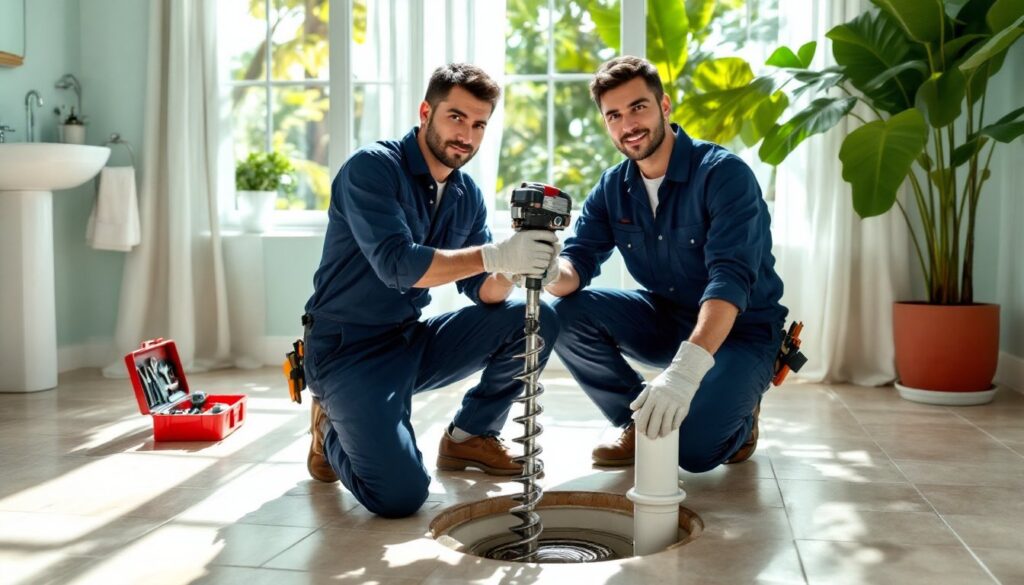
If you’re comfortable with power tools, a drill-powered drum auger speeds up the process but requires more care. Use low speed and steady pressure, forcing it can kink the cable or damage pipes. According to HomeAdvisor, homeowners should expect to spend $100–$275 on a quality powered auger if they plan to use it regularly.
Signs You Need Professional Drain Cleaning Services
Some clogs are beyond DIY reach and ignoring them can lead to pipe damage, sewage backup, or health hazards. Call a licensed plumber if you notice any of the following.
Multiple drains backing up simultaneously suggests a blockage in the main sewer line, not an isolated fixture problem. This often involves tree roots, collapsed pipes, or a clog in the line between your home and the municipal connection. Main line issues require professional equipment like motorized augers or hydro-jetting.
Sewage odors coming from drains indicate a venting problem or a serious clog allowing gases to escape into your home. Sewer gas contains methane and hydrogen sulfide, both hazardous. If you smell rotten eggs or sewage, don’t wait.
Gurgling sounds when you flush a toilet or drain a sink point to a vent blockage or partial clog that’s trapping air in the system. This can stress pipes and seals, eventually causing leaks.
Slow drains throughout the house, not just one fixture, signal a systemic problem. If plunging and snaking individual drains don’t help, the issue likely lies deeper in the system.
Water pooling around floor drains or cleanouts means the system is overwhelmed or blocked. In Miami’s low-lying areas, this can escalate quickly during heavy rain.
Repeated clogs in the same drain after DIY attempts suggest a chronic issue, root intrusion, pipe corrosion, or improper slope. A camera inspection can diagnose the exact problem. Many top-rated drain cleaning companies in Miami offer video inspections as part of diagnostic service.
If you’ve snaked a drain and pulled out roots, fiberglass insulation, or construction debris, stop and call a pro. Those materials indicate structural issues that require more than a cable auger.
How to Choose the Right Drain Cleaning Service in Miami
Picking a plumber in Miami requires more than a quick Google search. Start by verifying licensing and insurance. Florida requires plumbers to hold a state or local license: check credentials through the Florida Department of Business and Professional Regulation. A licensed contractor carries liability insurance and workers’ comp, protecting you if something goes wrong.
Ask about equipment and methods. Hydro-jetting, using high-pressure water to scour pipe interiors, is more effective than cable snaking for grease, scale, and root buildup. If a company only offers snaking for main line clogs, keep looking.
Request a camera inspection before major work. A sewer camera shows exactly what’s blocking the line and the condition of your pipes. This prevents unnecessary digging and ensures the right fix. Some companies include inspection in the service call: others charge $100–$200 separately.
Transparent pricing matters. Reputable services provide upfront quotes, not vague estimates that balloon after the fact. According to cost data from ImproveNet, average drain cleaning in Miami runs $150–$450 depending on severity, with main line work ranging $350–$650.
Check reviews and response times. Platforms like Angi, Google, and Yelp reveal patterns, do they show up on time? Communicate clearly? Handle emergencies promptly? In Miami’s humid climate, a backed-up drain can cause mold growth within 24–48 hours, so response speed isn’t just convenience.
Avoid companies that push chemical treatments or “miracle” solutions. Professional work relies on mechanical cleaning, not harsh chemicals that mask problems temporarily.
Finally, ask if they offer preventive maintenance plans. Regular hydro-jetting or inspections every 18–24 months can catch root intrusion or buildup before it becomes an emergency.
Preventive Maintenance Tips to Keep Your Drains Clear
Preventing clogs is cheaper and easier than fixing them. Start with what goes down your drains. Use mesh strainers in all sinks and tubs to catch hair, food particles, and debris. Empty them weekly, don’t wait until water backs up.
Never pour grease, cooking oil, or fat down kitchen drains. Even with hot water, grease solidifies as it cools and coats pipe walls. Collect it in a container and dispose of it in the trash.
Run hot water for 20–30 seconds after each sink use to flush residue through. Once a week, pour a kettle of boiling water down each drain to melt soap scum and light buildup.
Clean pop-up stoppers and P-traps every few months. Pop-up stoppers in bathroom sinks collect hair and toothpaste sludge: unscrew and rinse them. P-traps under sinks catch debris and can be removed with a wrench, place a bucket underneath first.
Garbage disposals need care, too. Run cold water while operating (hot water melts grease, which then re-solidifies in pipes), grind citrus peels occasionally to freshen, and avoid fibrous foods like celery or potato peels that can jam the blades.
Inspect and flush AC condensate lines twice a year. In Miami’s climate, mold and algae grow quickly in these lines, causing backups that can flood utility rooms. Pour a cup of white vinegar or a condensate pan tablet into the line every few months.
If you have large trees near your sewer line, schedule a professional camera inspection every two to three years. Root intrusion is progressive: catching it early means cutting roots instead of replacing pipes.
Consider installing backwater valves if your home is in a low-lying area prone to street flooding. These prevent municipal sewer backflow during heavy storms.
Finally, educate everyone in the household. Flushing wipes (even “flushable” ones), feminine products, cotton balls, or paper towels causes clogs. Toilets handle human waste and toilet paper, nothing else.