Table of Contents
ToggleA slow-draining kitchen or bathroom sink is one of those annoyances that starts small and gets worse fast. Most people ignore the gurgling or the pooling water until they’re elbow-deep in a backed-up mess. The good news? Most sink drain problems don’t require a plumber, just a few household items and about 20 minutes. Whether it’s hair, grease, soap scum, or food debris causing the slowdown, cleaning a drain is straightforward once you know the right techniques. This guide walks through both natural and mechanical methods to clear clogs and keep drains flowing freely.
Key Takeaways
- Most sink drain clogs caused by grease, hair, soap scum, and debris can be cleared in 20 minutes using household items without hiring a plumber.
- The baking soda and vinegar method is an effective natural solution for cleaning sink drains and cutting through biofilm without harsh chemicals that can damage pipes.
- Drain snakes and plungers provide mechanical solutions for tougher blockages, with drain snakes being especially effective for removing hair clumps deep within the drainpipe.
- Installing mesh strainers in kitchen sinks and hair catchers in bathroom drains prevents clogs before they form and costs just a few dollars.
- Regular preventative maintenance—such as monthly baking soda and vinegar flushes, running hot water after each use, and avoiding grease—keeps drains flowing freely and eliminates foul odors.
Why Sink Drains Get Dirty and Clogged
Kitchen and bathroom sinks face different challenges, but the end result is the same: gunk builds up inside the drainpipe and slows water flow.
In kitchen sinks, the main culprits are grease, cooking oil, and food particles. Even small amounts of fat can coat the inside of pipes, trapping bits of vegetable peel, coffee grounds, and other debris. Over time, this creates a thick, sticky layer that narrows the pipe’s diameter. Cold water makes the problem worse, since grease solidifies faster.
Bathroom sinks typically clog with hair, toothpaste residue, soap scum, and personal care products. Hair binds with soap and forms dense clumps that catch on the pop-up stopper mechanism or inside the P-trap (the curved section of pipe under the sink). Shaving cream, facial cleansers, and cosmetics add to the buildup.
Both drain types also accumulate biofilm, a slimy layer of bacteria that thrives in the moist, nutrient-rich environment inside pipes. Biofilm smells foul and contributes to slow drainage. Hard water minerals can calcify on pipe walls, further restricting flow.
Ignoring early warning signs, slow drainage, gurgling sounds, or odors, turns a minor inconvenience into a full blockage. Regular cleaning prevents most clogs from forming in the first place.
Natural Cleaning Methods for Sink Drains
For routine maintenance or minor slowdowns, natural cleaning methods work surprisingly well. They’re safer for pipes than chemical drain cleaners, which can damage older plumbing or PVC joints with repeated use.
Baking Soda and Vinegar Method
This is the go-to homemade drain cleaner for cutting through grease and biofilm without harsh chemicals. The fizzing reaction helps dislodge debris, though it won’t power through severe clogs.
What you’ll need:
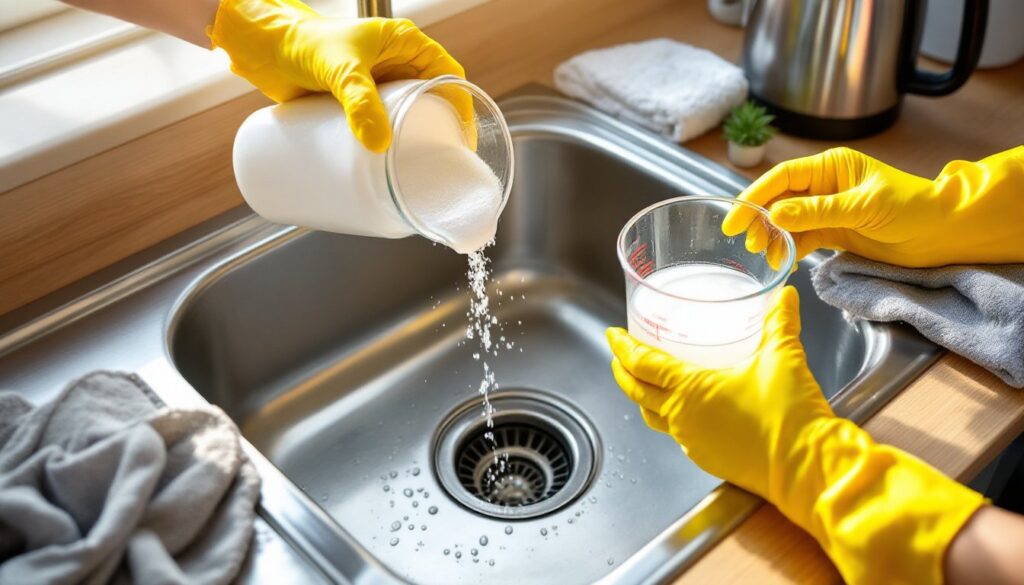
- 1/2 cup baking soda
- 1 cup white vinegar
- Boiling water (about 1 gallon)
- Stopper or wet rag
Steps:
- Remove the drain stopper or strainer. Clean off any visible hair or gunk by hand (wear rubber gloves).
- Pour the baking soda directly down the drain. Use a funnel if the opening is narrow.
- Follow immediately with the vinegar. You’ll hear fizzing, this is normal.
- Plug the drain with a stopper or wet rag to keep the reaction contained below the surface. Let it sit for 15-30 minutes.
- Boil a full kettle or pot of water. After the wait time, slowly pour the boiling water down the drain to flush everything through.
This method works best for preventative maintenance or mild slowdowns. It won’t break up solid clogs like a wadded ball of hair or a chunk of hardened grease. For tougher blockages, move to mechanical methods.
Boiling Water Flush
Sometimes the simplest solution is the right one. A boiling water flush dissolves grease and soap residue without any additives. It’s especially effective for kitchen sinks.
Steps:
- Boil a full kettle or large pot of water (about 1 gallon).
- Slowly pour the water directly down the drain in two or three stages, waiting a few seconds between pours. This allows the heat to work on the buildup.
- Run cold tap water for 30 seconds afterward to flush debris through the pipes.
Caution: Avoid this method if you have PVC drainpipes. Boiling water can soften PVC joints and cause leaks. Stick to hot (not boiling) tap water for plastic plumbing, or use the baking soda and vinegar method instead.
Mechanical Cleaning Techniques
When natural methods don’t cut it, it’s time to physically remove the clog. Mechanical cleaning is more labor-intensive but handles serious blockages that chemicals can’t touch.
Using a Plunger or Drain Snake
Plunger:
A standard cup plunger (the kind used for toilets) also works on sinks, but you need to create a tight seal. If the sink has an overflow opening (common in bathroom sinks), plug it with a wet rag or duct tape before plunging. Otherwise, air escapes and you lose suction.
Steps:
- Fill the sink with 2-3 inches of water to cover the plunger cup.
- Place the plunger over the drain and press down firmly to create a seal.
- Pump up and down rapidly 10-15 times, then pull the plunger off sharply. The suction should dislodge the clog.
- Repeat if needed. Follow with hot water to flush debris.
Plungers work well for soft clogs (food, hair clumps) but won’t break up hard obstructions.
Drain Snake (Auger):
A drain snake (also called a hand auger or zip-it tool) physically hooks or breaks up clogs deep in the pipe. You can find plastic disposable versions at any hardware store for a few dollars, or invest in a reusable metal auger for about $15-$30.
Steps:
- Remove the pop-up stopper or strainer. For bathroom sinks, unscrew the pivot rod under the sink to fully remove the stopper mechanism.
- Insert the snake into the drain opening. Feed it slowly, turning the handle clockwise as you push. You’ll feel resistance when you hit the clog.
- Once you reach the blockage, twist and push to either break it apart or hook it. Pull the snake back out, hair and gunk should come with it.
- Dispose of the debris (wear gloves), then flush the drain with hot water.
If the clog is deeper in the drainpipe or P-trap, you may need to remove the P-trap itself. Place a bucket underneath, unscrew the slip nuts with a pipe wrench or channel locks, and clean out the trap by hand. This is messier but highly effective. Reassemble carefully and check for leaks.
When to call a pro: If the clog persists after snaking, or if multiple drains in the home are slow, the blockage may be in the main sewer line. That’s a job for a licensed plumber with a motorized auger or hydro-jetting equipment.
Preventative Maintenance Tips
Cleaning a clogged drain is easier than dealing with a full backup, but prevention beats both. A few simple habits keep drains clear and reduce the need for deep cleaning.
Use drain strainers or catchers. Install a mesh strainer in kitchen sinks to catch food particles, and use a hair catcher in bathroom drains. Empty them after each use. These cost a couple of dollars and stop most clogs before they start.
Avoid pouring grease down the drain. Let cooking oil and fat cool, then scrape it into a can or the trash. Even small amounts of grease accumulate over time. If grease does go down, flush immediately with hot water and dish soap to help break it up.
Run hot water after each use. After washing dishes or brushing teeth, run hot tap water for 15-20 seconds. This helps flush residue through the pipes before it cools and sticks.
Monthly maintenance flush. Once a month, use the baking soda and vinegar method as a preventative rinse. Many DIYers find this simple routine from home improvement resources helps keep drains fresh and odor-free.
Clean pop-up stoppers regularly. Bathroom sink stoppers collect hair and soap scum quickly. Pull them out every few weeks, rinse under hot water, and scrub with an old toothbrush.
Avoid chemical drain cleaners for routine use. Sodium hydroxide and sulfuric acid-based cleaners generate heat and can corrode pipes, especially older metal drains or PVC joints. Save them for emergencies, or skip them entirely in favor of mechanical methods.
By treating drains like any other part of the home that needs regular upkeep, like furnace filters or gutters, homeowners can avoid most clogs and keep water flowing smoothly.