Table of Contents
ToggleAlbany’s freeze-thaw cycles, heavy spring rains, and dense tree cover make gutter maintenance more than a seasonal chore, it’s essential home protection. Clogged gutters don’t just overflow: they cause ice dams, foundation erosion, and rot that can cost thousands to repair. Whether you’re tackling the job yourself or hiring help, understanding the when, why, and how of gutter cleaning keeps your home dry and your wallet intact. This guide walks through the complete process, from seasonal timing to step-by-step cleaning and long-term prevention strategies tailored to Albany’s climate.
Key Takeaways
- Gutter cleaning in Albany should be performed twice annually—in late spring (May) and late fall (November)—to prevent ice dams, foundation erosion, and costly water damage caused by the region’s freeze-thaw cycles and heavy rainfall.
- Clogged gutters lead to expensive problems: foundation damage can cost $5,000–$15,000, while fascia rot, pest infestations, and basement seepage compound quickly in Albany’s climate if gutters aren’t maintained.
- DIY gutter cleaning requires proper safety equipment (ladder rated for your weight, work gloves, safety glasses, and a spotter), and the process typically takes 2–4 hours per single-story home when done correctly.
- Gutter cleaning professionals in the Albany area cost $100–$250 for standard single-story homes and should be hired for three-story homes, steep roofs, or situations where you’ve skipped multiple years of maintenance.
- Gutter guards (mesh screens, reverse-curve, or micro-mesh options at $1.50–$12 per foot installed) significantly reduce cleaning frequency, while tree trimming and downspout extensions address debris at the source and prevent foundation issues.
Why Gutter Cleaning Matters for Albany Homeowners
Gutters serve one critical function: directing water away from your home’s foundation, siding, and roof. When leaves, shingle grit, and debris clog the system, water backs up and finds new paths, usually into places you don’t want.
In Albany’s climate, the consequences escalate fast. Winter ice dams form when clogged gutters trap melting snow, which refreezes at the roof edge and pushes water under shingles. One harsh winter can destroy roofing underlayment and cause ceiling stains that signal bigger problems. Spring rains compound the issue, turning overflowing gutters into waterfalls that saturate soil around your foundation, leading to basement seepage and crack expansion.
Foundation damage is the most expensive risk. When water pools against your basement walls during Albany’s wet springs, hydrostatic pressure increases, pushing moisture through concrete and creating conditions for mold growth. Repairing foundation issues often runs $5,000–$15,000 depending on severity, far more than routine gutter maintenance costs.
Fascia boards and soffits rot when constantly exposed to overflow. These wooden structural components support your gutter system and roof edge: once they deteriorate, you’re looking at carpentry work that requires permits for structural repairs. Even well-built homes can’t withstand prolonged water exposure on wood surfaces.
Pest infestations also start in clogged gutters. Stagnant water attracts mosquitoes, while damp debris becomes nesting material for wasps, birds, and even squirrels. Once pests establish themselves in your gutter system, they often move into soffits and attic spaces.
When to Clean Your Gutters in Albany’s Climate
Albany homeowners should clean gutters twice annually at minimum: late spring (May) and late fall (November). These windows align with the region’s seasonal debris cycles and weather patterns.
Late spring cleaning removes maple keys, oak catkins, and the gritty residue from winter sand and asphalt shingle granules that wash down during snowmelt. This timing also clears gutters before summer thunderstorms arrive, ensuring proper drainage when heavy downpours hit.
Late fall cleaning, ideally after trees have fully dropped leaves but before the first hard freeze, is non-negotiable. This session clears the bulk of leaf litter from maples, oaks, and other deciduous trees common in Albany neighborhoods. Waiting until all leaves have fallen (usually mid-to-late November) means you won’t need to clean again before winter, but don’t wait so long that you’re working in freezing temperatures or dealing with frozen debris.
Homeowners with dense tree coverage, particularly those with silver maples or pin oaks directly overhanging the roofline, may need quarterly cleanings. These species drop debris nearly year-round, spring seeds, summer twigs from storms, fall leaves, and winter branch litter.
Watch for warning signs between scheduled cleanings: visible overflow during rainstorms, sagging gutter sections (indicating water weight), or plant growth sprouting from gutter channels. Any of these signals immediate attention, regardless of your maintenance schedule.
Never clean gutters during active precipitation or when temperatures are below freezing (32°F). Wet debris becomes heavy and difficult to remove, while frozen material can damage gutter seams when dislodged. Wait for a dry stretch with temperatures in the 45°F–65°F range for safest, most effective cleaning.
DIY Gutter Cleaning: Step-by-Step Instructions
Essential Tools and Safety Equipment
Before starting, gather the right equipment. Cutting corners on safety gear or tools turns a manageable task into a dangerous one.
Safety equipment (non-negotiable):
- Work gloves with textured grip (not gardening gloves, you’ll encounter sharp metal edges and roofing nails)
- Safety glasses to protect against debris when looking upward
- Sturdy extension ladder rated for your weight plus 25 lbs (Type I or Type IA). Avoid step ladders for anything above single-story height
- Ladder stabilizer bar to prevent gutter damage and improve stability
- Non-slip footwear with ankle support
Cleaning tools:
- Gutter scoop (plastic works better than metal, it conforms to gutter shape without scratching)
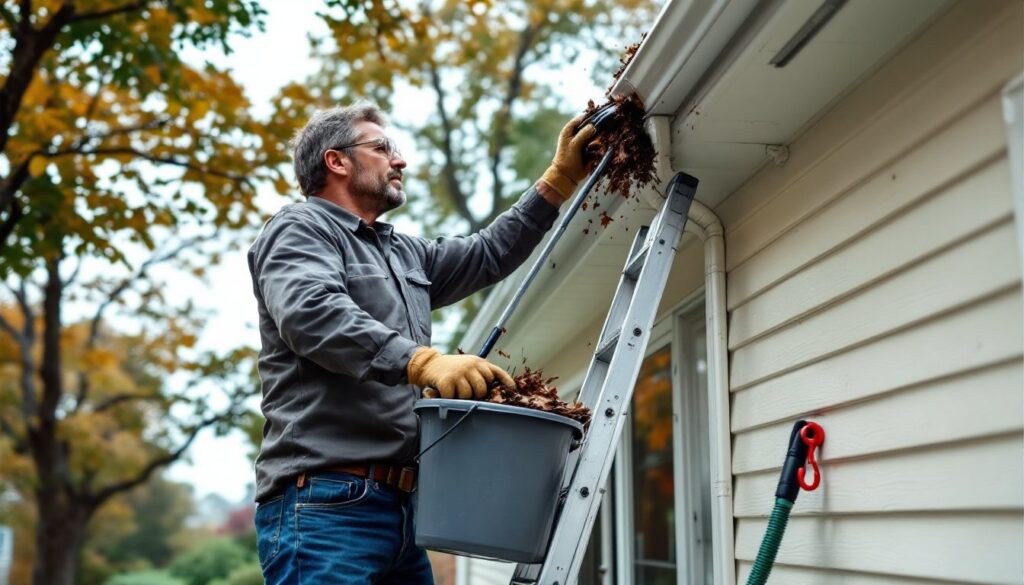
- 5-gallon bucket with S-hook to hang from ladder
- Garden hose with spray nozzle
- Plumber’s snake or stiff wire for downspout clogs
- Drop cloths to protect landscaping under downspouts
Optional but useful: a small hand broom for sweeping gutter channels, and a spotter to stabilize your ladder and hand you tools.
The Cleaning Process from Start to Finish
1. Position your ladder safely. Set it on level ground at a 75-degree angle (the base should be 1 foot away from the house for every 4 feet of ladder height). Place the stabilizer bar against the wall, never directly on the gutter itself. Move the ladder frequently rather than overreaching, falls happen when you lean too far to either side.
2. Start at a downspout and work away from it. This prevents pushing debris toward the drain opening. Use the gutter scoop to remove leaves, twigs, and sludge, dropping material into your bucket. Don’t throw debris on the ground below, it creates cleanup work and can damage plants.
3. Clear downspouts from the top. After removing bulk debris, flush gutters with your garden hose, starting at the high end. If water doesn’t drain freely, you’ve got a downspout clog. Disassemble the downspout at the elbow joints if possible, or feed a plumber’s snake down from the top opening. Stubborn clogs sometimes require tapping the downspout exterior with a rubber mallet while running water.
4. Check gutter pitch and fasteners. As you work, note any sections where water pools instead of flowing toward downspouts. Gutters should slope 1/4 inch per 10 feet toward drains. Sagging areas indicate loose hangers, you’ll need to reattach or add hangers, which should be spaced no more than 24 inches apart. This isn’t technically part of cleaning, but catching these issues early prevents bigger repairs.
5. Inspect for damage. Look for rust spots, separated seams, or cracks. Small holes can be patched with gutter sealant, but sections with extensive corrosion need replacement. Check that end caps are secure and that gutters haven’t pulled away from fascia boards.
6. Final flush and drainage test. Run water through the entire system for 2-3 minutes and walk the perimeter checking for leaks, overflow, or inadequate drainage. Water should exit downspout extensions at least 4-6 feet from your foundation, adjust extensions if needed.
The job typically takes 2-4 hours for an average single-story home, longer for two-story or homes with complex rooflines.
When to Hire Professional Gutter Cleaners in Albany
Some gutter situations exceed reasonable DIY scope. Know when to call a professional before risking injury or property damage.
Hire pros if your home has:
- Three-story or steep-pitch roofs (anything over 8/12 pitch). The fall risk and specialized ladder equipment required aren’t worth the savings.
- Difficult roof access with dormers, skylights, or valleys that make ladder placement unsafe
- Extensive tree overhang requiring frequent cleanings, annual service contracts often cost less than your time and equipment investment
Many top-rated gutter cleaning professionals in Albany also perform repairs and inspection during cleaning, catching problems you might miss. This is valuable for older homes where gutter condition may be questionable.
You should also hire help if:
- You have mobility issues or balance concerns that make ladder work dangerous
- Your gutters haven’t been cleaned in multiple years (packed debris often requires pressure washing equipment)
- You’ve discovered structural issues like rotted fascia boards, pros can often handle carpentry repairs during the same visit
Professional service costs in the Albany area typically range $100–$250 for a standard single-story home, with prices increasing for multi-story homes, extensive gutter footage, or significant clog severity. When comparing bids, ask whether downspout clearing and basic repairs are included, or if they’re charged separately.
Most reputable services carry liability insurance and workers’ compensation, verify this before hiring. The cheapest bid isn’t always the best value if it comes from an uninsured operator.
For project planning and detailed pricing information on various home maintenance tasks, HomeAdvisor offers cost calculators and contractor vetting that can help homeowners budget for seasonal maintenance. If you’re weighing the cost of ongoing maintenance against home improvement investments, ImproveNet provides renovation cost comparisons that put gutter work in context with other projects.
Preventing Future Gutter Clogs and Damage
Cleaning gutters regularly is necessary, but reducing how often you need to do it saves time and extends your gutter system’s lifespan.
Gutter guards are the most effective prevention tool. Multiple types exist, each with trade-offs:
- Mesh screens (fine metal or plastic mesh) block most debris while allowing water through. They work well for small leaf litter but can clog with pine needles and roof grit. Expect to pay $1.50–$3.50 per linear foot installed.
- Reverse-curve (surface tension) guards use water adhesion to pull liquid around a curved hood while debris falls off. These handle heavy leaf fall but can overflow during intense downpours. Higher-end option at $3–$6 per foot.
- Foam inserts fill gutter channels, allowing water to permeate while blocking debris. They’re DIY-friendly and inexpensive ($2–$4 per foot) but deteriorate in 2-3 years and can trap moisture against metal, accelerating rust.
- Micro-mesh guards (stainless steel mesh over a frame) offer the best debris protection and durability. Premium choice at $5–$12 per foot professionally installed, but they virtually eliminate cleaning needs for most homeowners.
No guard system is 100% maintenance-free, plan on annual inspections and occasional rinsing even with guards installed. Avoid cheap plastic snap-on guards: they warp in Albany’s temperature swings and often cause more problems than they solve.
Tree trimming reduces debris volume at the source. Trim branches that overhang your roofline by at least 6-8 feet. This not only cuts leaf accumulation but also prevents branch damage during ice storms, a common issue in Albany winters. Large tree work requires a licensed arborist: this isn’t a DIY project.
Downspout extensions and drainage prevent the foundation issues that make gutter cleaning critical in the first place. Extend downspouts far enough that water dumps onto sloped ground leading away from your house. Buried drain lines or pop-up emitters work well but require proper installation to prevent freezing, they should drain to daylight below the frost line or include cleanout access.
Regular roof maintenance also helps. Keep shingles in good repair and replace any that are shedding excessive granules. Overhanging tree branches scrape shingles during wind, accelerating granule loss that ends up in your gutters.
Finally, mark your calendar. Set recurring reminders in May and November for gutter maintenance. The 30 minutes you spend twice a year prevents the multi-thousand-dollar repairs that come from neglect. Albany’s climate doesn’t forgive deferred maintenance, water damage compounds quickly in freeze-thaw cycles.