Table of Contents
ToggleWater pooling at the bottom of your dishwasher? That telltale gurgling sound when the cycle ends? A clogged dishwasher drain isn’t just an inconvenience, it’s a sign that something’s blocking water from flowing out. The good news: most cases of dishwasher drain clogs can be fixed without calling a plumber. Whether your dishwasher is not cleaning dishes properly because water can’t drain, or you’re facing standing water that smells faintly of sewage, the culprit is usually food debris, grease buildup, or a kinked drain line. This guide walks you through the fixes you can tackle yourself, plus when to know a professional’s needed.
Key Takeaways
- Start troubleshooting a clogged dishwasher drain by cleaning the filter and drain basket, which solves approximately 70% of drainage issues without professional help.
- Check the drain hose for kinks, twists, or improper installation—even slight bends can trap water and prevent proper drainage.
- Use a plumbing snake or garden hose to clear blockages in the drain hose, but avoid caustic chemical drain cleaners that can damage rubber seals and internal components.
- A clogged dishwasher drain caused by debris in the spray arm holes or drain filter may also improve overall washing performance when cleared.
- Call a professional if water backs up into your sink, the clog persists after using a plumbing snake, or you suspect a cracked drain line or tree root intrusion.
Why Your Dishwasher Drain Gets Clogged
A dishwasher’s drain system is surprisingly simple but relies on clear pathways. Food particles, grease, and soap residue accumulate in three main areas: the drain filter (the basket-like screen under the spray arm), the drain basket beneath the filter, and the drain hose itself. Unlike sink drains with P-traps, dishwasher drains rely on a constant flow of water to push debris through a narrow rubber hose, usually just half an inch in diameter. When that hose kinks, twists, or gets clogged with hardened grease, water stops flowing. A dishwasher not draining also happens when the drain valve (a small flapper at the pump outlet) gets stuck or when you’ve accidentally installed the drain hose too high, creating a siphon trap that holds water in the line. Dish loading matters, too, overloading prevents the spray arm from rotating freely and can push food particles into the drain rather than rinsing them out completely.
Simple Fixes to Try First
Start simple. Before you grab tools or chemical drain cleaners, try these steps, they solve roughly 70 percent of clogged dishwasher drains. Run a hot-water cycle with nothing in the machine: sometimes mineral buildup or a light layer of soap scum clears on its own. If that doesn’t work, move to the filter area.
Check and Clean the Filter
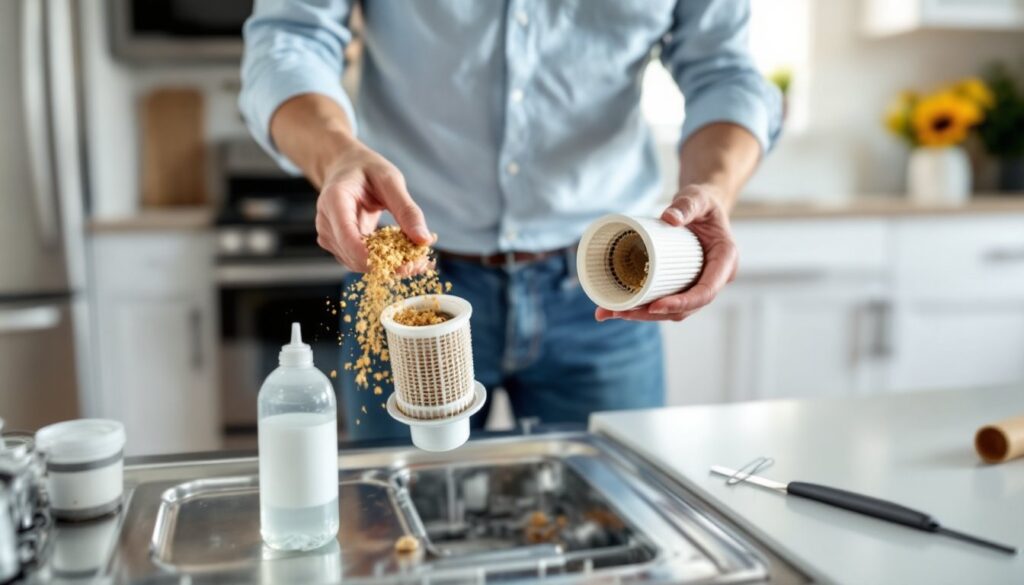
The drain filter is your first troubleshooting point. On most modern dishwashers, you’ll find it under the lower spray arm, usually in the rear corner of the tub. Here’s what to do: First, remove the spray arm (it typically pulls up or unbolts from underneath). Then unscrew or twist out the cylindrical or basket-style filter, the exact mechanism varies by brand, but it should come free with gentle pressure. Look at the filter: if you see food particles, hair, or a slimy coating, that’s your problem. Rinse it under hot running water, using an old toothbrush to scrub away buildup. Don’t use heavy abrasives on fine mesh filters, but do get it clean. While the filter is out, peer into the drain cavity below it for visible debris or grease. Use a damp cloth to wipe away anything you can reach. Reinstall the filter and spray arm, making sure everything sits flush.
Clear the Drain Basket and Spray Arm
Beneath the filter sits the drain basket, another collection point for debris. Empty this basket and rinse it thoroughly. Then inspect the spray arm itself. The spray arm has small holes that spin the arm and direct water up into the dishes. If those holes are clogged with mineral deposits or hardened food, water won’t circulate properly, and the dishwasher is not cleaning effectively. Use a straightened paperclip or a small wire to poke through each hole gently. If mineral buildup is heavy, soak the spray arm in white vinegar for an hour, then repeat the wire-cleaning step. This simple maintenance often restores both drainage and cleaning performance at the same time.
Advanced Unclogging Methods
If the filter and drain basket are clean but water still pools, the clog is deeper in the drain line. Start by checking the drain hose itself, the rubber tube that connects the dishwasher to your sink’s drain or garbage disposal. Turn off the dishwasher and pull it out from under the counter (you may need to disconnect the water inlet line first: have a shallow tray nearby for spillage). Look along the hose for kinks, twists, or pinches. Even a slight bend near where the hose enters the cabinet can trap water. Straighten any kinks and secure the hose with a cable tie if it tends to move. The hose should slope downward toward the drain to encourage gravity-fed drainage.
Next, disconnect the drain hose from the sink drain or garbage disposal, again, have a tray ready. Run the dishwasher for 10–15 seconds and let water flow out of the disconnected hose into a bucket. If water flows freely, the clog is in the sink’s drain line or garbage disposal. If no water comes out or it trickles weakly, the clog is in the dishwasher’s internal drain or the hose itself. For clogs in the hose, try flushing it backward with a garden hose at moderate pressure (too much pressure can rupture the rubber). If that doesn’t work, a plumbing snake, a flexible metal auger available at any hardware store for under $20, can break up stubborn blockages. Feed the snake into the disconnected hose and turn the handle gently: you should feel resistance when you hit the clog. Work the snake back and forth without forcing it, then flush the hose again with hot water.
When the clog is inside the dishwasher itself, access the drain pump (location varies by model: your manual is your friend here). On many units, you can unscrew a small access panel below the tub to reach the drain pump. Check for debris trapped in or around the pump inlet. Sometimes a twisted food label, a piece of broken plastic, or a bone fragment gets wedged in the pump and stops it cold. Remove any visible blockage carefully and reassemble. Avoid chemical drain cleaners in dishwashers, caustic chemicals can damage rubber seals and internal components. If you’re uncomfortable taking apart the pump, call a technician rather than risk damaging it.
When to Call a Professional
Some clogs require professional help. If the dishwasher is not cleaning dishes and the drain is clear, or if water backs up into the sink when the dishwasher runs, the problem may be in the home’s main drain line, not the dishwasher itself. A backed-up sink usually points to a clog in the trap beneath the sink or further downstream in the plumbing vent stack. Similarly, if you’ve already cleaned the filter, checked the hose, and run a plumbing snake without improvement, the clog might be caused by a cracked drain line or tree roots in your sewer line, neither of which a homeowner should try to fix alone. Tree roots in particular require professional camera inspection and removal equipment.
Also consider calling a professional if the dishwasher itself is older than 10 years and the drain valve is stuck. Replacing a drain valve requires removing the pump assembly, and on older units, rubber seals can dry-rot or break during disassembly, leading to leaks. A licensed technician can replace the valve and seals in one trip. Likewise, if you suspect a cracked tub or internal leaks, get a pro’s opinion before spending money on major repairs. Many home improvement resources like Family Handyman offer detailed troubleshooting guides, and Bob Vila’s article on dishwasher drainage walks through several diagnostic approaches. For step-by-step fixes, Today’s Homeowner also provides practical guidance on identifying and resolving drain problems yourself.
Conclusion
A clogged dishwasher drain responds well to methodical troubleshooting. Start with the filter and drain basket, most clogs hide there. If that doesn’t help, inspect the drain hose for kinks and use a plumbing snake to clear internal blockages. Knowing when to call a professional saves frustration and prevents expensive mistakes. With these steps, you’ll get your dishwasher draining and cleaning properly again without unnecessary downtime.