Table of Contents
ToggleOpening your dishwasher only to find standing water at the bottom is never a welcome discovery. It’s one of those problems that looks worse than it might be, but it’s also one that rarely fixes itself. Whether your dishwasher is not cleaning dishes properly or leaving water pooled below the racks, the culprit is usually something simple you can diagnose and fix in an afternoon. Most cases don’t require a service call: they just need a methodical approach and the right troubleshooting steps. This guide walks you through identifying the issue, trying easy fixes first, and knowing when to bring in a professional.
Key Takeaways
- Standing water at the bottom of your dishwasher is usually caused by a clogged filter, blocked drain hose, or drain pump failure, all of which can often be diagnosed and fixed without professional help.
- Start by removing and cleaning the filter thoroughly with hot water and a soft brush, as dirty filters are the most common culprit preventing dishwasher water from draining properly.
- Check the drain basket, spray arm holes, and drain hose connections for blockages or kinks using simple tools like a toothpick, bottle brush, or flashlight before attempting more complex repairs.
- If dishwasher water still pools after cleaning these components, the issue likely involves the drain pump, float switch, or internal hose damage—situations where professional repair service becomes necessary.
- Always ensure your dishwasher is empty and powered off before troubleshooting, and verify that your kitchen sink or garbage disposal isn’t clogged, as these backup problems often get mistaken for appliance malfunctions.
Why Water Accumulates at the Bottom of Your Dishwasher
Standing water at the bottom of your dishwasher means the appliance isn’t draining properly. The wash cycle runs, water sprays over the dishes, and then it should drain completely before the dry cycle begins. When that doesn’t happen, water gets trapped in the sump, the low point inside the tub where drainage begins.
The most common culprits are a clogged filter, blocked drain hose, or a drain pump that’s not working. Less often, it’s a malfunctioning float switch (the mechanism that tells the dishwasher when it’s full) or a check valve issue. Here’s the good news: most of these are accessible from inside the dishwasher without opening up the whole machine.
Common Drain and Filter Issues
Your dishwasher filter is the primary defense against food debris, grease, and particles clogging the drain system. Over weeks of use, bits of food, soap residue, and hard water minerals accumulate on and around this filter. When it gets clogged, water can’t flow out of the tub, and it pools at the bottom.
The drain basket (often at the lower front corner or center of the tub) catches larger items before they reach the pump. If this basket or the drain opening gets blocked, the same problem occurs. The drain hose itself, the rubber tube running from the dishwasher to your sink’s drain or disposal, can also kink, twist, or develop a clog over time. Even a partial blockage slows drainage enough to leave standing water behind.
How to Diagnose the Problem Yourself
Before calling for repairs, spend 10 minutes narrowing down the issue. First, open your dishwasher and look at the water sitting at the bottom. Is it clear, or does it smell foul? If it smells sour or rotten, something organic is decomposing in the system, likely a buildup in the filter or drain hose.
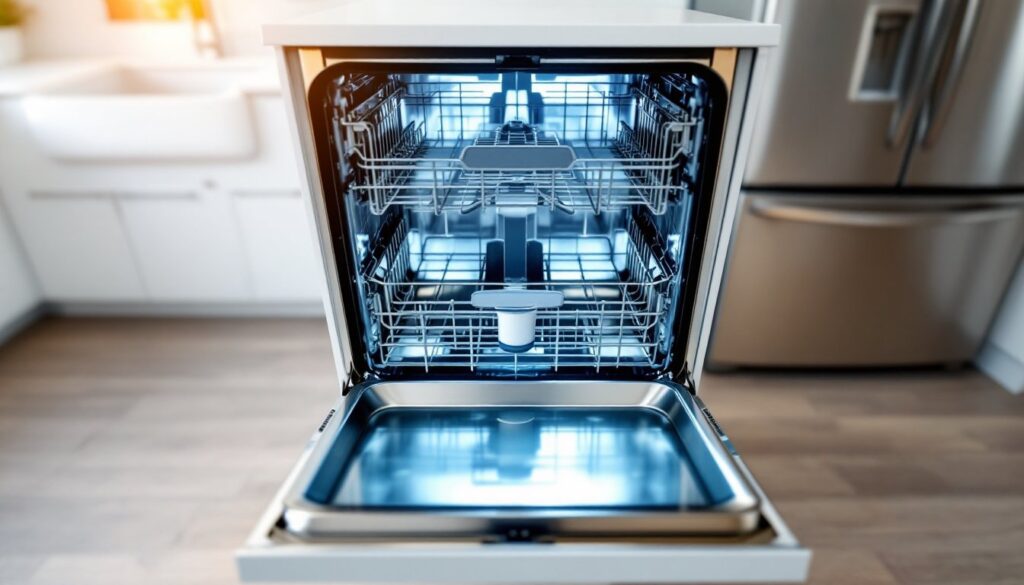
Next, feel around the drain area (with the power off, obviously). Locate your filter, it’s usually a cylindrical or basket-shaped component at the bottom of the tub. Pull it straight up and out. Look inside the filter and the filter well for visible food debris, grease, or mineral crusts. This is your first red flag: if the filter is dirty or clogged, that’s your starting point.
While the filter is out, shine a flashlight into the drain opening below it. You should see the sump and a small opening where water flows out. If you see debris, hair, or gunk blocking that opening, you’ve found the problem. Some people discover that the filter wasn’t seated correctly the last time it was cleaned, it’s not fully locked in place, so water can’t drain past it.
Also check the drain hose connection at the back of the dishwasher (you may need to pull the appliance out slightly). Make sure it’s not kinked or pinched. If your dishwasher drains into a sink with a garbage disposal, run your disposal a few times to rule out a backup from that end. Standing water at the dishwasher bottom often means the disposal or sink drain is clogged, not the dishwasher itself.
Easy DIY Fixes You Can Try First
Most standing water problems clear up with straightforward cleaning. You don’t need special tools, just patience and hot water. Start by ensuring your dishwasher is empty and the power is off (flip the breaker or unplug it if accessible).
Cleaning the Filter and Drain Basket
Remove the filter by pulling it straight up and twisting it counterclockwise if it has a locking tab. Rinse it under hot running water and use an old toothbrush or soft brush to scrub away food particles, grease, and mineral buildup. Pay attention to the fine mesh, this is where grease and soap residue stick. If it’s stubborn, soak the filter in hot water mixed with white vinegar for 15 minutes, then scrub again.
While the filter is out, clean the drain basket directly below it. Remove any visible debris by hand (wear gloves, it’s gross). Use a small bottle brush or pipe cleaner to clean the drain opening itself. Push it down into that hole and work it side to side to dislodge anything stuck inside. Rinse thoroughly with hot water.
Once everything is clean and dry, reinstall the filter. This is crucial: make sure it’s fully seated and locked into place. If it’s not sitting flush against the bottom, water will pool around it instead of draining. Most filters have a locking tab or notches, align them carefully before twisting clockwise to lock.
Clearing the Spray Arms
Clogged spray arm holes also prevent water from draining properly and contribute to a dishwasher not cleaning dishes effectively. These spinning arms at the top and bottom of the tub have small holes that spray water. If those holes are blocked, less water circulates and more sits at the bottom.
Remove the lower spray arm by twisting it counterclockwise. Hold it up to a light and look through each hole, you should see light on the other side. If not, use a toothpick or straightened paper clip to gently clear each hole. Soak the arm in hot vinegar for 10 minutes if mineral deposits are visible, then scrub with a soft brush. Rinse and reinstall, twisting clockwise until snug.
Do the same for the upper spray arm if your dishwasher has one (not all models do). Once both are clean and reinstalled, run a short rinse cycle with nothing inside. Watch as the arms spin and water sprays, this confirms everything is flowing.
If water still pools after cleaning the filter, basket, and spray arms, your dishwasher is not cleaning or draining for another reason. Move to the next step.
When to Call a Professional
If you’ve cleaned the filter, basket, and spray arms and water still sits at the bottom, the problem likely lies in the drain pump, drain hose, or float switch, components that require more invasive repair.
A clogged or kinked drain hose running from your dishwasher to the sink can trap water, but it’s not always easy to access without pulling the dishwasher out and disconnecting it. If you’re handy and comfortable doing that work, you can inspect the hose for kinks and try clearing it with a plumbing snake. But, if the hose is damaged internally or the pump itself is faulty, replacement is the only fix. This is where professional service makes sense: you’ll spend $200–$400 on a service call and parts, but DIY mistakes can cost more.
A failing drain pump is another common culprit. The pump motor may not be engaging, or the pump impeller could be cracked. You’d hear clicking or grinding sounds if this is happening. Replacing a pump requires opening the dishwasher base and disconnecting plumbing and electrical connectors, definitely a pro job unless you have serious appliance repair experience.
The float switch (a small plastic ball mechanism that rises and falls with water level) can also get stuck, telling the dishwasher the tub is full even when it’s not. Debris or mineral buildup around the float usually causes this. A technician can test and replace it if needed. You can sometimes free a stuck float by cleaning around it gently with a brush, but if that doesn’t work, professional service is your best bet.
Also, if your dishwasher is leaving water pooled and your sink with a garbage disposal is backing up or draining slowly, the problem isn’t your dishwasher, it’s your drain or disposal. Clear that first, and your dishwasher drainage issue may resolve itself. Resources like what to do when your dishwasher is not draining and step-by-step guidance for checking dishwasher drainage can walk you through these distinctions.
Before you call a repair service, mention that you’ve already cleaned the filter and checked for obvious blockages. This helps the technician come prepared and may lower your diagnostic fee. Also ask if they offer warranty work, if your dishwasher is relatively new, parts and labor might be covered.