Table of Contents
ToggleStanding water pooling in the bottom of your dishwasher isn’t just a nuisance, it’s a signal that something needs attention. Whether you’ve got a dishwasher not cleaning properly or you’re noticing water sitting at the basin after a cycle, the good news is most causes are straightforward to diagnose and fix yourself. A dishwasher not cleaning dishes effectively often points to the same underlying issues that leave water trapped below. This guide walks you through the most common culprits, how to spot them, and the steps to get your machine draining and performing like it should.
Key Takeaways
- Water in bottom of dishwasher is usually caused by one of three issues: a clogged drain filter, a kinked drain hose, or a blocked garbage disposal connection—all fixable in under an hour.
- A clogged drain filter is the single most common culprit and can be cleaned by removing the cylindrical basket at the tub’s bottom, rinsing it thoroughly, and checking the filter housing for blockages.
- Straightening a kinked drain hose solves drainage problems in about 20% of cases, so always check for bends or twists before assuming the blockage is internal.
- Test your dishwasher’s drainage by running a short empty cycle; if water still pools after cleaning the filter and hose, the issue is likely a pump failure or deep clog requiring professional repair.
- Most homeowners can diagnose and fix standing water issues themselves using only a flashlight, sponge, and basic tools like pliers, saving professional repair costs of $200–$500.
- If your dishwasher isn’t cleaning dishes after fixing the drainage problem, the circulation pump or spray arms may be blocked, requiring technician expertise and component replacement.
Common Reasons Water Pools at the Bottom
Clogged Drain Filter
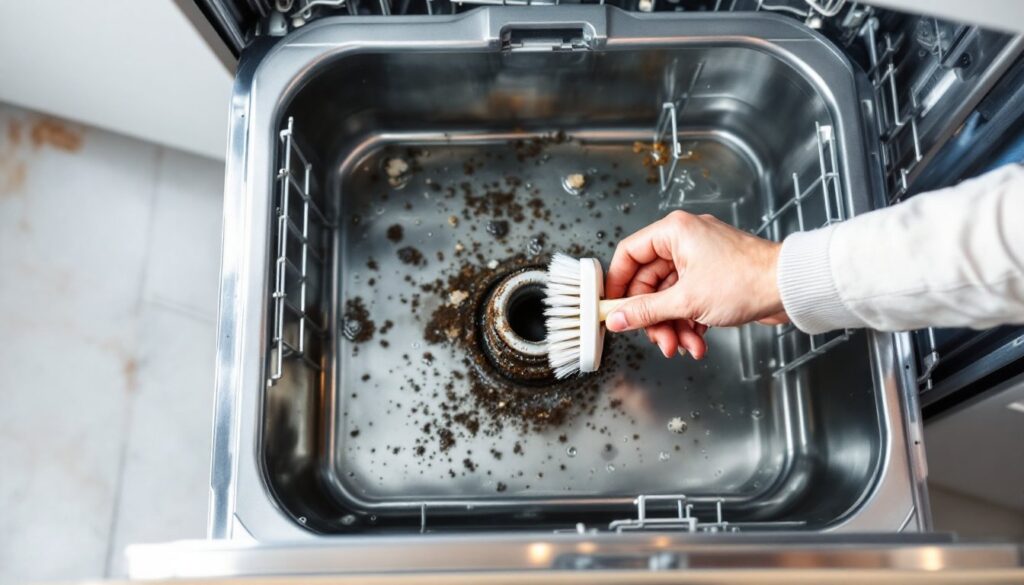
The drain filter sits at the bottom of your dishwasher’s tub and catches food particles, grease, and debris before they clog the drain line. Over time, this filter gets gunked up. When it’s clogged, water can’t drain through it, so it pools below. A dishwasher is not cleaning effectively sometimes because water stagnates around the filter instead of circulating through the spray arms.
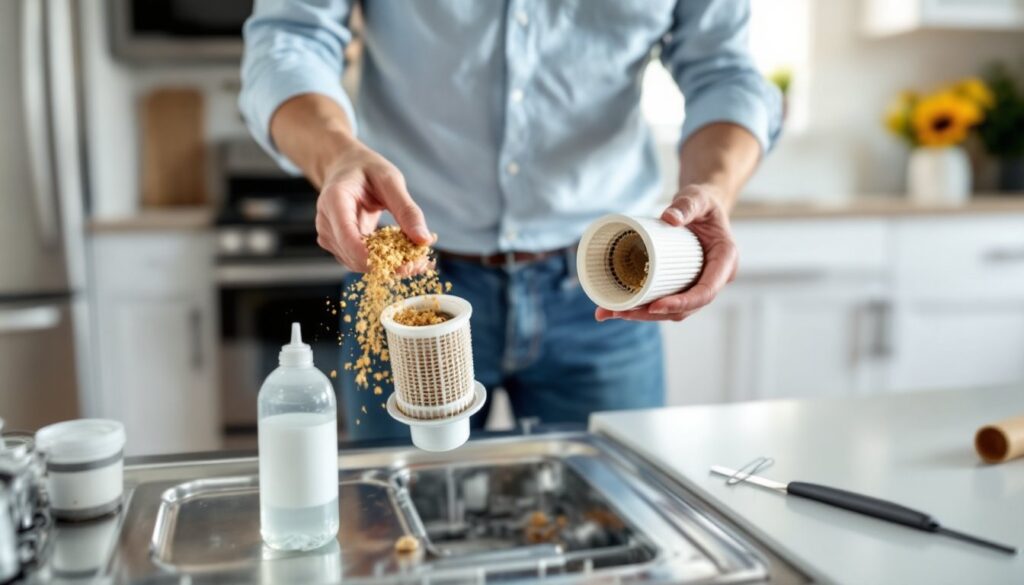
You’ll notice the filter if you remove the lower spray arm, it’s usually a cylindrical basket or mesh screen. Food residue, grease buildup, and detergent scum accumulate here fast, especially if you’re not rinsing dishes before loading. A clogged filter is the single most common reason for standing water and performance dips.
Blocked Drain Hose
The drain hose is the rubber line running from your dishwasher to either your garbage disposal, sink drain, or standpipe. If this hose kinks, twists, or gets clogged with debris, water backs up into the tub. Even a small blockage upstream, like in your garbage disposal or sink trap, can prevent your dishwasher from draining at all.
Check the hose for obvious kinks behind the dishwasher. Sometimes the hose gets crimped during installation or shifted over months of use. If the hose looks kinked, straightening it often solves the problem immediately. If it looks clear but water still isn’t draining, the blockage is likely inside the hose or further down the drain line.
How to Diagnose the Problem
Start by checking whether your dishwasher is actually draining at all. Run a short cycle with no dishes, and watch what happens at the end. If water sits in the bottom, you’ve got a drainage issue, not a cleaning issue.
Next, pull out the lower dish rack and shine a flashlight into the tub. Look at the drain filter, is it visibly clogged with gunk? Remove it and rinse it under the sink. If water drains freely once the filter is out, congratulations: you’ve found your culprit, and you’re about 10 minutes away from a fix.
If the filter was clean and water still won’t drain, the blockage is downstream. Check your garbage disposal: run it to see if anything comes up. Listen for unusual sounds, a grinding or gurgling noise often means the disposal or drain line is clogged. Also check that the drain hose isn’t kinked or pinched against the cabinet back. The hose usually sits at the back-left or back-right side of the unit, so inspect it carefully. Most dishwashers that don’t drain properly have an issue at one of these three points: filter, hose, or the garbage disposal connection.
Step-by-Step Cleaning and Drainage Solutions
Cleaning the Filter and Drain Components
Before you touch anything, pull the lower rack out entirely. You’ll have more room to work, and you won’t splash water on your dishes while troubleshooting.
What you’ll need:
- Flashlight or headlamp
- Sponge or soft brush
- Vinegar (optional but helpful for mineral deposits)
- Towels
- Pliers (if the filter is stuck)
-
Locate and remove the filter. At the bottom center of the tub, you’ll see a cylindrical or flat screen basket, that’s your filter. It typically twists counterclockwise or lifts straight up. If it’s stuck, run hot water over it for a minute to soften the buildup, then try again. Use pliers only as a last resort: you don’t want to crack the plastic.
-
Inspect and rinse thoroughly. Hold the filter under warm running water and use your sponge or brush to scrub away food, grease, and film. Pay close attention to the mesh, debris loves to hide in the holes. If you see stubborn mineral deposits, soak the filter in equal parts water and vinegar for 20 minutes, then brush again.
-
Check the filter housing. With the filter out, look into the cavity where it sits. You’ll see a small drain hole or slot at the bottom. Shine your light in there: is it clogged too? If so, use your brush to clear it, or carefully pour a cup of hot water mixed with vinegar down the hole to dissolve mineral buildup.
-
Reinstall the filter. Once clean and dry, put the filter back in place (twist clockwise or press down firmly, depending on your model). Make sure it’s fully seated, a loose filter won’t seal properly, and water won’t drain.
-
Test with a short cycle. Run a 15-minute rinse cycle with the tub empty. Watch the drain, water should flow away steadily. If it does, you’re done. If water still pools, move to the hose check.
Unclogging the drain hose:
Pull the dishwasher away from the counter slightly (you don’t need to remove it fully, just enough space to access the hose). Look at the back left or right side. The drain hose is usually gray or black rubber, about the diameter of a garden hose.
- Check for kinks. If the hose is bent sharply, straighten it carefully. This alone solves the problem in about 20% of cases.
- Disconnect the hose. You’ll need a bucket or towel, water will spill. The hose usually connects with a hose clamp (tighten/loosen with a screwdriver) or a clip. Once free, hold it over your bucket and run water through it. If water flows freely, the clog is elsewhere. If water barely drips through or stops, the hose is blocked inside.
- Clear the blockage. If the hose is clogged, try feeding a plumbing snake (also called a drain auger) through it, or use hot water mixed with baking soda to flush it out. Some homeowners use a shop vac on reverse to push air through and dislodge the debris.
- Reconnect securely. Once clear, reattach the hose. Make sure the clamp is tight, a loose connection will drip.
If your water in bottom of dishwasher when not in use issue persists after these steps, the problem is likely in the garbage disposal or drain line beyond the hose. Manufacturers report that 60–70% of standing-water issues stem from a clogged filter or kinked hose, items you can fix in under an hour with no tools beyond a brush and towel.
When to Call a Professional
If you’ve cleaned the filter, straightened the hose, and water still pools at the bottom, you’re facing an internal pump failure or a clog deep in the drain plumbing. You could also have a cracked or damaged drain valve inside the unit, a repair that requires the dishwasher to be partially disassembled.
Also, if your dishwasher is not cleaning dishes after you’ve resolved the water drainage issue, the problem may be the circulation pump or spray arm blockage. Those repairs typically require professional technician training and often mean replacing components.
Call a qualified appliance repair technician if:
- Water still won’t drain after you’ve cleaned the filter and hose.
- You hear grinding, squealing, or unusual noises during the drain cycle.
- Water leaks from underneath the dishwasher (not just pooling inside the tub).
- The unit is still under warranty, a technician visit preserves coverage.
A technician will use diagnostic tools to pinpoint pump function, check for internal leaks, and test the drain valve. Repair costs typically range from $200 to $500 depending on parts and labor in your area. If your dishwasher is older than 10 years and repairs approach 50% of replacement cost, it’s often smarter to replace the unit. Modern Energy Star models use less water and run quieter than older units, so you may recoup the investment in lower utility bills over time.
For more detailed troubleshooting on how to fix a dishwasher that won’t drain, consult your owner’s manual or the manufacturer’s website, many provide video walkthroughs specific to your model.
One more tip: if your dishwasher is otherwise working but you’ve noticed it’s not cleaning properly overall, don’t overlook simple fixes like cleaning your dishwasher filter or running a cleaning cycle with vinegar. Many performance issues, including standing water, trace back to mineral buildup and debris, not mechanical failure.