Table of Contents
ToggleYour dishwasher completes its cycle, but your dishes still look cloudy, greasy, or film-covered. A dishwasher not rinsing properly can turn a helpful appliance into a frustration, and often means rewashing by hand. The good news: most rinsing issues come from simple, fixable problems that don’t require a service call. Clogged spray arms, low rinse aid, improper loading, or a blocked filter are the usual culprits behind dishes that aren’t getting that final sparkle. This guide walks you through seven practical fixes to diagnose and solve your dishwasher not rinsing problem, so you can get back to clean dishes and reclaim your time.
Key Takeaways
- A dishwasher not rinsing is usually caused by clogged spray arms, a dirty filter, low rinse aid, or improper loading—all fixable without professional service.
- Clear spray arm holes with a thin wire and soak in vinegar if deposits are stubborn, since blocked holes are one of the most common reasons for rinsing failure.
- Check and refill your rinse aid reservoir regularly, as it’s essential for water to sheet off dishes and prevent cloudy, spotty results during the final rinse cycle.
- Load dishes strategically by tilting plates upward on the bottom rack and angling glasses on the top rack to ensure water reaches all surfaces and spray arms rotate freely.
- Use the correct dishwasher cycle (normal or heavy wash) with hot water at 120–140°F for proper detergent dissolution and effective rinsing, rather than quick or eco cycles.
- Maintain your dishwasher monthly by checking the filter and quarterly with vinegar rinses to prevent mineral buildup and keep the system running smoothly.
Check and Clean Your Spray Arms
The spray arms are workhorses in your dishwasher, rotating to blast water and detergent across your dishes. When they get clogged, the spray pattern breaks down, leaving dead zones where water never reaches. This is one of the most common reasons a dishwasher is not cleaning properly, and it’s easily fixed at home.
How to Inspect and Unblock Spray Arms
Start by removing the lower rack (most dishwashers have this accessible without tools). Look at the spray arm, it’s the rotating hub beneath the rack with small holes underneath and around it. These tiny holes are where the pressurized water exits. Over time, mineral deposits, food particles, and detergent residue seal them shut.
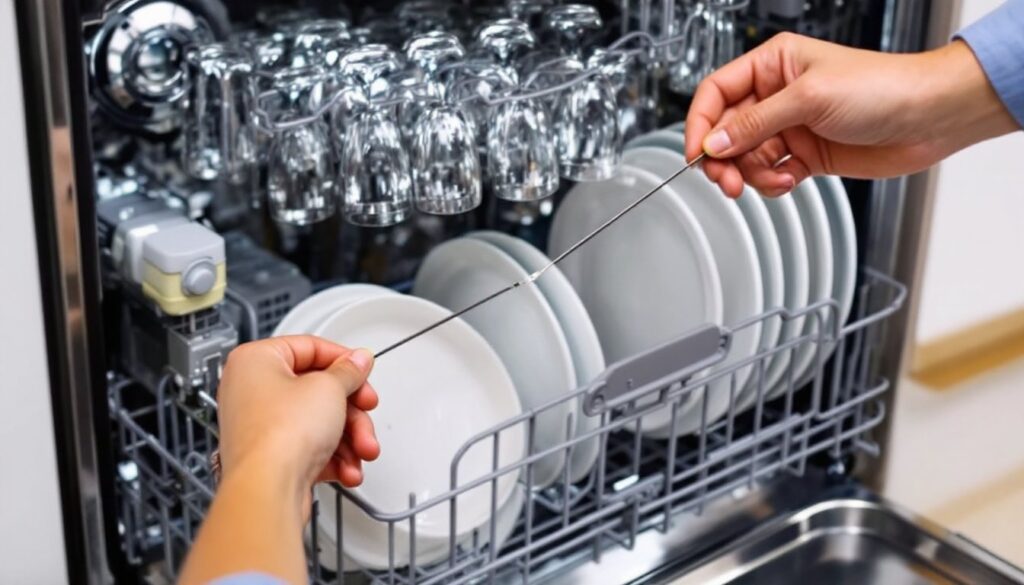
Grab a thin, stiff wire (an unfolded paperclip works fine) and carefully probe each hole. You’re not trying to force anything: just gently clear the opening. If you see white or brown crusty buildup, that’s mineral deposit, a sign your water is hard. Work methodically around the entire arm, making sure every hole is clear. Rotate the arm by hand to access holes on different sides.
For stubborn blockages, fill a bowl with equal parts white vinegar and warm water, then soak the spray arm for 30 minutes if your dishwasher allows you to remove it. Check your manual first, some models require special unbolting. After soaking, run the same wire through again and rinse under running water before reinstalling.
If the arm itself is cracked, warped, or has deteriorated holes, replacement is your next step. These parts are affordable (typically $15–$40) and snap back in place in minutes.
Inspect and Replace Your Dishwasher Filter
Your dishwasher filter traps food particles and debris, preventing them from recirculating onto your dishes. When it clogs, water can’t flow freely, and your rinse cycle suffers. A clogged filter is one of the main reasons behind a dishwasher not cleaning dishes properly.
Locate your filter at the bottom of the dishwasher tub, usually a cylindrical or flat screen. Open the door, pull out the bottom rack, and you’ll see it. Remove the filter by twisting counterclockwise (or lifting straight up, depending on your model). Look inside: if you see a layer of sludge, grease, or trapped debris, that’s your problem.
Rinse the filter under hot running water and use an old soft toothbrush to scrub away stubborn residue. If buildup is heavy or the filter feels damaged, it’s time to replace it. Check your model number online or consult your manual for the exact replacement part, costs usually range from $25 to $60. Installation takes under two minutes.
While the filter is out, reach down into the filter housing and run your finger around the bottom. Feel any grit or crud? Wipe it out with a damp cloth. A dishwasher filter kept clean ensures water circulates freely, directly improving rinse performance.
Verify Your Detergent and Rinse Aid Levels
Detergent and rinse aid work together. Detergent cleans: rinse aid helps water sheet off dishes during the final rinse, preventing spotting and film. If your rinse aid reservoir is empty or running low, you’ll get poor drying and cloudy results, which looks like a rinsing problem even if the cycle is working.
Open your dishwasher door fully and look along the inner edge. You’ll see a small round cap (usually black or white), that’s your rinse aid dispenser. Twist it open and peer inside. A full reservoir will look opaque or have liquid visible. If it’s empty or nearly empty, refill it with rinse aid (brands like Jet-Dry or Cascade are common, around $3–$5 per bottle). Fill until you see liquid reach the fill line, then twist the cap back on. The dispenser itself has settings (numbers 1–7, typically): if your dishes are spotty, you may need to adjust to a higher setting to dispense more aid.
For detergent, use the correct amount for your water hardness and load size. Hard water requires slightly more detergent: overfilling the soap dispenser won’t help and can leave residue. Powders, gels, and pods all work, but pods are pre-measured and foolproof. If you’re using powder or gel, fill the main dispenser completely and the pre-wash cup halfway.
One detail many homeowners miss: check the expiration date on your detergent. Old detergent loses potency and won’t rinse cleanly. If your box is over a year old, replacing it often solves the problem immediately.
Load Your Dishwasher Correctly
How you load your dishwasher directly affects how water reaches every surface. A poorly loaded tub blocks spray arm rotation or prevents water from hitting dish surfaces during the rinse cycle, so your dishes come out looking like the dishwasher was not cleaning at all.
Start with the bottom rack. Plates and larger items go here. Face them toward the center and tilt them slightly upward so water can get underneath. Don’t cram plates too tightly, water needs room to flow between them. Bowls and pots can sit upside-down, but angle them so standing water doesn’t pool inside.
For the top rack, load glasses, cups, and smaller items. Lean glasses and bowls at an angle: never stack them flat or side-by-side where water can’t reach both surfaces. Keep the top rack clear of tall items like glasses placed upright, as they can block the upper spray arm from rotating fully. If you have a top rack not cleaning properly, check that nothing is hitting the spray arm when it rotates.
Keep utensils, knives, and small items in the utensil basket, never loose on the racks. They fall during the cycle and block water flow or damage the pump. Never block the spray arms or water inlet openings with dishes or towels. A common mistake is placing a baking sheet vertically on the bottom rack: it stops the spray arm cold.
Also skip hand-washing dishes before loading. Soaking loosens food and actually helps detergent work, so pre-rinsing is unnecessary and wastes water. Just scrape off large chunks of food.
Check Water Temperature, Program Settings, and Inlet Valve
Dishwashers need hot water, ideally 120–140°F, to dissolve detergent and rinse effectively. If your water heater is set too low, or if the dishwasher’s inlet valve isn’t delivering hot water correctly, the rinse cycle fails.
Check your water heater’s thermostat setting. Most are preset to 120°F, but some homes run them lower to save energy. If yours is below 120°F, raise it. Your dishwasher will perform better, and you’ll also see improved cleaning across the board.
Next, review your cycle selection. Running a “quick wash” or “eco” cycle uses less water and lower temperatures, perfect for lightly soiled dishes but inadequate for heavily soiled loads. For better results on greasy or sticky dishes, select a “normal,” “heavy,” or “pots and pans” cycle. These use hotter water and longer rinse periods. Some newer models have a “heat boost” option, enabling it during the rinse cycle ensures hotter final rinse water.
The inlet valve is a small solenoid-controlled device that lets water into the dishwasher. If it’s partially clogged or failing, hot water won’t reach the spray arms. You’ll notice weak water pressure or only cold water entering. This requires professional diagnosis, but if you suspect it, check that your home’s hot water line is actually reaching your dishwasher. Feel the hose connection at the back of the unit (with the power off): it should be warm during a cycle.
According to expert repair guides at Family Handyman, water temperature and inlet valve issues account for significant portions of poor-rinsing complaints. If you’ve ruled out all other fixes, professional service may be necessary.
Conclusion
A dishwasher not rinsing doesn’t mean it’s broken, it usually means one of these common culprits needs attention. Start with the easiest fixes: check and clear the spray arms, inspect and clean the filter, and ensure your rinse aid is full. Adjust your loading technique and confirm you’re using the right cycle for your soil level. These steps solve nine out of ten rinsing issues without calling for service.
If cloudy dishes and film persist after trying these fixes, your water heater may need adjustment, or the inlet valve might require professional inspection. Whatever the cause, tackling it early prevents the frustration of rewashing and keeps your dishwasher running like it should. Regular maintenance, monthly filter checks and quarterly vinegar rinses, keeps problems from starting in the first place. For more in-depth maintenance, cleaning your dishwasher with vinegar removes mineral buildup and keeps components running smoothly.