Table of Contents
ToggleA dishwasher that gets no water is one of those problems that stops you dead in your tracks. You load the dishes, hit start, and then… nothing. The tub stays dry, the cycle runs without any water entering, and suddenly you’re hand-washing a sink full of plates. Before you call for a costly service visit, take a breath. Most of the time, when a dishwasher gets no water, the culprit isn’t a catastrophic failure, it’s something you can diagnose and fix yourself. Whether your dishwasher is not cleaning dishes because it’s not filling at all, or you’re dealing with intermittent water issues, the fixes often come down to checking a few key components. Let’s walk through the most common causes and how to restore your appliance.
Key Takeaways
- Start troubleshooting by checking the water supply shutoff valve under your sink—a partially closed valve is the most commonly overlooked cause when a dishwasher gets no water.
- Inspect and clean the inlet filter screen, which often clogs with sediment and mineral buildup; a 10-minute cleaning can restore water flow in most cases.
- Test the water inlet valve solenoid with a multimeter (reading should be 500–2000 ohms); if the valve hums but no water flows, replacement is needed ($30–$75).
- Check the fill hose for kinks, clogs, or mineral scale by holding it to light; soaking severely clogged hoses in a 50/50 white vinegar and water solution for 2–4 hours often clears blockages.
- Verify the door latch closes firmly and the float switch moves freely inside the tub, as a faulty latch or stuck float prevents the control board from signaling the inlet valve to open.
- Work through these checks methodically from easiest to hardest—nine out of ten no-water issues are DIY-fixable without costly service calls.
Check Your Water Supply Connection
Start here, because it’s the easiest thing to overlook. Open the cabinet under your kitchen sink and locate the shutoff valve for the dishwasher, it’s usually a small ball valve on the copper, braided, or plastic supply line. Make sure it’s fully open. A valve that’s been partially closed can create a no-water situation that feels like a mechanical failure but is really just a valve.
While you’re down there, inspect the entire supply line for kinks, sharp bends, crushing, or visible leaks. If the line runs along the back of the cabinet, it can get pinched where it enters the dishwasher housing. Even a partial kink restricts water flow dramatically. If you spot damage, the line will need replacing, these are inexpensive parts and straightforward to swap out.
Also check your household water pressure at the kitchen faucet. Turn it on and run it for a few seconds. If the water comes out weak or sputtering, your water pressure is low across the board, and that’s a house-wide issue, not a dishwasher problem. Normal household water pressure is 40–80 psi. If it’s below that, contact your water utility or check for blockages in your main shutoff valve.
Inspect and Clean the Inlet Filter
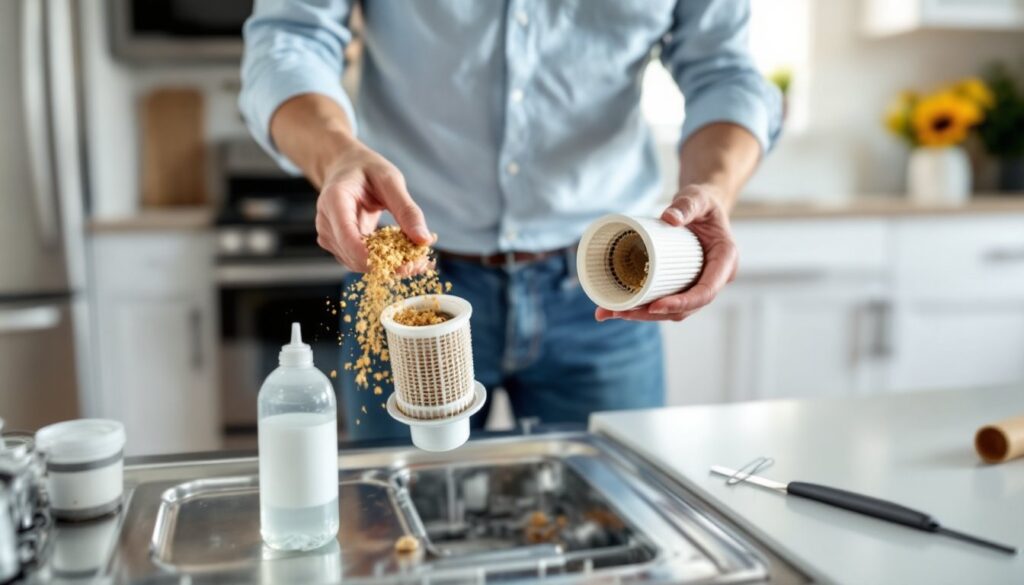
Most dishwashers have a small inlet filter screen at the water inlet valve. This screen catches sediment, mineral buildup, and debris before they get inside the system. Over time, it clogs, and when it does, little to no water can pass through. Fortunately, cleaning it takes about 10 minutes.
Turn off power to the dishwasher at the breaker and shut off the water valve. Next, remove the kick plate (the false toe panel at the bottom front of the unit). You’ll see the inlet valve tucked near the bottom, usually at the front-left or center side. Disconnect the supply line by unscrewing the fitting clockwise. Some water may drip, so have a small bucket handy.
Once the line is free, locate the filter screen inside the valve inlet. It’s a small mesh screen, often brass or stainless steel. Gently remove it and rinse it under cool running water. If sediment or mineral deposits are caked on, use a soft brush, an old toothbrush works, to scrub it gently. Never use abrasive pads, as they can damage the screen. Reinstall the screen, reconnect the supply line, and test. In many cases, that’s all you need.
Test the Water Inlet Valve
If water still isn’t filling after you’ve cleaned the inlet filter, the inlet valve itself may have failed. This is a solenoid-operated valve that opens when the dishwasher’s control board signals it during the fill cycle. A dead solenoid, internal blockage, or mechanical jamming can prevent the valve from opening at all.
With power and water off, inspect the valve body for visible cracks, heavy corrosion, or mineral deposits so thick they look like stone. If the valve is completely encrusted, it’s likely failed. You can also test the solenoid using a multimeter set to the ohms (resistance) setting. Disconnect the solenoid coil connector and touch the meter probes to the two terminals. You should read between 500 and 2000 ohms, depending on the model. If you read zero or infinity (open circuit), the solenoid is dead and the valve needs replacement.
Another sign of valve failure: the valve hums audibly when the dishwasher cycle starts, but no water flows. That hum tells you the solenoid is energizing, but the internal plunger isn’t opening the valve seat. Replacement inlet valves typically cost $30–$75 and take 15 minutes to swap out. Installation involves disconnecting the water line and electrical connector, unbolting the old valve, and sliding in the new one.
Signs of a Faulty Inlet Valve
Know what to listen and look for. A faulty inlet valve often produces these telltale signs: your dishwasher runs through its entire cycle but the tub remains bone dry: it fills intermittently (sometimes works, sometimes doesn’t): you hear a distinct humming sound from the valve during the fill phase, but no water enters the tub: or there’s no visible blockage in the supply line or inlet filter, yet filling still fails. If you’re experiencing any of these patterns, the inlet valve is your prime suspect.
Clear Any Clogs in the Fill Hose
The fill hose runs from the inlet valve into the tub and can become blocked or damaged. Mineral scale buildup inside the hose is common in hard-water areas. A kinked or collapsed hose also restricts flow to the point where the dishwasher gets no water at all.
Shut off power and water, then disconnect the fill hose from both the inlet valve and the tub inlet port. Hold it up to a light and look through it. You should see daylight on the other side. If you see sediment, scale, or cloudy buildup inside, the hose is clogged. Try flushing it backward, pour water in from the tub end and let it flow out through the valve end. If debris comes out, repeat until the water runs clear.
For severe scale or mineral deposits, soak the hose in a 50/50 white vinegar and water solution for 2–4 hours, then flush again. If the hose is cracked, collapsed, or severely kinked, replacement hoses are $15–$35. Install it the same way you removed the old one: hand-tighten the compression fittings firmly but don’t over-tighten, which can crack plastic connections.
Verify Door Latch and Float Switch Function
Here’s a component most people forget: the door latch and float switch. The door latch closes tightly when you shut the dishwasher, and it triggers a switch that tells the control board the machine is ready to fill. If the latch is cracked, bent, or misaligned, the switch may not engage, and the control board won’t signal the inlet valve to open.
Close the door and listen for a firm click. If the latch feels loose or the door doesn’t close tight, the latch assembly may be broken. You can replace a latch assembly for $30–$60, and it takes about 20 minutes. Check that nothing is blocking the latch strike on the tub frame, either, sometimes crumbs or mineral deposits prevent a tight seal.
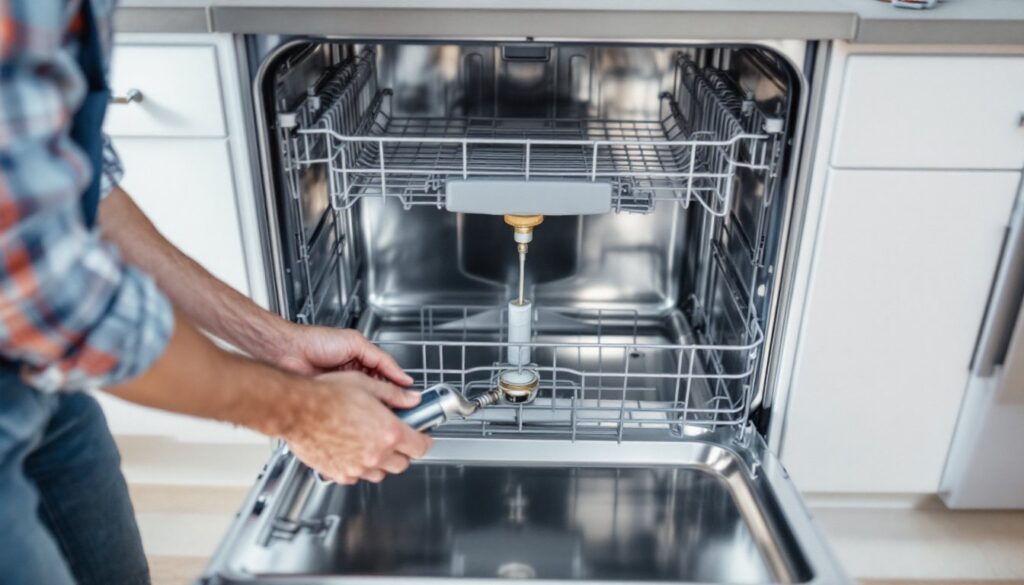
Next, look for the float switch, usually a small dome or cylinder inside the tub. This float rises as water enters: when it reaches a certain height, it closes a switch that signals “tub is full” and stops the fill. If the float is stuck, corroded, or blocked by debris, it won’t move freely. Reach in and gently lift it by hand, it should drop back down smoothly when released. Remove any buildup around the float and ensure the switch actuates. If the float switch is cracked or won’t reset, it needs replacement ($20–$40). These issues are less common than a failed inlet valve, but they absolutely prevent filling and should be ruled out.
Conclusion
When your dishwasher is not cleaning because it’s not filling with water, the problem almost always falls into one of these categories: a closed or restricted supply valve or line, a clogged inlet filter screen, a failed inlet valve, a blocked or kinked fill hose, or a faulty door latch or float switch. Work through these checks methodically, starting with the easiest and cheapest. Most of the time, you’ll find the culprit and restore water flow within an hour. If you’ve walked through all these steps and water still isn’t entering, the control board or wiring may be at fault, and that’s when a qualified technician becomes the right call. The good news is that nine times out of ten, this is a DIY fix.