Table of Contents
ToggleNothing’s more frustrating than opening your dishwasher to find dishes still covered in food residue or cloudy with grime. When your dishwasher is not cleaning dishes properly, it’s easy to assume the appliance is broken, but most of the time, the fix is simpler than you think. A dishwasher not washing well often comes down to a few preventable issues: clogged spray arms, incorrect loading, worn detergent, or a blocked filter. The good news? You can troubleshoot and resolve most problems yourself in under an hour, without calling a repair technician. Here are five quick fixes to get your dishwasher running like new again.
Key Takeaways
- A dishwasher not washing well is usually caused by clogged spray arms, incorrect loading, worn detergent, or a blocked filter—issues you can fix yourself in under an hour.
- Clean spray arm holes with white vinegar and a toothpick to remove mineral deposits and food buildup, a fix that resolves about 40% of dishwasher cleaning problems.
- Load dishes strategically by placing plates upright on the lower rack, keeping items spaced for proper water circulation, and avoiding stacking to ensure optimal spray exposure.
- Replace expired detergent and maintain adequate rinse aid levels to prevent cloudy dishes and ensure effective cleaning, as detergent loses potency after 6–12 months.
- Clear the filter every 1–2 weeks and check the drain hole for clogs to prevent food debris from restricting water flow and degrading wash performance.
- Verify your water heater is set between 120°F–140°F and select the appropriate wash cycle (normal or heavy for soiled dishes) to achieve proper cleaning results.
Check and Clean the Spray Arms
The spray arms are the rotating parts inside your dishwasher that distribute water during the wash cycle. Over time, they accumulate mineral deposits, food particles, and soap buildup that clog the tiny holes where water jets out. When these holes are blocked, water can’t reach your dishes, leaving them dirty.
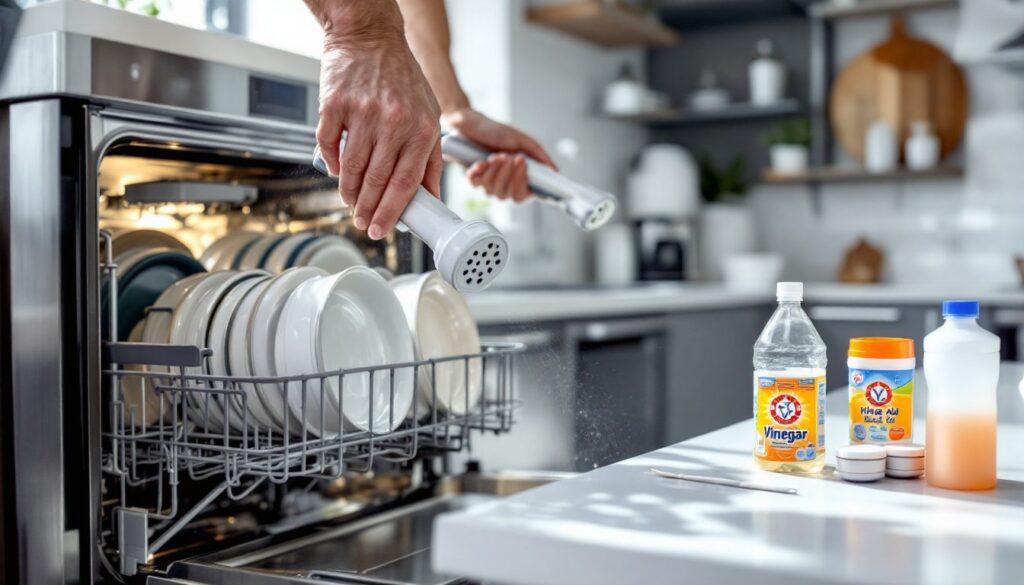
Start by removing the spray arms, most twist counterclockwise or slide out, depending on your model. Hold each arm up to a light and look through the spray holes: if you can’t see light, they’re clogged. Soak the arms in warm water mixed with white vinegar for 15–30 minutes to dissolve mineral buildup. Use a toothpick or small wire to carefully clear each hole, then rinse thoroughly under running water. Reinstall the arms and run a test cycle. This simple step fixes dishwasher not cleaning issues in roughly 40% of cases. If you’re uncertain about removal, consult your manual or watch a video tutorial on cleaning dishwasher spray arms specific to your brand.
Load Your Dishes Correctly
How you load your dishwasher matters far more than most homeowners realize. Cramming dishes in tight or stacking bowls on top of each other blocks water spray and prevents proper rinsing. Upper racks typically have less water pressure and heat than lower racks, so placement affects cleaning performance.
Follow these loading rules: Place plates upright in the lower rack, angled slightly toward the center for maximum spray exposure. Put glasses and mugs on the upper rack without nesting them together, they need breathing room. Load bowls face-down in the lower rack. Avoid stacking items or covering the spray arms with large pans. Leave space between dishes so water and detergent can circulate freely. Pots and cast iron should go on the bottom, handles facing outward. Utensils go in the basket with handles down and tips up (except sharp knives). Overloading is one of the easiest mistakes to make, and it’s also one of the quickest to fix.
Use the Right Detergent and Rinse Aid
Using old or expired dishwasher detergent is like trying to wash your car with water alone, it simply won’t work. Dishwasher detergent is formulated specifically to work in hot water and break down food particles, unlike dish soap. If your dishwasher is not cleaning properly, check the expiration date on your detergent. Most pods and powders lose effectiveness after 6–12 months, especially if exposed to moisture or heat.
Rinse aid (also called drying agent) is equally important but often overlooked. It prevents water spots and film on glasses by helping water bead and run off during the drying cycle. Low rinse aid levels directly contribute to cloudy dishes and poor cleaning results. Check your dispenser (usually a small dial or indicator on the door) and refill if needed. Use the correct amount of detergent for your water hardness, too little won’t clean, and too much leaves residue. Many homes benefit from switching to quality pods or powder designed for hard water. A complete guide on improving dishwasher cleaning results covers these essentials in depth.
Clear Clogs in the Filter and Drain
The filter sits at the bottom of your dishwasher and traps food debris so it doesn’t recirculate onto your dishes. A clogged filter is one of the most common culprits when a dishwasher is not cleaning dishes effectively. Over weeks of use, food scraps, grease, and soap residue accumulate, restricting water flow and creating poor wash performance.
Locate your filter (consult your manual if unsure, it’s typically a cylindrical or flat component at the bottom center). Remove it by twisting counterclockwise or lifting straight up. Rinse debris under warm running water, then soak in hot water with a few drops of dish soap for 10 minutes to dissolve grease. Use a soft brush to gently scrub the mesh. While the filter is out, check the drain hole below it for clogs: use a flashlight and remove any visible debris with your fingers or tweezers. Reinstall the filter and run a hot wash cycle. Cleaning the filter every 1–2 weeks prevents buildup and keeps your dishwasher running smoothly. For detailed instructions tailored to your model, consult step-by-step guidance on filter cleaning.
Inspect the Wash Cycle and Water Temperature
Your dishwasher needs hot water to dissolve detergent and sanitize dishes, ideally 120°F to 140°F. If your water heater is set too low or your home’s plumbing has poor water pressure, cleaning performance suffers. Check your water heater setting: most building codes require it to be between 120°F and 140°F. If it’s lower, you may need to adjust it or call a plumber.
Also verify you’re running the right wash cycle. A short or eco cycle uses less water and lower temperatures, which is fine for lightly soiled dishes but won’t cut through baked-on food. If dishes are heavily soiled, select a normal or heavy cycle instead. Some dishwashers have a “pots and pans” or “intense” setting designed for stubborn debris. Check your manual to ensure you understand all available cycles and their intended use. Running the correct cycle for your load type makes a measurable difference. You can also run a test by checking water temperature as it fills, it should be hot enough that you can’t hold your hand under it for more than a few seconds.
When to Call a Professional
If you’ve tried all five fixes and your dishwasher is still not cleaning properly, the problem likely requires professional diagnosis. Internal components like the circulation pump, heating element, or water inlet valve may be failing. Other signs you need a technician include leaking, grinding noises, standing water that won’t drain, or a burning smell during cycles.
Repair costs typically range from $200–$500 depending on the part, but diagnosis fees are usually $75–$150. Compare repair costs against replacement: if your dishwasher is over 10 years old and the repair is expensive, buying a new one might make more financial sense. A professional can also spot issues you can’t see, like corrosion inside the tub or faulty door seals. Don’t ignore persistent problems, water damage from leaks or standing water can harm your cabinets and floors. When in doubt, contact a licensed appliance repair technician in your area.
Conclusion
A dishwasher not washing well doesn’t always mean it’s time for a replacement. By checking spray arms, loading correctly, using fresh detergent and rinse aid, clearing filters, and running appropriate cycles, you’ll solve 90% of cleaning complaints. These fixes take minimal time and cost almost nothing. Start with the easiest steps first, spray arm cleaning and filter removal, and work your way down the list. If problems persist after all checks, call a professional. Most importantly, maintain your dishwasher monthly to prevent buildup and keep it performing like new.