Table of Contents
ToggleA clogged gutter doesn’t announce itself with a bang, it whispers its neglect through water damage, foundation settling, and rotting fascia that’ll cost thousands to fix. Gutters and downspouts are arguably the most underrated part of home protection. They quietly divert water away from your foundation, siding, and landscaping, but only if they’re working properly. Most homeowners don’t think about gutters until they’re spilling water over the edge during the first heavy rain. This guide walks you through what your gutter system does, why it matters, what problems to watch for, and exactly how to maintain or repair it without hiring someone else to climb your ladder.
Key Takeaways
- Clogged gutters and downspouts cause water damage, foundation settling, and fascia rot that cost thousands to repair, making regular maintenance essential for home protection.
- Clean gutters and downspouts twice yearly (spring and fall) by scooping debris, flushing with water, and inspecting for damage to prevent costly structural issues.
- Small gutter and downspout problems like seeping seams, sagging brackets, and downspout clogs can be fixed DIY with sealant, replacement brackets, and a plumbing snake before they worsen.
- Upgrade to seamless aluminum gutters, gutter guards, or extended downspouts (4–10 feet depending on soil type) to improve drainage system performance and reduce maintenance.
- Improper gutter slope, undersized systems, and ice dams in cold climates commonly cause water backup; ensure 1/4-inch pitch per 10 feet and properly sized downspouts for your roof area.
Understanding Your Gutter System
Gutters are the horizontal channels running along your roofline that catch rainwater. Downspouts are the vertical pipes that carry that water away from your home. Together, they form your home’s water defense system. Most residential gutters come in two standard profiles: K-style (the most common, with a flat front and decorative crown) and half-round (shaped like a tube cut lengthwise, older and less common in new construction). Gutters are typically made of aluminum, steel, copper, or vinyl, each with trade-offs in durability, weight, and cost. Aluminum is lightweight and rust-resistant, making it the DIY-friendly standard. Copper gutters are premium, highly durable, and develop an attractive patina over time. Steel rusts without proper maintenance, while vinyl is budget-friendly but can crack in cold climates. Downspouts extend 4 to 6 inches from the foundation in most code requirements, though extensions to 10 feet or more work better in areas with clay soils prone to settling. The slope (or “pitch”) should be roughly 1/4 inch per 10 feet of gutter run, steep enough for water to flow, gradual enough that it doesn’t look off.
Why Gutters and Downspouts Matter for Your Home
Water is your home’s worst enemy. Without functional gutters and downspouts, rainwater cascades directly onto your foundation, siding, landscaping, and soil, creating conditions for settling, rot, pest infiltration, and mold. A foundation that shifts even a quarter-inch can crack drywall, jam doors, and destabilize your home’s structure. Proper gutters service protects your gutters protection investment by routing water safely away before it ever gets there. Your fascia board (the trim running along the roofline) is particularly vulnerable. This horizontal wood sits directly under the gutter and absorbs every bit of water that overflows or backs up. Rotted fascia compromises the gutter’s attachment and can allow water into your attic. Gutters also keep water from pooling at ground level, which prevents basement seepage and keeps your soil stable. If your gutters are undersized or poorly pitched, water backs up and pools on the roof, a recipe for rot, leaks, and ice dams in winter. The relationship is simple: working gutters save you foundation repairs, basement waterproofing, and structural work that easily run $10,000 or more.
Common Gutter and Downspout Problems
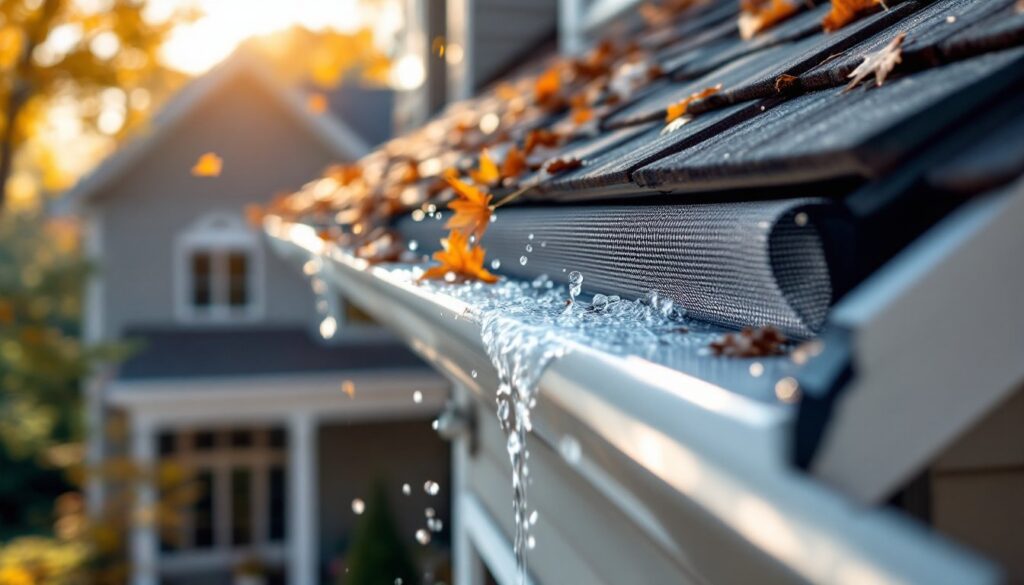
Debris buildup is the number-one culprit. Leaves, twigs, shingle granules, and dirt accumulate in gutters year-round, especially in fall. When debris packs tight, water can’t flow, and it backs up into the fascia, siding, and soffit. Sagging or pulled gutters happen when mounting brackets fail or water weight becomes too heavy, usually because the gutter is clogged and full of standing water. You’ll notice visible dips or separation from the fascia. Downspout clogs occur at elbows or where downspouts meet the ground, trapping debris and stopping water flow entirely. Seams and holes develop over time. Joints leak, rust forms (on steel gutters), or impact damage creates punctures. Ice dams in cold climates form when roof heat melts snow that refreezes at the eaves, backing water under shingles and into the attic. Improper slope causes water to pool rather than drain, creating standing water that rots the gutter bottom and attracts mosquitoes. Undersized gutters or downspouts can’t handle heavy rain loads, common in older homes or those with large roof areas. If you spot water pouring over the gutter edge during rain, or water staining your siding, your system isn’t keeping up.
How to Clean Your Gutters and Downspouts
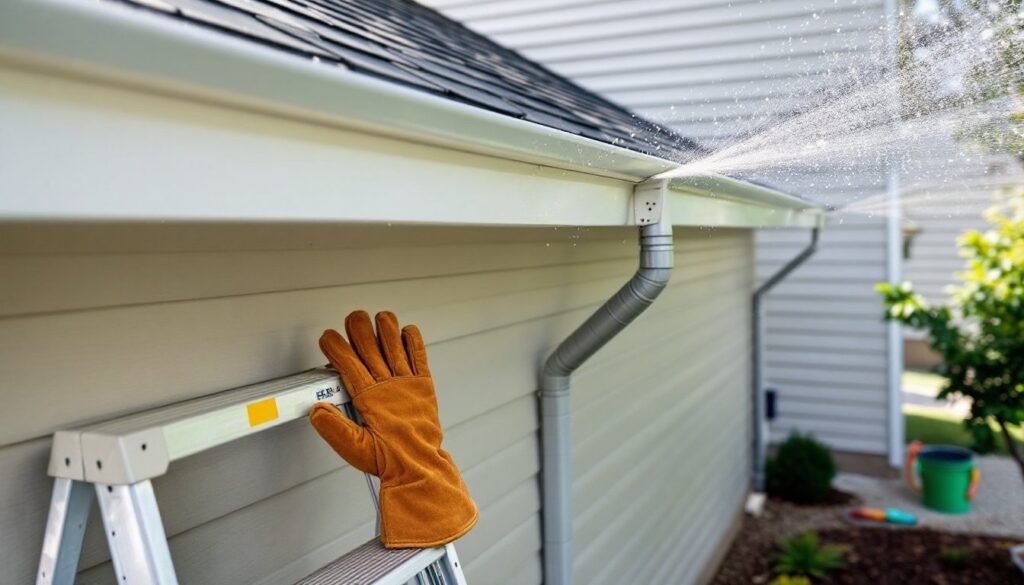
Cleaning gutters twice a year, spring and fall, is your best defense against costly repairs. Here’s what you’ll need:
Materials & Tools:
- Sturdy ladder (20-foot extension for two-story homes)
- Work gloves (leather, with grip)
- Safety glasses or face shield
- Scoop or trowel (plastic or aluminum, not sharp metal that dents gutters)
- 5-gallon bucket (hung on the ladder with an S-hook)
- Garden hose with spray nozzle
- Optional: gutter cleaning hose attachment for hands-free flushing
Steps:
- Set up safely. Place your ladder on level ground at least 3 feet from the wall. Wear gloves and glasses. Never lean beyond arm’s reach: move the ladder instead.
- Scoop out loose debris. Use your trowel to loosen and remove leaves, dirt, and twigs into the bucket. Start at a downspout end so you’re working toward drainage.
- Flush with water. Use your hose to spray out remaining sediment and test flow toward downspouts. A strong spray flushes packed silt and reveals leaks.
- Check downspout flow. Aim the hose into the downspout opening and watch for water exiting at the base. If it backs up, the downspout is clogged, use a plumbing snake or high-pressure spray to clear it.
- Inspect while you’re up there. Look for sagging, bent sections, separated seams, rust spots, or holes. Mark problem areas for repair.
If your roof is steep, gutters are high, or you’re uncomfortable on ladders, hire a pro. A single fall costs far more than a cleaning service.
DIY Gutter Repairs You Can Handle Yourself
Sealing small leaks: If you spot water dripping from a seam or pinhole, allow the gutter to dry completely. Use gutter sealant (silicone or polyurethane, rated for your material) applied with a caulking gun. Fill the gap generously and smooth with a wet finger. This buys you time before replacement.
Fixing sagging sections: If brackets are loose, tighten bolts with a wrench. If brackets are corroded or broken, you may need to replace them, a DIY job if you’re comfortable on a ladder. Measure the spacing (typically 24 inches apart), buy matching brackets from a hardware store, and fasten with the original hardware size.
Clearing downspout clogs: Remove the downspout elbow or section where it exits (usually two or three screws or rivets). Use a plumbing snake, straightened coat hanger, or leaf blower to dislodge packed debris. Flush with a hose and reattach.
Patching holes: Small holes (smaller than 1/4 inch) can be sealed with gutter sealant. Larger holes need a gutter patch kit (aluminum or plastic adhesive patches available at hardware stores). Clean the area, roughen it lightly with sandpaper, apply the patch per kit instructions, and let cure fully before running water through it.
Replacing a section: If a 10-foot gutter section is badly rusted or damaged, you can remove and replace it. This requires cutting or unbolting the damaged section, installing a new matching section, and resealing joints with gutter sealant. It’s doable solo, but a second pair of hands steadying the new section makes it much safer.
For structural issues, sagging from heavy water weight, extensive rust, or compromised fascia, call a pro. Trying to fix it yourself risks falls and poor installation.
Upgrading and Protecting Your Drainage System
If your gutters are old, undersized, or failing, upgrade now rather than waiting for catastrophic damage. Modern aluminum gutters are affordable, lightweight, and last 20-30 years with minimal maintenance. Consider seamless gutters, installed on-site with no joints except at corners, they reduce leak points significantly. For premium durability, copper gutters develop a protective blue-green patina and outlast the house itself, though they cost 3-5x more than aluminum. Gutter guards (or gutter covers) reduce debris buildup by 80-90%, cutting cleaning frequency to once yearly or less. They don’t eliminate cleaning entirely, fine sediment and shingle granules still settle, but they’re a game-changer if you have heavy tree cover or poor access. Types include mesh screens, foam inserts, and reverse-curve covers: each has trade-offs in cost and effectiveness. Downspout extensions or splash blocks direct water away from the foundation. Extend downspouts 4-10 feet, depending on your soil type and foundation depth. In clay soils, aim for 10 feet or use underground drainage to a dry well. Gravel or mulch around extensions prevents soil erosion. You can also upgrade to gutter drainage solutions that direct water to rain barrels or French drains for irrigation and stormwater management. These aren’t necessary for basic protection, but they conserve water and add resale appeal. When upgrading, ensure new downspout sizing matches your gutter capacity, undersized downspouts are a common mistake that negates all other improvements.
Conclusion
Gutters and downspouts are unglamorous but essential. Neglecting them costs thousands in foundation, fascia, and basement repairs. Cleaning twice yearly and addressing small problems early, sealed leaks, tightened brackets, cleared clogs, keeps your system working for decades. If you’re climbing a ladder, use safety gear and know your limits: falls are serious. Consider upgrades like gutter guards or extensions if your current system underperforms. With a bit of attention and the right approach, your drainage system protects your home’s most valuable asset: its structure.