Table of Contents
TogglePulling open your dishwasher door to find standing water pooling at the bottom is frustrating, and it usually means dishes aren’t coming out clean. A dishwasher not cleaning dishes properly is often a sign that water isn’t draining correctly. When a dishwasher is not cleaning or leaving water behind, the culprit is typically one of a few common issues: a clogged drain hose, a full filter, or debris blocking the drainage system. The good news? Most of these problems are fixable without calling a plumber. This guide walks you through the causes, the straightforward fixes you can tackle yourself, and when it’s time to bring in a pro.
Key Takeaways
- A dishwasher with water at the bottom usually indicates a drainage problem caused by a clogged filter, blocked drain hose, or debris buildup in the drainage system.
- Clean your dishwasher’s drain filter monthly and check the drain hose for kinks or blockages to prevent standing water and improve cleaning performance.
- Run the drain hose under water to test for clogs; if water flows freely, the issue lies elsewhere, such as a blocked sink drain backing water into the dishwasher.
- If standing water persists after cleaning the filter and hose, the drain pump itself may be faulty and requires professional service, typically costing $200–$400.
- Scrape dishes before loading and run a monthly empty rinse cycle to flush the pump and hose, preventing future drainage issues and extending your dishwasher’s lifespan.
Why Water Pools at the Bottom of Your Dishwasher
Standing water in your dishwasher means the drainage cycle didn’t complete. Unlike a kitchen sink that relies on gravity alone, most modern dishwashers use a pump to force water out through a drain hose. If that water stays put, something’s blocking the path. Understanding where the blockage is helps you know what to fix, and whether the job is a quick DIY task or needs professional attention.
Clogged Drain Hose
The drain hose is a ribbed plastic tube (usually about 1.5 inches in diameter) that runs from the dishwasher‘s sump pump to your home’s sink drain or garbage disposal. Over time, food particles, grease, soap scum, and mineral deposits can collect inside it, restricting water flow. A kinked or pinched hose can also slow drainage to a crawl. If water is sitting at the bottom but your filter looks clean, the hose is the next place to investigate. Many homeowners don’t realize that even a partial blockage upstream in the sink drain can cause water to back up into the dishwasher, so this isn’t always the dishwasher’s fault alone.
Filter and Debris Buildup
Most dishwashers have a removable filter assembly at the bottom (it looks like a small cylindrical cage or basket). This filter traps food scraps, preventing them from clogging the drain pump. When food particles pile up, and they do, quickly, water can’t drain out because there’s nowhere for it to go. A dishwasher not cleaning dishes is often accompanied by standing water because a blocked filter prevents the pump from doing its job. Debris can also collect around the filter housing or in the drain pump intake, creating another choke point. Cleaning the filter regularly is the easiest preventive step you can take. Some dishwashers pull water up through the filter to clean it during the cycle, so a clogged filter reduces cleaning performance and creates drainage problems simultaneously.
Step-by-Step Fixes You Can Try at Home
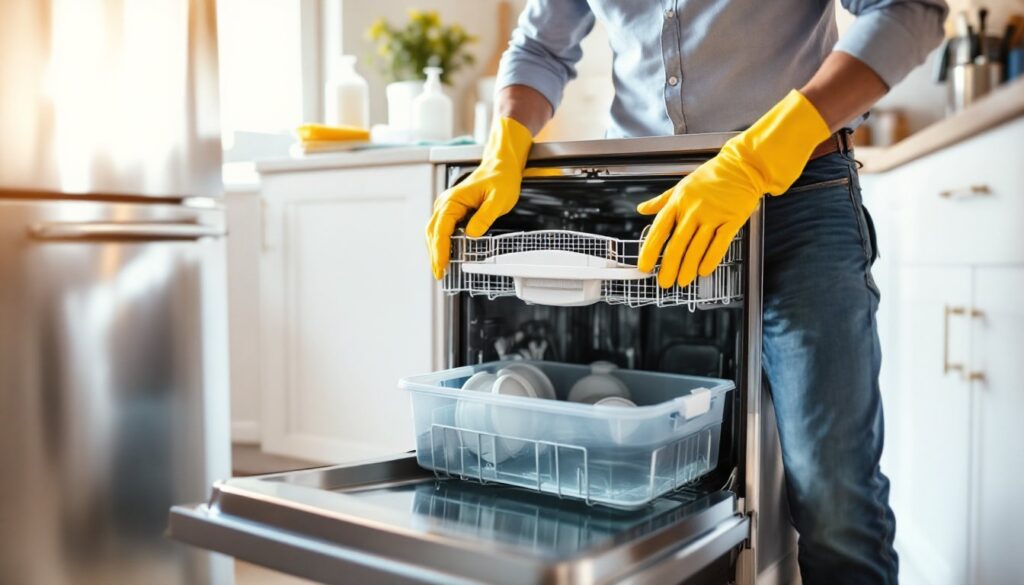
Before you call a plumber, try these straightforward checks and cleanings. Most take less than 30 minutes and require only hand tools. Wear rubber gloves to protect your hands from food debris and bacteria. If you’re sensitive to standing water or odors, consider keeping a damp towel and spray bottle nearby to manage spills as you work.
Clean the Drain Filter and Strainer
-
Stop the cycle and remove the rack. Open the dishwasher door and slide out the bottom rack to access the filter area at the base. Don’t run another cycle until you’ve addressed the standing water: it’ll just spread the problem and possibly damage the pump.
-
Locate and remove the filter. Most filters are located in the bottom center or rear corner of the tub. The filter assembly typically twists counterclockwise to release it. Some models have two parts: an upper filter basket (for coarser debris) and a lower cylindrical filter. Remove both and set them aside.
-
Rinse debris under running water. Hold the filter under your kitchen sink faucet and rinse away visible food, grease, and buildup. Use a soft brush (an old toothbrush works well) to scrub the mesh gently. Don’t scrub hard, mesh is fragile. If the filter feels slimy or smells sour, soak it in warm water with 1 tablespoon of white vinegar for 15 minutes, then rinse again. This breaks down soap scum and mineral deposits.
-
Check the filter cavity. While the filter is out, shine a flashlight into the cavity and look for standing debris. Use a paper towel or soft cloth to wipe the bottom and sides. You may spot food, hair, or other gunk stuck around the pump intake. Remove what you can by hand (still wearing gloves).
-
Reinstall the filter and test. Once clean, twist the filter back in place (clockwise, snug but not forced). Close the dishwasher door and run a short rinse cycle to see if water drains. If standing water persists, move on to checking the drain hose.
Check and Clear the Drain Hose
-
Locate the drain hose. Look under your sink or behind the dishwasher. The hose is a ribbed plastic tube, typically connected to either the sink’s drain tailpiece or directly to a garbage disposal. It may also empty into a standpipe (a 2-inch upright drain fitting, common in islands or under-cabinet setups). The other end is connected to the dishwasher’s pump outlet (often accessible from the base of the unit, behind a lower kick panel).
-
Disconnect the hose carefully. Before you disconnect anything, place a bucket or shallow pan underneath, water will spill. Use a flathead screwdriver to loosen any hose clamps (or pinch-grip clamps) and gently pull the hose free. Keep track of which end is which: you’ll need to reconnect correctly.
-
Check for kinks or pinches. Lay the hose on a flat surface and inspect it for creases, pinched sections, or sharp bends. A kinked hose, even if it looks minor, can slow water flow enough to cause backup. If the hose is permanently deformed, it’s worth replacing (a new hose costs $15–$30 at most hardware stores and is straightforward to swap out).
-
Run water through the hose. Take the disconnected hose to a bathtub or utility sink and run hot water through it from the dishwasher end. Water should flow freely. If water dribbles or backs up, use a plumbing snake (a flexible auger, available for $10–$20) or a piece of stiff wire to push out the blockage. Feed the snake gently: you don’t want to puncture the plastic. Alternatively, flush the hose with a garden hose on low pressure (don’t use full pressure, it can damage the hose).
-
Check the drain connection. Locate where the hose connects to your sink drain or garbage disposal. A common culprit is a clogged sink drain that backs water up into the dishwasher. Pour hot water down the sink drain (not the disposal) and make sure it drains freely. If the sink drains slowly, that’s your real problem, not the dishwasher. You may need to plunge the drain or use a drain unclogging guide to clear it.
-
Reconnect the hose securely. Once the hose is clear, reattach it to both the dishwasher pump outlet and the sink drain (or garbage disposal). Tighten the hose clamps firmly with a screwdriver so the hose doesn’t slip during the drain cycle. Overtightening can pinch or crack the fitting, so firm is better than forceful.
After reconnecting, run a short rinse or drain cycle to confirm water exits the dishwasher. If standing water is still present, the issue may be deeper inside the dishwasher’s drainage system (the pump itself or internal blockage), which brings us to the next step.
When to Call a Professional Plumber
If you’ve cleaned the filter and checked the hose and water still pools at the bottom, it’s time to call a pro. The drain pump itself may be faulty, the pump housing may be cracked, or there could be an internal blockage you can’t reach. Similarly, if your home’s drain line is clogged or backed up (a common issue that affects the entire house, not just the dishwasher), a plumber will need to snake or jet the main line, something that’s beyond DIY scope and requires specialized equipment.
If you notice odd noises (grinding, squealing) coming from the dishwasher during the drain cycle, or if water leaks around the hose connections even when everything looks tight, those are signs the pump is struggling or wearing out. A new drain pump typically costs $200–$400 in parts and labor for a service call, but it’s far cheaper than replacing the entire dishwasher.
One more heads-up: if your dishwasher is older than 8–10 years and standing water is a recurring issue, you may want to budget for a replacement. Older pumps wear out, seals degrade, and repair costs can start to rival the price of a new unit. Depending on your region and model, a new dishwasher ranges from $400 to $1,500, and most plumbers can install it the same day.
To avoid future drainage headaches, run the dishwasher on a short rinse cycle once a month with nothing inside, this flushes the pump and hose. Scrape dishes before loading (especially foods like pasta, rice, or grease-heavy pans). Every couple of months, pull the filter and give it a quick rinse. These small habits prevent the buildup that causes standing water and keep your dishwasher not only draining properly but also cleaning dishes effectively. With regular upkeep, a well-functioning dishwasher should run for years without trouble.