Table of Contents
ToggleYour gutters are working right now, quietly funneling water away from your foundation, roof edge, and landscaping. But most homeowners barely think about them until water’s backing up onto the roof or pouring down the foundation wall. A solid gutter service routine, whether that’s regular cleaning or installing gutters protection, is one of the cheapest ways to prevent thousands in water damage. This guide walks you through why gutter service matters, what problems to watch for, and whether you should tackle it yourself or hire a professional.
Key Takeaways
- Regular gutter service twice yearly prevents thousands in water damage by stopping foundation seepage, basement flooding, and structural rot.
- Common gutter problems like clogging, sagging, rust, and seam leaks are identifiable early through visual inspection and cost far less to repair than foundation or waterproofing work.
- DIY gutter cleaning works for low-pitch roofs under 6/12 slope and single-story homes, but professional gutter service is essential for steep roofs, multi-story homes, or complex repairs.
- Gutter guards and protection systems reduce cleaning frequency to once yearly or less, though no system is completely maintenance-free when debris accumulates on edges.
- Aluminum gutters are the most affordable and rust-resistant option at $3–$8 per linear foot, while professional installation ensures proper slope and downspout placement critical for water drainage.
- Adding gutter protection during new installation is cheaper than retrofitting later and should be paired with downspout strainers to prevent outlet clogs.
Why Gutter Service Matters for Your Home
Gutters serve one job: move water off your roof and away from your home’s structure. When they fail, water pools against your foundation, seeps into basements, rots fascia boards and soffits, and damages landscaping. Over time, standing water attracts pests and promotes mold growth in crawl spaces.
Most homeowners need gutter maintenance twice yearly, spring and fall. Spring cleaning removes winter debris and prepares gutters for heavy rains. Fall cleanup is critical in areas with dense tree cover, where leaves can clog downspouts entirely within weeks. A rain gutter cleaning service can handle this, or you can DIY if your roof isn’t steep or extremely high.
Ignoring gutter upkeep is false economy. One round of foundation repair or basement waterproofing runs $10,000–$50,000 depending on severity. A yearly gutter service costs a fraction of that. Regular inspection also catches small problems, a rusted seam, a loose bracket, a sagging section, before they become emergencies.
Common Gutter Problems and How to Spot Them
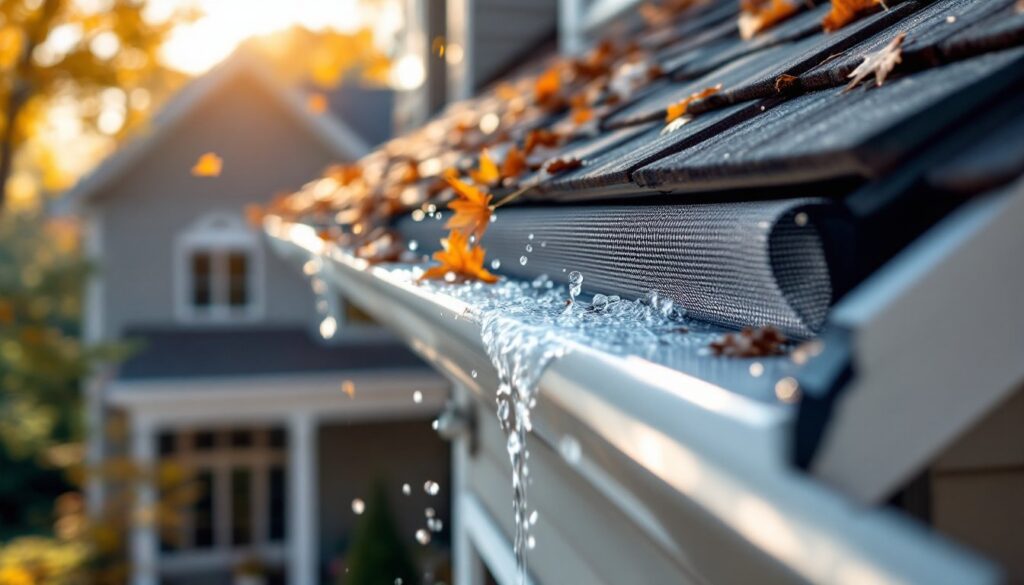
Clogging is the most common issue. Leaves, twigs, shingle granules, and dirt accumulate, especially near downspout outlets. Water backs up and overflows during heavy rain, sometimes pooling and freezing in winter. Check gutters after storms or windy days, if water isn’t flowing freely, debris is the culprit.
Sagging or pulling away happens when fasteners loosen or the gutter weight exceeds what the old brackets can handle. Walk around your home and look along the roofline: gutters should run in a straight line with a slight slope toward downspouts (typically 1/2 inch drop per 10 feet). Sags are safety hazards and funnel water toward your foundation instead of away from it.
Rust and corrosion affect steel gutters, especially in humid or coastal areas. Rust spots start small but spread, weakening the metal and creating pinhole leaks. Aluminum gutters don’t rust but can develop chalky oxidation (a whitish coating) that’s cosmetic unless it’s severe.
Seam and joint leaks occur where gutter sections meet. Silicone sealant deteriorates over 5–10 years. You’ll spot leaks as water dripping from seams or staining on fascia boards below. Leaks are easier to patch early than to ignore until water damage spreads inside.
Types of Gutters and Gutter Guards Explained
Aluminum gutters are the standard in most North American homes. They’re lightweight, affordable ($3–$8 per linear foot installed), resist rust, and come in 15+ colors to match trim. They dent more easily than steel and can separate at seams if not maintained.
Steel gutters cost more ($4–$10 per foot) but withstand impact better. They require painting or coating to prevent rust, especially in wet climates. Steel lasts longer if well-maintained but demands more attention than aluminum.
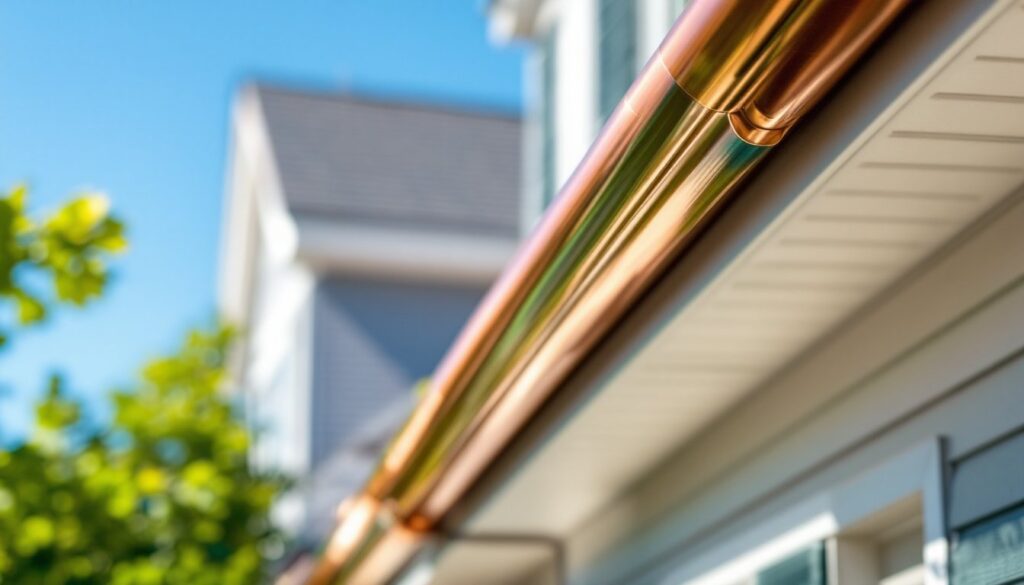
Copper gutters ($15–$30+ per foot) are premium choices for high-end homes. They age beautifully, developing a protective green patina, and last 50+ years. Overkill for most projects but worth considering if you’re replacing gutters on a historic or luxury home.
Gutters protection systems, often called gutter guards, screens, or covers, sit atop or inside gutters to block leaves while allowing water through. The most common types are mesh screens, foam inserts, and gutter covers. No guard is truly “maintenance-free.” Debris still accumulates on top or around edges, especially in heavy leaf years. But, quality guards reduce cleaning frequency from twice yearly to once yearly or less, and gutter guards work best paired with downspout strainers that prevent clogs at the outlet.
DIY Gutter Maintenance vs. Hiring a Professional
When to Handle Gutter Cleaning Yourself
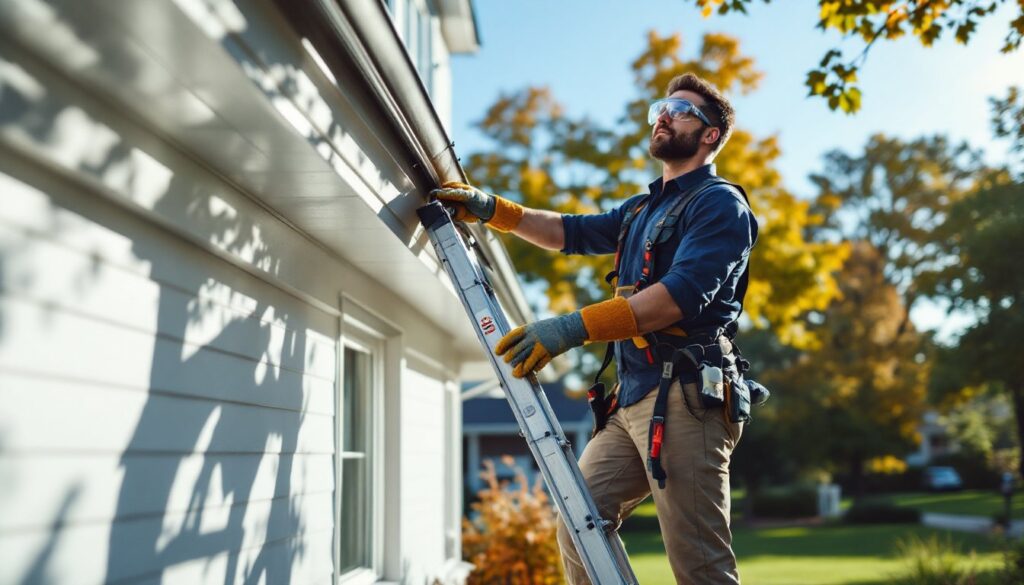
DIY gutter cleaning is feasible if your roof pitch is under 6/12 (a 6-inch rise for every 12 inches of horizontal run, roughly walkable with care), and you’re comfortable on a ladder. You’ll need a 24–28 foot extension ladder (higher homes need bigger), work gloves, a gutter scoop or small shovel, a bucket for debris, and safety glasses. For two-story homes, rent a ladder stabilizer or have someone hold the base.
The process is straightforward: position your ladder every 4–6 feet along the gutter run, scoop out debris into the bucket, and flush the gutter and downspouts with a garden hose to confirm water flows freely. This takes 2–4 hours depending on your home’s size and debris load. Safety is non-negotiable: don’t overreach from the ladder, wear slip-resistant shoes, and avoid working in rain or high winds.
When to Call a Professional
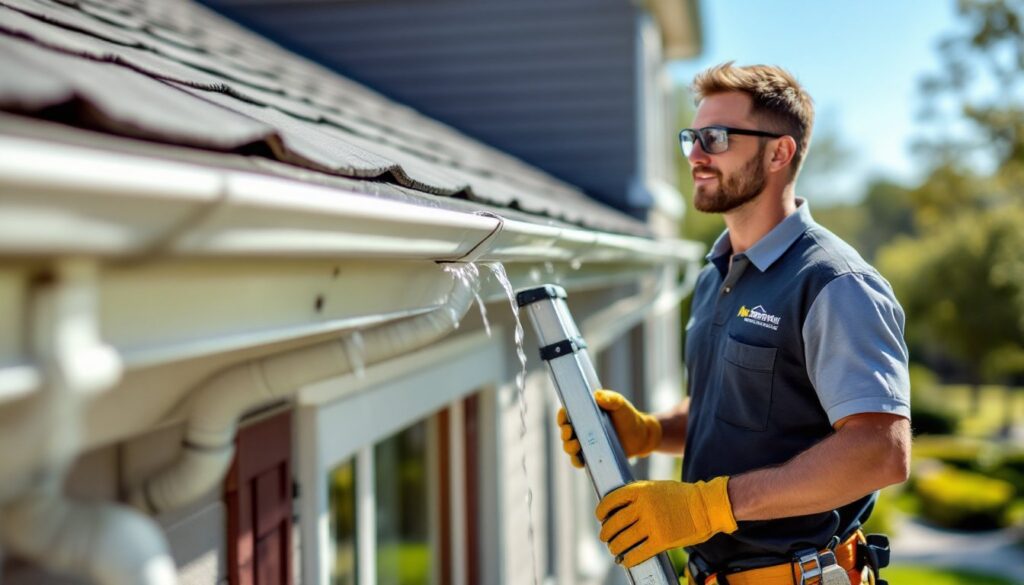
Hire a gutter cleaning service if your roof is steep (7/12 pitch or higher), your gutters are three or more stories up, or you’re uncomfortable on ladders. Professional crews have safety equipment, insurance, and experience working at heights. They also spot problems you might miss, a loose bracket, early rust, or a sagging section, and can recommend repairs immediately.
Repairs like fixing seam leaks, replacing rotted fascia, adjusting slope, or installing gutter guards require tools and skills beyond cleaning. A small seam patch costs $50–$150: ignoring it until the gutter fails will cost $500–$2,000+ in water damage. Professional gutter specialists can assess damage, quote repairs, and handle installation of new gutters or protection systems if needed.
Gutter Installation and Repair: What to Expect
Gutter replacement is a job for professionals. Installation requires precise slope measurement (typically 1/2 inch per 10 feet), proper fastener spacing (16–24 inches apart), correct downspout placement, and elbows angled to direct water at least 4–6 feet from the foundation. Mistakes mean water pools and overflows, defeating the whole purpose.
Replacement costs vary by gutter type, home size, and local labor rates. Aluminum gutters typically run $8–$15 per linear foot installed. A 2,000-square-foot home with 200 linear feet of gutters might cost $1,600–$3,000 total. Get three quotes and ask what’s included: downspout extensions, end caps, gutter guards, and fascia repair are common add-ons.
Gutter repairs range from simple to complex. Seam sealing with silicone or gutter sealant runs $50–$200 and extends gutter life by years. Replacing a 10-foot section costs $150–$400. Bracket replacement or slope correction usually runs $200–$600. Cost estimators can help you budget, but always get in-person quotes from local contractors who understand your climate and building codes.
If you’re replacing gutters, consider adding gutters protection at the same time. Installation during new gutter setup is cheaper and cleaner than retrofitting later. Guards add $3–$8 per linear foot but reduce future maintenance hassle.